Last Updated on January 20, 2026
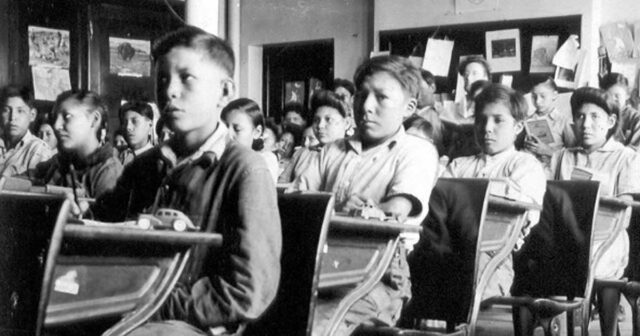
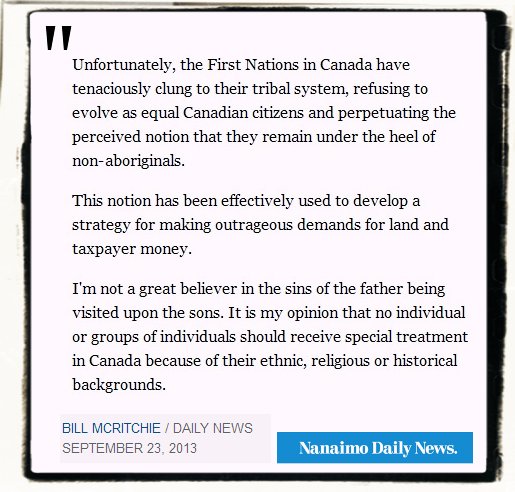
Residential schools were not a tragic misunderstanding, a well-intentioned social experiment, or an unfortunate footnote in an otherwise benevolent national story. They were a cornerstone of state policy that was designed to erase Indigenous peoples. Yet in recent years, a growing chorus of commentators, politicians, and online influencers have begun reframing this history, questioning its evidence, and recasting accountability as an exaggeration.
Denialism rarely announces itself as denial. It presents as “skepticism,” “free inquiry,” or “just asking questions.” But its impact is the same: it destabilizes truth, retraumatizes survivors, and obstructs justice. Below are ten of the most common talking points used to minimize or deny the harms of residential schools, and the facts that dismantle them.
This claim depends on selective amnesia.
The intent of residential schools was never ambiguous. Federal officials, church administrators, and policymakers stated it plainly and repeatedly. The goal was to assimilate Indigenous children by severing them from their families, languages, spiritual systems, and nations. Education was not the primary objective. Cultural destruction was.
When Deputy Superintendent Duncan Campbell Scott declared that the aim was to “Continue until there is not a single Indian in Canada that has not been absorbed into the body politic and there is no Indian question,” he was not describing an accidental outcome. He was articulating policy. The harm was structural, predictable, and widely endorsed as an essential step in Canada’s journey to statehood.
This talking point survives only by narrowing what counts as abuse.
Physical and sexual violence were endemic across the system, documented by survivor testimony, police records, court cases, and internal church correspondence. But even when denialists concede this point, they often reframe abuse as the actions of “a few bad actors.”
This framing ignores the deeper reality. Forced confinement. Chronic malnutrition. Medical abuse. The criminalization of Indigenous languages. Solitary punishment. Family separation. These were not aberrations. They were standardized practices, enforced through policy and routine discipline.
Abuse was not limited to moments of violence either. It was embedded in the daily architecture of the schools themselves.
This argument hinges on deliberate confusion between evidence and procedure.
The unmarked burial sites identified at former residential schools were never presented as speculative fantasies. They were identified using ground-penetrating radar, corroborated by survivor accounts, archival death records, and decades of community knowledge. The absence of immediate exhumation does not negate the findings. It reflects ethical, cultural, and legal considerations, many of them guided by Indigenous communities themselves.
Children died in large numbers at residential schools. This is not in dispute. What was long disputed was whether their deaths mattered enough to investigate. Denialism shifts the focus from why so many children died to whether their remains have been disturbed to settler satisfaction.
The demand for spectacle has become a substitute for truth.
This is not historical context. It is moral laundering.
At the very moment residential schools were operating, Indigenous parents were resisting them. Survivors were speaking out. Doctors, journalists, and even some government officials were documenting appalling conditions and preventable deaths. The harms were visible. They were contested. They were criticized.
Invoking the past to excuse violence erases the voices of those who lived through it and fought against it in real time. It also ignores the fact that other choices were deliberately rejected.
History does not absolve harm simply because it occurred earlier.
This claim reveals the deepest misunderstanding of all.
Survivors did not choose to carry this history alone for decades. They were forced to. What denialists call “dwelling on the past” is, in reality, a long-overdue reckoning with structures that still shape child welfare systems, incarceration rates, health disparities, and land dispossession today.
Memory is not a barrier to progress. It is a prerequisite for justice. Societies that refuse to confront foundational violence do not move forward. They repeat it under new names.
This argument relies on selective listening.
Survivor testimony is not a monolith, and no serious historian claims it is. Some individuals did form friendships, learn skills, or encounter moments of kindness. Acknowledging this does not invalidate the system’s violence. It underscores a basic truth: human resilience persists even in corrosive environments.
What denialists do is weaponize these accounts to discredit others. They elevate a minority of experiences to silence the majority, ignoring that children were confined by force, deprived of family, and punished for their identity regardless of individual outcomes. A prison does not cease to be a prison because some inmates survive it better than others.
Survivor testimony must be held in its full complexity, not cherry-picked to erase harm.
This claim collapses under even minimal scrutiny.
Many Indigenous families resisted enrollment fiercely. Children were taken by truant officers, clergy, and police. Parents who hid their children faced fines, imprisonment, or the withholding of rations. “Consent” obtained under threat is not consent. It is coercion.
Even in cases where parents complied, choices were constrained by poverty that was deliberately produced through land theft, starvation policies, and restricted movement. To describe this as voluntary participation is to misunderstand power itself.
When the state controls food, freedom, and survival, compliance is not agreement.
This argument reframes dispossession as benevolence.
Indigenous nations had complex systems of education long before European contact, rooted in language, land-based knowledge, governance, and intergenerational teaching. Residential schools did not supplement these systems. They were designed to dismantle them.
Academic instruction at the schools was often minimal, inconsistent, and deliberately inferior. Many students left unable to read or write fluently in any language, while being stripped of their own. What was destroyed far exceeded what was offered.
Education that requires the erasure of identity is not education. It is indoctrination.
This talking point attempts to fragment accountability.
Churches administered many residential schools, but they did not conceive the system, mandate attendance, or write the laws that enforced it. The federal government funded the schools, set policy, defined objectives, and ignored repeated warnings about death rates and abuse.
In other words, churches and the state were partners in a shared project. To isolate blame is to misunderstand that colonial systems function through collaboration between institutions, each reinforcing the other.
This argument confuses blame with responsibility.
No one is asking individuals to inherit guilt for actions they did not commit. The demand is far simpler and far more challenging: to recognize that the benefits of colonial policies persist, as do their harms. Structures created then still shape who has access to land, safety, health, and political power now.
Responsibility is not about personal shame. It is about collective obligation. Roads, schools, laws, and wealth were built on policies whose consequences did not end when the schools closed.
You do not have to cause harm to benefit from it. But benefiting creates an ethical duty to repair.
Taken together, these talking points reveal a consistent strategy: minimize scope, individualize harm, fragment responsibility, and redirect attention away from the system of abuse.
To be clear, what is being contested here is not the historical record. The documentation exists. Survivor testimony exists. Government archives, church correspondence, medical reports, and legal findings exist. What is being contested is interpretation. Denialism works not by disproving facts, but by burying them beneath technicalities, false equivalencies, and endless demands for impossible standards of proof.
At its core, this is a struggle over memory. Collective memory determines whose stories are carried forward and whose are treated as disposable. When survivors are told their experiences are “anecdotal,” “politicized,” or “overstated,” credibility is quietly transferred away from those who lived the system and back to institutions that designed and defended it.
These are not neutral disagreements about the past either. They are active negotiations over the moral boundaries of the present. If the harm can be minimized, then responsibility can be postponed. If responsibility can be postponed, then repair can be avoided. And if repair is avoided, the structures built on dispossession remain intact.
In that sense, residential school denialism is not a relic of colonial thinking. It is a reminder that Canada’s colonial mission continues to thrive in today’s political landscape.
Across the world right now, Indigenous peoples are facing a renewed assault on their lands, rights, and ways of life.
From extractive industries pushing deeper into ancestral territories, to governments rolling back hard-won protections,
the threat is global—and it is growing.
What makes this moment especially dangerous is how little attention it receives.
Stories like this are disappearing in real time. Mainstream media
barely covers it and the coverage is fragmented. The public is left without the context
needed to understand what is truly at stake.
That is exactly why IC Magazine exists..
For more than 20 years, IC has reported on Indigenous struggles worldwide — consistently, independently, and without compromise.
We don’t follow news cycles; we trace patterns. We don’t sensationalize; we provide context.
And when the world looks away, we stay focused.
But this work is increasingly difficult to sustain.
We refuse to lock our reporting behind a paywall. We don’t sell access through subscriptions.
And we don’t answer to advertisers. IC Magazine survives solely because readers like you choose to
support independent Indigenous journalism.
Please donate today if you can. Every contribution helps us to continue this crucial work.
Thank you,
John Ahni Schertow
Founder and Editor in Chief