Last Updated on January 29, 2026
In a significant win for Indigenous custodians, the Queensland Court of Appeal on Thursday restored a landmark case that challenges the environmental and cultural impacts of the Carmichael coal mine on the ancient Doongmabulla Springs complex in central Queensland.
The unanimous ruling by the state’s highest appellate court upheld the appeal by the Nagana Yarrbayn Wangan and Jagalingou Cultural Custodians, clearing the way for the case to proceed to trial. The court also ordered the government to pay all legal costs.
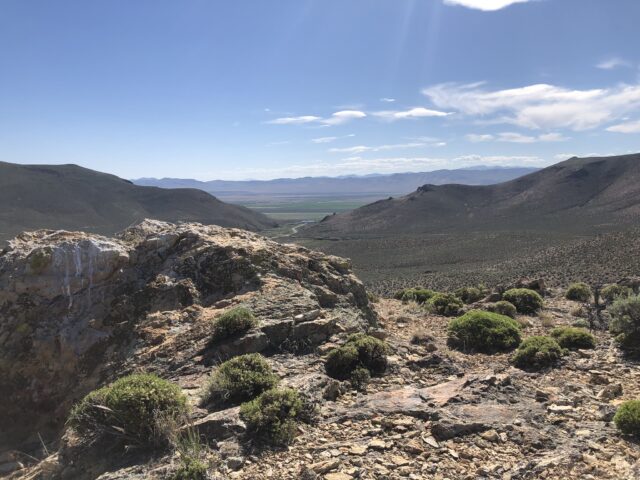
At stake is the future of Doongmabulla Springs, an aquifer-fed wetland system that holds profound cultural significance for the Wangan and Jagalingou peoples. Independent scientific reports have warned that mining operations at Adani’s Carmichael site could disrupt groundwater flows critical to the springs, where water has been dated at more than 500,000 years old.
Senior Cultural Custodian Adrian Burragubba, a lead plaintiff in the case, said the decision ends two years of legal delays under successive state governments. He said the ruling affirms that Indigenous cultural rights recognized under the Queensland Human Rights Act are substantive, not symbolic, and can form a legal basis to challenge government inaction on sacred sites.
“Two years and two governments down, and we can finally go to trial,” Burragubba said. “The State tried everything to shut this case down before the evidence could be heard. They failed.”
The court’s opinion emphasized that cultural rights recognized in the Human Rights Act do not originate solely from the legislation but reflect longstanding First Nations law — and that potential damage to land or waters could impair the custodians’ relationship with Country.
“The Doongmabulla Springs are the home of Mundagutta, the Rainbow Serpent, and central to Wangan and Jagalingou creation stories,” Burragubba said. “If the Springs are destroyed – and they are in real danger – that connection is severed forever… that is irreversible loss – of nature, of culture, of who we are.”
The custodians first launched their legal action in February 2024 after the Queensland Department of Environment declined to act on scientific evidence highlighting risks posed by mining to the springs. Rather than engaging with the evidence, the state government sought to have the case thrown out.
The Queensland Human Rights Commission intervened in support of the custodians, while Attorney-General Deb Frecklington had argued cultural rights were not enforceable in this context. With the appellate victory secured, the government may seek to appeal to the High Court of Australia — but Burragubba said custodians are prepared for that fight as well.
The springs’ protection has become a focal point for broader debates over Indigenous rights, cultural heritage protection, and the environmental impacts of coal mining in Australia’s resource-rich inland regions.
Across the world right now, Indigenous peoples are facing a renewed assault on their lands, rights, and ways of life.
From extractive industries pushing deeper into ancestral territories, to governments rolling back hard-won protections,
the threat is global—and it is growing.
What makes this moment especially dangerous is how little attention it receives.
Stories like this are disappearing in real time. Mainstream media
barely covers it and the coverage is fragmented. The public is left without the context
needed to understand what is truly at stake.
That is exactly why IC Magazine exists..
For more than 20 years, IC has reported on Indigenous struggles worldwide — consistently, independently, and without compromise.
We don’t follow news cycles; we trace patterns. We don’t sensationalize; we provide context.
And when the world looks away, we stay focused.
But this work is increasingly difficult to sustain.
We refuse to lock our reporting behind a paywall. We don’t sell access through subscriptions.
And we don’t answer to advertisers. IC Magazine survives solely because readers like you choose to
support independent Indigenous journalism.
Please donate today if you can. Every contribution helps us to continue this crucial work.
Thank you,
John Ahni Schertow
Founder and Editor in Chief