Last Updated on March 18, 2026
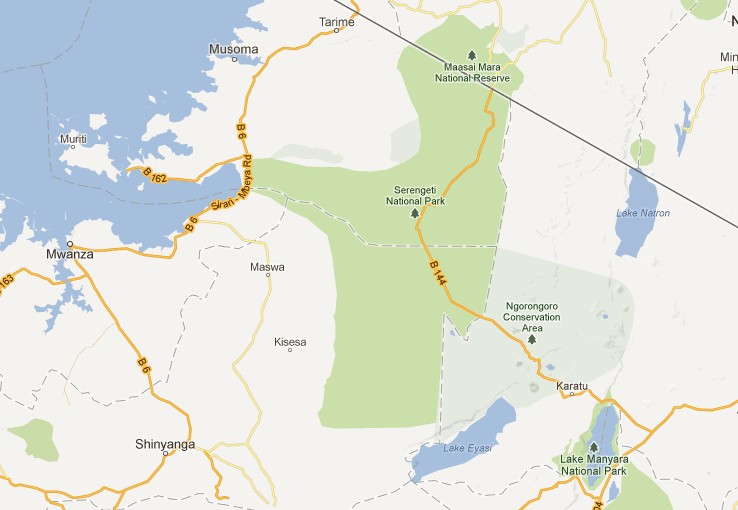
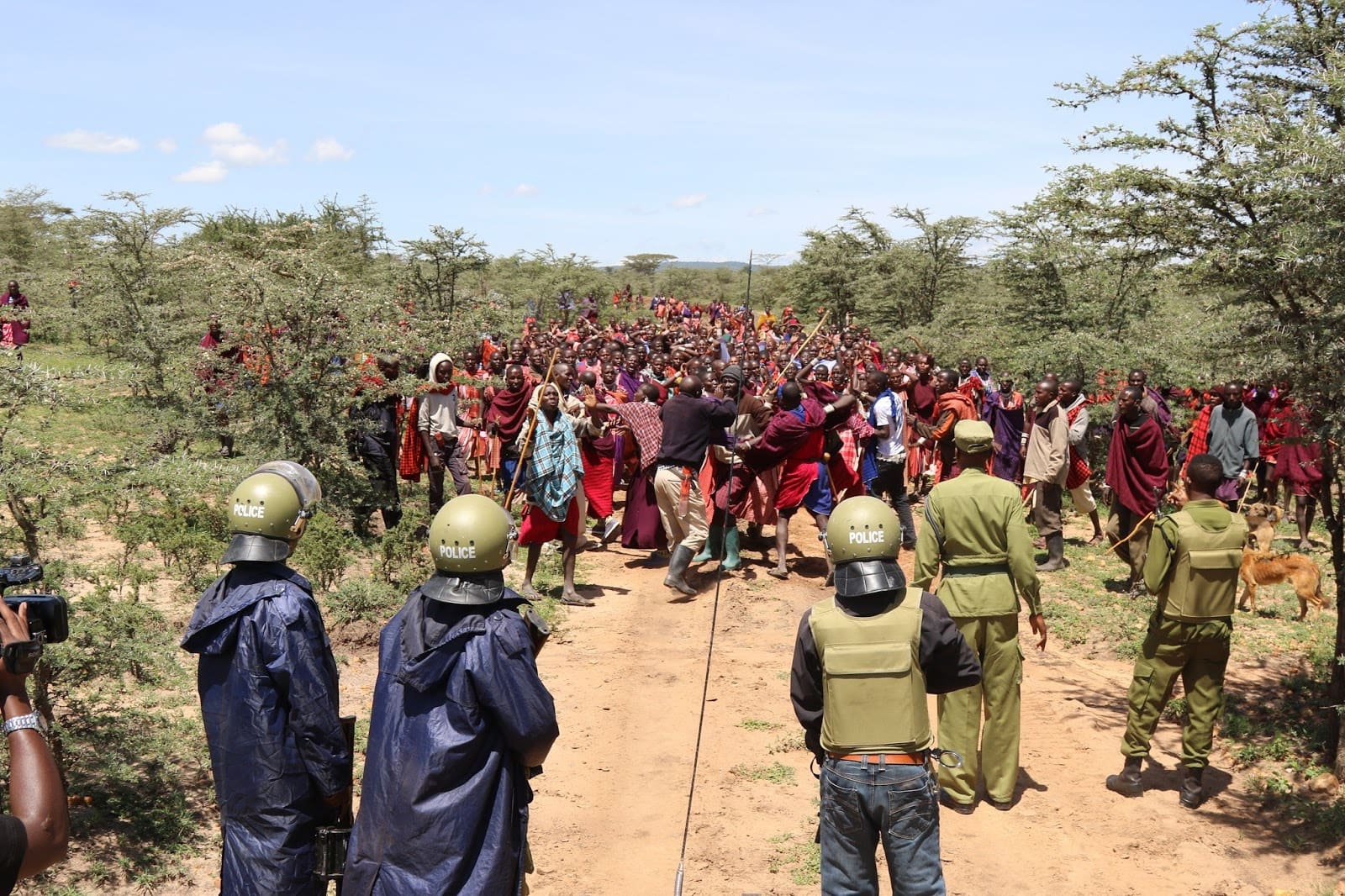
Two presidential commissions in Tanzania have endorsed government plans to evict Indigenous Maasai communities from the Ngorongoro Conservation Area (NCA), drawing sharp criticism from rights groups who say the process undermines the Maasai’s Indigenous land rights.
According to the Oakland Institute, the “recommendations are a crafty attempt at changing 1959 legislation that created the NCA as a multiple land use area – explicitly enshrining the right of the Maasai to live and graze cattle in the area” which is a UNESCO World Heritage Site.
The Maasai were promised that “should there be any conflict between the interests of the game [animals] and the human inhabitants, those of the latter must take precedence.”
“The commissions’ recommendations are based on outright lies about the environmental impacts of the Maasai, while completely ignoring the real damage caused by rapid tourism expansion,” said a Maasai elder, whose name was withheld out of fear of government reprisal. “If these extremely biased and reckless recommendations are implemented, it will be the end of our people in Ngorongoro.”
Tanzanian President Samia Suluhu Hassan indicated that she intends to act on the recommendations, signaling an expansion of a so-called “voluntary” relocation program.
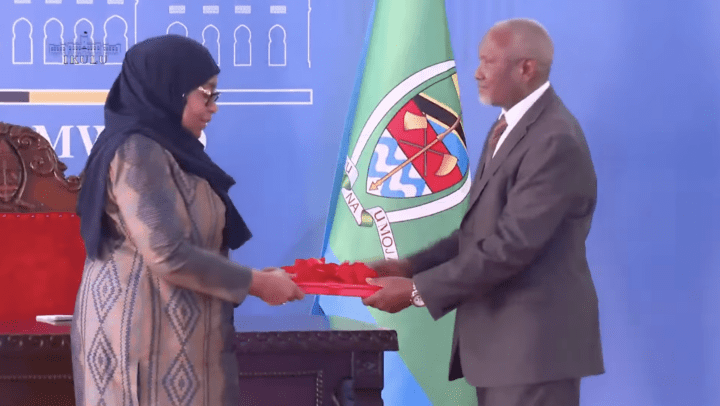
President Hassan receives a report from the presidential commissions at an official handover ceremony, March 2026. © Ikulu Tanzania/ Youtube
The Oakland Institute disputes that characterization, arguing the relocations are being driven by coercive measures.
“For years, the Oakland Institute has shattered government myths about ‘voluntary’ resettlement – exposing serious flaws with relocation plans that are being forced upon communities. To pressure residents to leave, the government has stopped basic medical, education, and water services while restricting access to grazing land for pastoralists,” the Oakland Institute said in a statement.
The commissions also recommended further restrictions on livelihoods beyond the NCA, threatening more evictions of Maasai communities living near Loliondo and Lake Natron.
“These commissions were a sham, a gimmick designed to give Tanzania’s violent persecution of the Maasai a veneer of respectability,” said Survival International Director Caroline Pearce. “These recommendations give the green light to more evictions, in Ngorongoro and beyond. And while the Maasai are robbed of their lands and livelihood, the government, tour operators and so-called conservationists will enrich themselves from a landscape emptied of its original owners.”
“These sham findings [threaten] hundreds of thousands of Indigenous lives in blind pursuit of tourism dollars that have failed to trickle down to improve the lives of the poor Tanzanians and the local communities,” said Anuradha Mittal, Executive Director of the Oakland Institute.
“We are blamed for environmental degradation while the unchecked expansion of tourism is ignored. Forced relocation, disguised as policy, has deprived our people of basic rights and dignity,” another anonymous Maasai person told Survival International. “We reject any continuation of these measures and condemn the Commission’s failure to reflect the voices, realities, and rights of our people.”
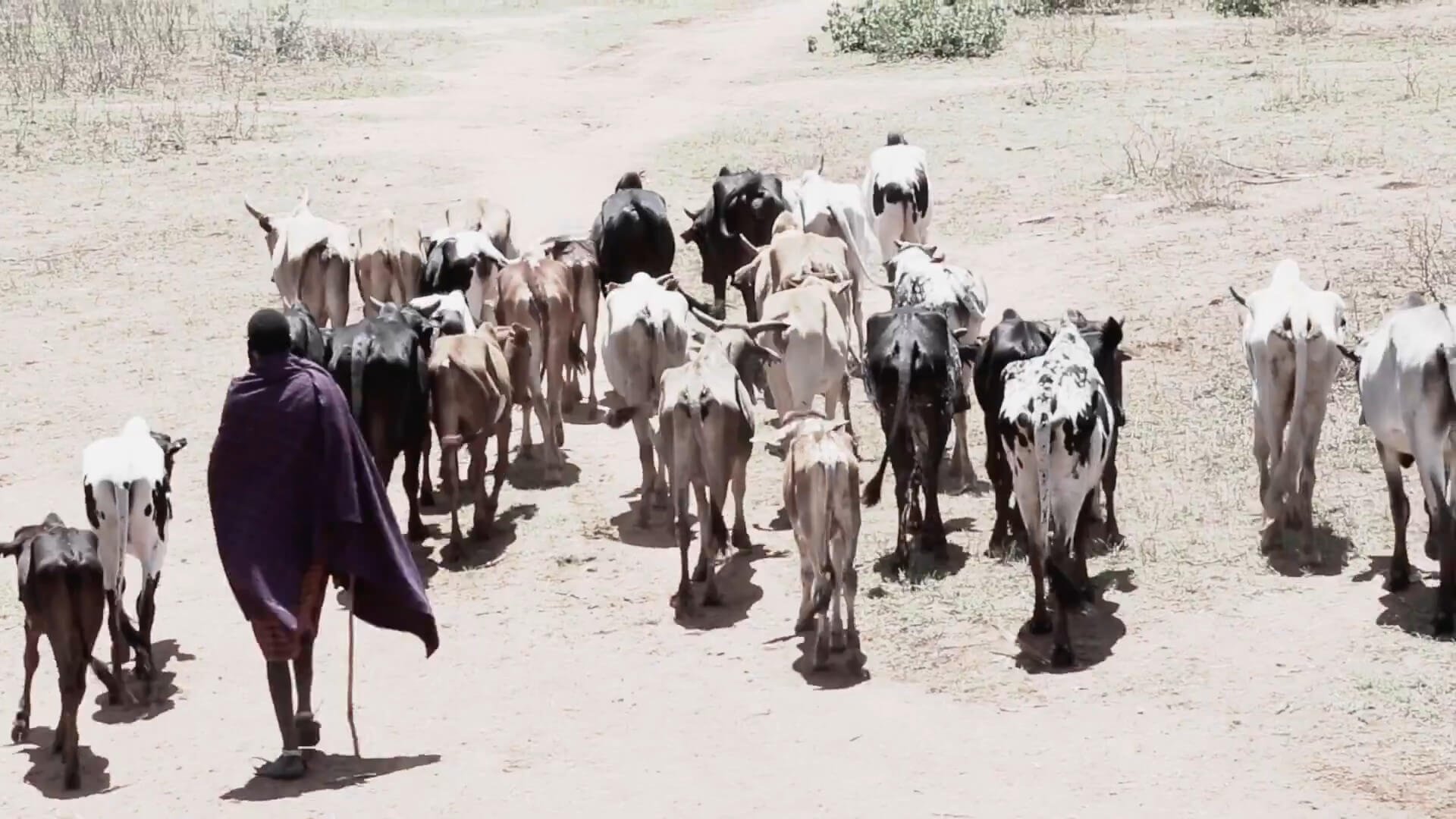
The dispute reflects a long-running conflict in Tanzania, where conservation and tourism initiatives have increasingly intersected with Indigenous land rights. Maasai communities, who have lived in the region for generations, have repeatedly resisted relocation efforts, arguing that their pastoralist practices are compatible with environmental stewardship.
Maasai communities have pledged to resist any attempt to displace them from their ancestral lands.
Across the world right now, Indigenous peoples are facing a renewed assault on their lands, rights, and ways of life.
From extractive industries pushing deeper into ancestral territories, to governments rolling back hard-won protections,
the threat is global—and it is growing.
What makes this moment especially dangerous is how little attention it receives.
Stories like this are disappearing in real time. Mainstream media
barely covers it and the coverage is fragmented. The public is left without the context
needed to understand what is truly at stake.
That is exactly why IC Magazine exists..
For more than 20 years, IC has reported on Indigenous struggles worldwide — consistently, independently, and without compromise.
We don’t follow news cycles; we trace patterns. We don’t sensationalize; we provide context.
And when the world looks away, we stay focused.
But this work is increasingly difficult to sustain.
We refuse to lock our reporting behind a paywall. We don’t sell access through subscriptions.
And we don’t answer to advertisers. IC Magazine survives solely because readers like you choose to
support independent Indigenous journalism.
Please donate today if you can. Every contribution helps us to continue this crucial work.
Thank you,
John Ahni Schertow
Founder and Editor in Chief