Last Updated on May 14, 2026
Criminal groups tied to Mexico’s drug cartels are accelerating illegal logging in the ancient forests of the Sierra Tarahumara, threatening Indigenous communities, biodiversity and one of northern Mexico’s most important watersheds, according to a recent investigation by The Guardian.
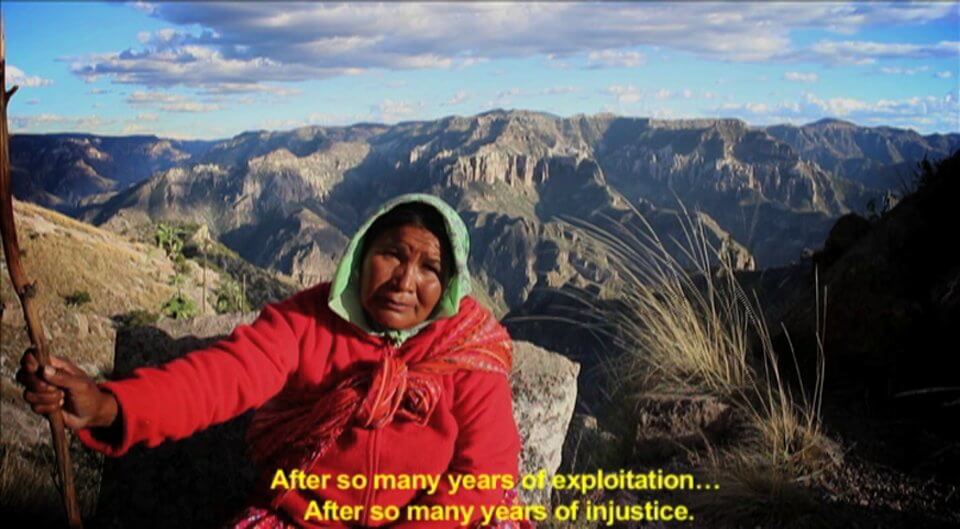
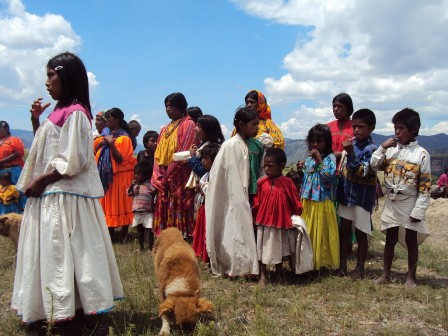
The Sierra Tarahumara, home to the Rarámuri and Ódami peoples, has become a battleground where cartels increasingly profit not only from narcotics trafficking but also from timber extraction, land seizures and resource smuggling.
Investigators and local residents say factions linked to the Sinaloa and Juárez cartels have expanded their control over communal forest lands through intimidation, disappearances and killings.
The consequences are unfolding on multiple fronts. Large areas of old-growth pine and oak forest have reportedly been stripped over the past decade, disrupting fragile hydrological systems that communities depend on for farming and drinking water. Residents in some areas have faced drought, crop failures and displacement as forests disappear and violence intensifies.
The investigation by The Guardian reports that cartel-linked sawmills are also allegedly laundering illegally harvested timber through falsified permits and weak enforcement systems.
Corruption and severe underfunding of environmental agencies have enabled criminal networks to operate with near impunity.
For Indigenous communities in the Sierra Tarahumara, the violence has become deeply personal. Community leaders and land defenders who challenge illegal logging operations have reportedly faced threats, forced displacement and assassination.
The region has long been dangerous for Indigenous environmental defenders, but observers say criminal diversification into timber trafficking has intensified the crisis.
Researchers and environmental groups say the forests of the Sierra Tarahumara are ecologically critical, serving as carbon sinks and biodiversity corridors. Illegal clear-cutting, they argue, is accelerating ecological collapse in communities already vulnerable to climate change.
The crisis in northern Mexico reflects a broader trend across Indigenous territories in Latin America, where organized crime networks are expanding at rapid pace.
This week, Indigenous organizations from across the Amazon basin urged the United Nations to confront organized crime as a growing driver of violence and environmental destruction across Latin America. In a letter addressed to UN agencies and member states, Indigenous leaders warned that criminal organizations are undermining their Indigenous governance systems while devastating forests and waterways.
“Across vast areas of the region, activities such as drug trafficking, illegal mining, illegal logging, and other illicit economies are generating dynamics of violence, environmental degradation, and territorial control that undermine the security of Indigenous Peoples and the continuity of their ways of life,” the letter reads.
“These dynamics are intertwined with historical and ongoing processes of territorial dispossession, structural racism, agrarian inequality, corruption, and the imposition of extractive and infrastructure projects that weaken Indigenous systems of territorial governance.”
The letter goes on to call for a major shift in how governments and international institutions respond to organized crime in Indigenous territories. Rather than relying on militarized crackdowns, the letter argues for an approach that centers on Indigenous governance, territorial rights and environmental protection.
The appeal comes amid mounting evidence that transnational criminal groups have evolved into a major environmental force that is capable of reshaping ecosystems as profoundly as any industrial extraction scheme.
Across the world right now, Indigenous peoples are facing a renewed assault on their lands, rights, and ways of life.
From extractive industries pushing deeper into ancestral territories, to governments rolling back hard-won protections,
the threat is global—and it is growing.
What makes this moment especially dangerous is how little attention it receives.
Stories like this are disappearing in real time. Mainstream media
barely covers it and the coverage is fragmented. The public is left without the context
needed to understand what is truly at stake.
That is exactly why IC Magazine exists..
For more than 20 years, IC has reported on Indigenous struggles worldwide — consistently, independently, and without compromise.
We don’t follow news cycles; we trace patterns. We don’t sensationalize; we provide context.
And when the world looks away, we stay focused.
But this work is increasingly difficult to sustain.
We refuse to lock our reporting behind a paywall. We don’t sell access through subscriptions.
And we don’t answer to advertisers. IC Magazine survives solely because readers like you choose to
support independent Indigenous journalism.
Please donate today if you can. Every contribution helps us to continue this crucial work.
Thank you,
John Ahni Schertow
Founder and Editor in Chief