Last Updated on April 7, 2025
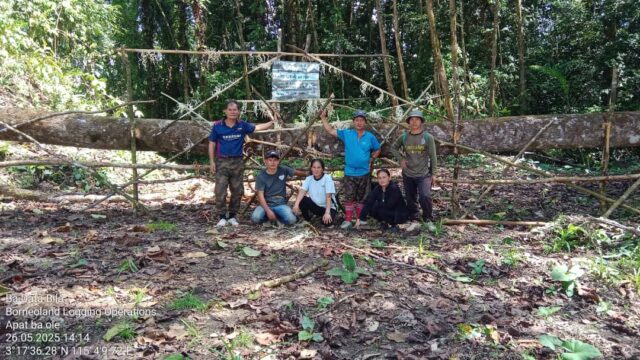
Malaysian Police in Sarawak have once again removed the blockade set up by the Penan People. You may recall the blockade was rebuilt a few weeks ago, after it was initially torn down on Feb 7.
From BMF: The police used chainsaws to dismantle the blockade and set the logs on fire, the community reported. Timber company workers of Samling, a controversial Malaysian timber company, were also present at the site. “The police and the company workers were very rude and did not negotiate with us”, a Penan spokesman said.”We couldn’t do anything because we heard the police firing gunshots which made the situation really dangerous to us.” (source)
Some background from Survival International:
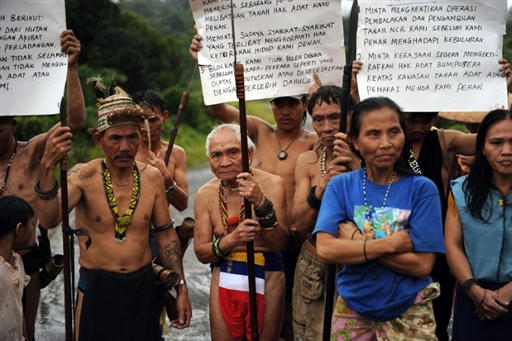
Since the 1970s, all the tribal peoples of Sarawak have had their land taken to make way for logging, dam construction and oil palm plantations – driving them into towns where they are reduced to abject poverty. The Penan have been told by the government that they have no rights to land at all until they ‘settle down’ or start farming. The logging industry has a particularly devastating impact. The Malaysian government claims that Sarawak is being logged sustainably – but in fact its forests are being destroyed at one of the fastest rates in the world. As the forests are logged, the rivers are silted up, killing the fish. The game is being scared deeper into the few remaining forests. Since 1987, the Penan have been fighting back by blockading the logging roads – and suffering acute food shortages as a result. Many Penan have been arrested for holding these peaceful blockades but finally they are starting to see some results. Some of the companies are now agreeing not to log Penan forest, but the Penan need to stay vigilant as many such promises have been broken.
Across the world right now, Indigenous peoples are facing a renewed assault on their lands, rights, and ways of life.
From extractive industries pushing deeper into ancestral territories, to governments rolling back hard-won protections,
the threat is global—and it is growing.
What makes this moment especially dangerous is how little attention it receives.
Stories like this are disappearing in real time. Mainstream media
barely covers it and the coverage is fragmented. The public is left without the context
needed to understand what is truly at stake.
That is exactly why IC Magazine exists..
For more than 20 years, IC has reported on Indigenous struggles worldwide — consistently, independently, and without compromise.
We don’t follow news cycles; we trace patterns. We don’t sensationalize; we provide context.
And when the world looks away, we stay focused.
But this work is increasingly difficult to sustain.
We refuse to lock our reporting behind a paywall. We don’t sell access through subscriptions.
And we don’t answer to advertisers. IC Magazine survives solely because readers like you choose to
support independent Indigenous journalism.
Please donate today if you can. Every contribution helps us to continue this crucial work.
Thank you,
John Ahni Schertow
Founder and Editor in Chief