Last Updated on October 9, 2015
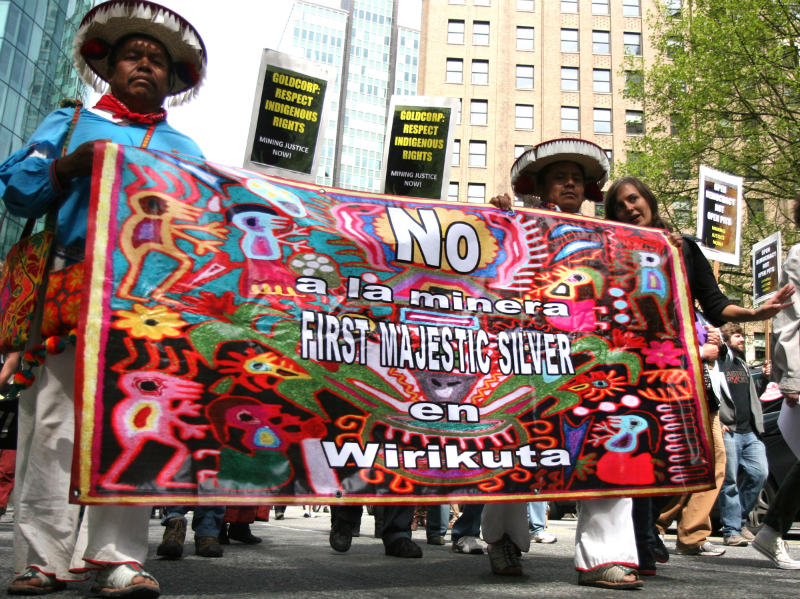
Interviews and excerpts from the first international conference of its kind in Latin America, “Women, Mining and Human Rights: Beyond the Challenge,” held in Guatemala City from March 14 to 17, 2010.
Organized by the London-based Charity LAMMP and the Union of Latin American Women (ULAM), a regional network of women affected by mining, this inspiring conference brought together rural and indigenous women, activists, NGOs, academics and others “to raise awareness about the impact of mining on women, identify the risks facing women environmental and human rights defenders, and explore the gap between corporate social responsibility policy and practice in the mining industry.”
As LAMMP describes on their website: “In Latin America, as in other regions of the developing world, mining is promoted as an economic activity with the potential to play a significant role in sustainable development and the fight against poverty. However, this position has failed take into account the specific concerns of women from mining-affected communities and address the impact of mining developments on rural and indigenous women.”
As well, even though women are at the forefront of mining opposition around the world, “[they are also] generally excluded from or less likely to benefit from compensation or economic opportunities associated with mining development. They are also more severely affected by and bear the greater burden of negative health, social and environmental impacts of the extractive industry. The environmental, social, cultural and economic changes brought about by mining developments are transforming women’s lives and demanding new roles for them.”
Appropriately, the international conference made room for everyone to explore what this transformation means, and more importantly, to begin building strategies “to stimulate, support and sustain women’s efforts to become agents of change, capable of influencing mining policy and development.”
Thanks to filmmakers Michael Watts and David McNulty, we can hear what these powerful women had to say and what they want to do for their Families, Communities, Nations and the Earth itself.
Learn more about the Conference:
http://www.lammp.org/our-work/international-conference/
Read the Guatemala Conference Statement:
http://www.lammp.org/2010/05/20/guatemala-conference-statement/
Alternatively, you can watch this ten-minute film at:
http://www.vimeo.com/11735844
Across the world right now, Indigenous peoples are facing a renewed assault on their lands, rights, and ways of life.
From extractive industries pushing deeper into ancestral territories, to governments rolling back hard-won protections,
the threat is global—and it is growing.
What makes this moment especially dangerous is how little attention it receives.
Stories like this are disappearing in real time. Mainstream media
barely covers it and the coverage is fragmented. The public is left without the context
needed to understand what is truly at stake.
That is exactly why IC Magazine exists..
For more than 20 years, IC has reported on Indigenous struggles worldwide — consistently, independently, and without compromise.
We don’t follow news cycles; we trace patterns. We don’t sensationalize; we provide context.
And when the world looks away, we stay focused.
But this work is increasingly difficult to sustain.
We refuse to lock our reporting behind a paywall. We don’t sell access through subscriptions.
And we don’t answer to advertisers. IC Magazine survives solely because readers like you choose to
support independent Indigenous journalism.
Please donate today if you can. Every contribution helps us to continue this crucial work.
Thank you,
John Ahni Schertow
Founder and Editor in Chief