Last Updated on January 24, 2015
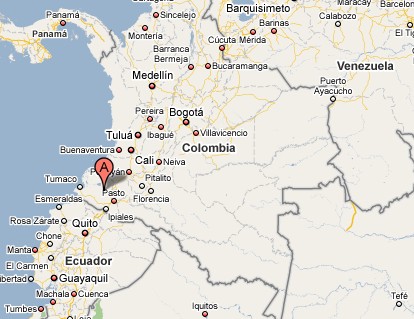
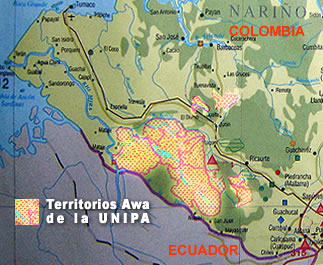
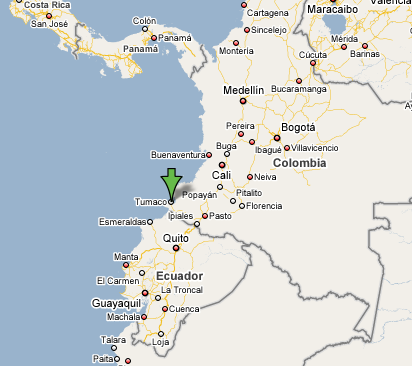
Members of the indigenous Awa in southwestern Colombia have reported that as many as 20 people were killed last week by the Revolutionary Armed Forces of Colombia (FARC).
No less then a massacre, the Awa say FARC entered two separate villages between February 4-6, and began to accuse them of collaborating with the Colombian army.
The guerrillas then started to bring people into their homes and execute them ‘as a lesson’ to the rest of the village.
The events weren’t made public until yesterday, after a small group of Awa successfully fled from their village and informed the government of what was happening. An official immediately traveled to confirm their reports.
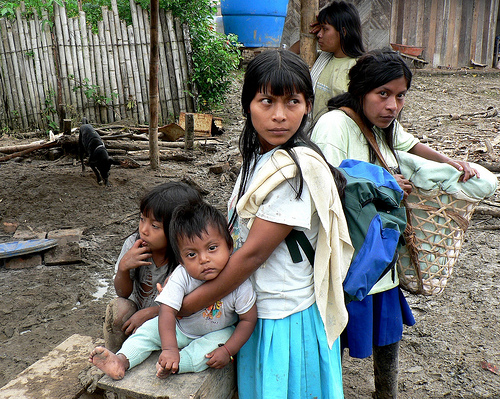
Among the victims are two Women and 3 Children between the ages of 3 and 6.
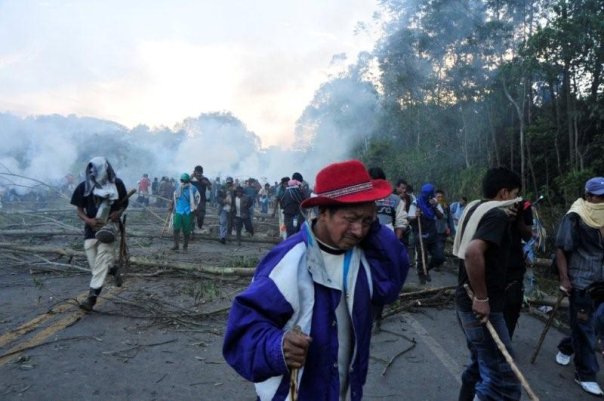
Faced with this new mourning, and the ongoing displacement and murder of the Indigenous peoples of Colombia, as well as the land theft and constant accusations from all sides (that they are “collaborating with the enemy”), the National Indigenous Organization of Colombia (ONIC) “condemn[s] the systematic genocide we have been experiencing, which after the National Minga of Indigenous Resistance, and so far in 2009, has taken more than 50 Indians, wounded hundreds and displaced thousands.”
“As a immediate action, ONIC calls to the national and international communities, human rights defenders, and the UN to be a part of this urgent situation. And for the other Indigenous Peoples of Colombia, to support one another and to stay on alert.”
Across the world right now, Indigenous peoples are facing a renewed assault on their lands, rights, and ways of life.
From extractive industries pushing deeper into ancestral territories, to governments rolling back hard-won protections,
the threat is global—and it is growing.
What makes this moment especially dangerous is how little attention it receives.
Stories like this are disappearing in real time. Mainstream media
barely covers it and the coverage is fragmented. The public is left without the context
needed to understand what is truly at stake.
That is exactly why IC Magazine exists..
For more than 20 years, IC has reported on Indigenous struggles worldwide — consistently, independently, and without compromise.
We don’t follow news cycles; we trace patterns. We don’t sensationalize; we provide context.
And when the world looks away, we stay focused.
But this work is increasingly difficult to sustain.
We refuse to lock our reporting behind a paywall. We don’t sell access through subscriptions.
And we don’t answer to advertisers. IC Magazine survives solely because readers like you choose to
support independent Indigenous journalism.
Please donate today if you can. Every contribution helps us to continue this crucial work.
Thank you,
John Ahni Schertow
Founder and Editor in Chief