Last Updated on April 10, 2025
NOTE: this article was originally published in 2009. A more recent article on the housing crisis, published Nov 22, 2011, is available here: Attawapiskat Housing Crisis A Serious Risk To Women, Children, Elders
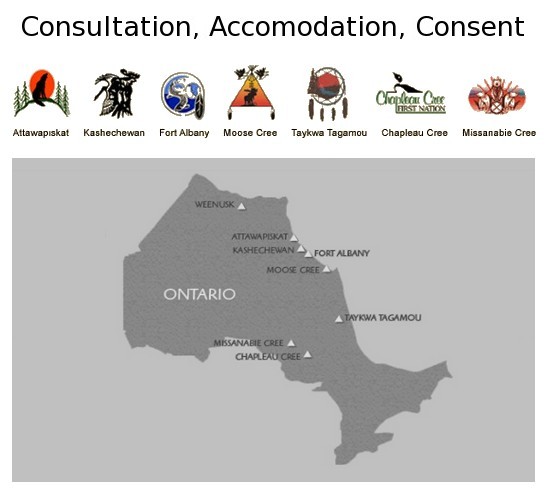
The Attawapiskat First Nation in northern Ontario is preparing to evacuate 700 children out of fears that continued exposure to toxic fumes is making them sick.
In 1979, 30,000 gallons of hydrocarbon oil was found to have accumulated underneath the community’s school grounds as a result of a broken oil distribution line to the school. INAC installed, operated, and maintained the line.
Nine years ago, staff and children attending the school started getting sick, eventually leading to the closure of the school. INAC also built a series of portable shacks immediately beside the contamination site as a temporary fix until a new school was built.
Attawapiskat is still waiting for the replacement school. In fact, only last month was the old school finally demolished, and with obvious consequences. “An open toxic wound” now sits “in the center of the community,” says MP Charlie Angus, who visited the site after Attawapiskat declared a state of emergency on March 30, 2009.
Since the demolition, community members have been complaining of headaches, nausea, skin rashes, nosebleeds, chronic diarrhea (even in infants), and children just “passing out”. Attawapiskat wants all children from the community to be evacuated until remediation efforts at the contamination site are completed.
INAC–apathetic (and criminally negligent, some would say) as ever–won’t agree to an evacuation because, according to their tests, there is no danger to the community.
Angus said they were appalled at what they saw. “The federal government has left an open toxic wound in the centre of the community. The stench of diesel emanating from this pit, even on a blustery windy day was overwhelming. We have met teachers, children and parents who were so overcome with fumes and dust that they threw up and were left with severe headaches. Even two weeks after the demolition many of those symptoms persist in families living near the site.”
Angus goes on to say that the refusal by Indian Affairs to support an evacuation is typical negligence of health and safety.
There are hundreds of other indigenous communities across Canada who would agree.
He continues, “Indian Affairs have been sitting on reports for nearly two decades that identify this site as an extreme hazardous to human health. They did a half-assed clean up job and have left a gaping hole that they don’t intend to remediate for another two years.”
Gilles Bisson, who accompanied Angus to the community, points out that the symptoms being experienced are consistent with exposure to benzene, toluene and ethyl benzene. “We are talking about chemicals known for causing leukemia, bone marrow damage and kidney failure. The smell of these chemicals has made going to school a dangerous proposition for children. I shudder to think of what the contaminant levels will be when the ground around the hole begins to thaw and fill with spring rain. Action is required now.”
The toxic stench of oil can be smelled far beyond the school grounds, in and around 61 local homes.
Discussing the issue in Parliament, INAC Minister Chuck Strahl states the whole situation is little more than a publicity stunt being propped up “on the backs of needy aboriginal people.”
Across the world right now, Indigenous peoples are facing a renewed assault on their lands, rights, and ways of life.
From extractive industries pushing deeper into ancestral territories, to governments rolling back hard-won protections,
the threat is global—and it is growing.
What makes this moment especially dangerous is how little attention it receives.
Stories like this are disappearing in real time. Mainstream media
barely covers it and the coverage is fragmented. The public is left without the context
needed to understand what is truly at stake.
That is exactly why IC Magazine exists..
For more than 20 years, IC has reported on Indigenous struggles worldwide — consistently, independently, and without compromise.
We don’t follow news cycles; we trace patterns. We don’t sensationalize; we provide context.
And when the world looks away, we stay focused.
But this work is increasingly difficult to sustain.
We refuse to lock our reporting behind a paywall. We don’t sell access through subscriptions.
And we don’t answer to advertisers. IC Magazine survives solely because readers like you choose to
support independent Indigenous journalism.
Please donate today if you can. Every contribution helps us to continue this crucial work.
Thank you,
John Ahni Schertow
Founder and Editor in Chief