Last Updated on September 21, 2013
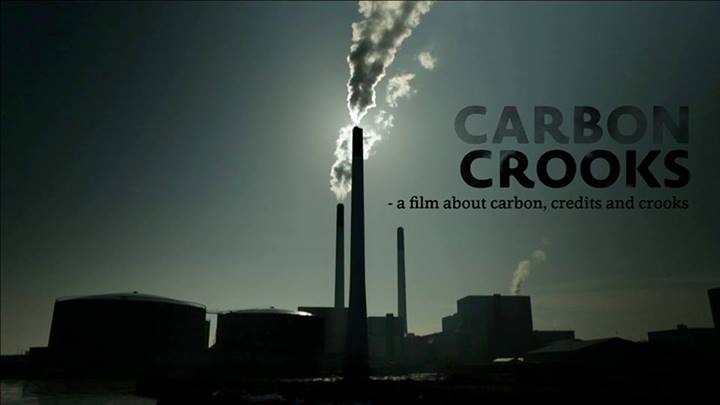 A documentary film about carbon emissions, credits and crooks.
Learn more about the film at CarbonCrooks.tv.
Synopsis
At the very end of 2012, the second part of Kyoto Protocol expired. All the countries that ratified the protocol have guaranteed that they will cut down on their carbon emissions and curb the greenhouse gasses.
The question is: How did they do that? One of the solutions has been to buy and sell carbon credits. If e.g. a rich country in the developed world has problems in reaching the goal set in the Kyoto Protocol, they can buy Carbon Credits in the poor countries. Hocus-pocus and the arithmetic fits.
One of the major arguments for the UN, the EU and other developed countries has been to establish and support environmental friendly projects that are “additional” – meaning that the projects – supported by rich countries – would never had been established if it had not been for the trading of carbon emissions. However, a number of the projects that the film describes were already established before the rich countries decided to buy their credits.
The smokeless factories
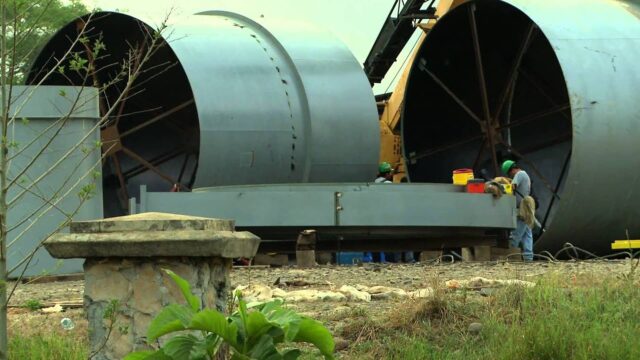
Bangladesh, Denmark and numerous other countries have signed contacts of buying some 600-700,000 carbon credits from new brick factories that the UN call “smokeless”, the workers are exposed to extremely hazardous fly-ash. During the visit of the factory we could hardly breathe due the the heavy smoke from the so-called “smokeless” factories.
In Kenya some 900,000 water purification filters were distributed for free. The idea was to reduce the use of firewood and thereby save carbon emissions. But what do you do when you want to make a profit and only a quarter of the local population actually use firewood to boil their water? The solution was to invent a much higher need. In the UN-approved system it’s called “Suppressed Demand” meaning that you randomly ask: “If you had money and time enough, would you then boil your water?”
To no surprise, almost 80 % replied that they would boil their water if they had the time and money. But they do not have the time and money. Still a Western company can sell carbon credits to individuals and companies who want to flash the “I’m carbon neutral” sign.
And it all looks good in the official documents, but how does reality look when an investigative film crew turns up on the scene?
Massive fraud
On top of that, the carbon trading industry has been exposed to massive theft and fraud. According to Europol the fraud exceeds more than $5 billion euro (approx $6.7 billion US). And Denmark was one of the centers for the massive fraud. One of the most intensive frauds was a V.A.T. carousel where several European countries were exposed to a fraud hardly seen before.
In the Czech Republic the national carbon registry was lured by a telephone bomb. The office building was evacuated. But there was no bomb. When the officials came back to their offices they had lost all their carbon credits from their computers.
Back in the EU-Commission each and every of the 10 billion electronic carbon credits are registered. Each carbon credit has a unique serial number and the EU-Commission should therefore be able to track the previously stolen credits. But Mrs. Connie Hedegaard – the EU-Commisioner for the Climate refuses to reveal where the stolen credits are.
Across the world right now, Indigenous peoples are facing a renewed assault on their lands, rights, and ways of life.
From extractive industries pushing deeper into ancestral territories, to governments rolling back hard-won protections,
the threat is global—and it is growing.
What makes this moment especially dangerous is how little attention it receives.
Stories like this are disappearing in real time. Mainstream media
barely covers it and the coverage is fragmented. The public is left without the context
needed to understand what is truly at stake.
That is exactly why IC Magazine exists..
For more than 20 years, IC has reported on Indigenous struggles worldwide — consistently, independently, and without compromise.
We don’t follow news cycles; we trace patterns. We don’t sensationalize; we provide context.
And when the world looks away, we stay focused.
But this work is increasingly difficult to sustain.
We refuse to lock our reporting behind a paywall. We don’t sell access through subscriptions.
And we don’t answer to advertisers. IC Magazine survives solely because readers like you choose to
support independent Indigenous journalism.
Please donate today if you can. Every contribution helps us to continue this crucial work.
Thank you,
John Ahni Schertow
Founder and Editor in Chief