Last Updated on April 28, 2026
China has adopted a sweeping new law aimed at strengthening what officials describe as “ethnic unity,” a move that will accelerate the assimilation of the country’s diverse ethnic groups and further erode cultural and linguistic rights in the country.
The legislation, formally known as the Law on Promoting Ethnic Unity and Progress, was passed by the National People’s Congress in March and is set to take effect July 1. The new law codifies policies under President Xi Jinping that emphasize a single national identity centered on loyalty to the Chinese state and the ruling Communist Party.
State officials say the new law is intended to foster cohesion among China’s population and promote what they call a “shared consciousness of the Chinese nation.”
The measure requires government bodies, businesses and citizens to actively support ethnic unity, while prohibiting activities deemed to promote division or separatism.
As widely reported in the press, it also mandates that Mandarin Chinese be taught to all children before kindergarten and through to the end of high school.
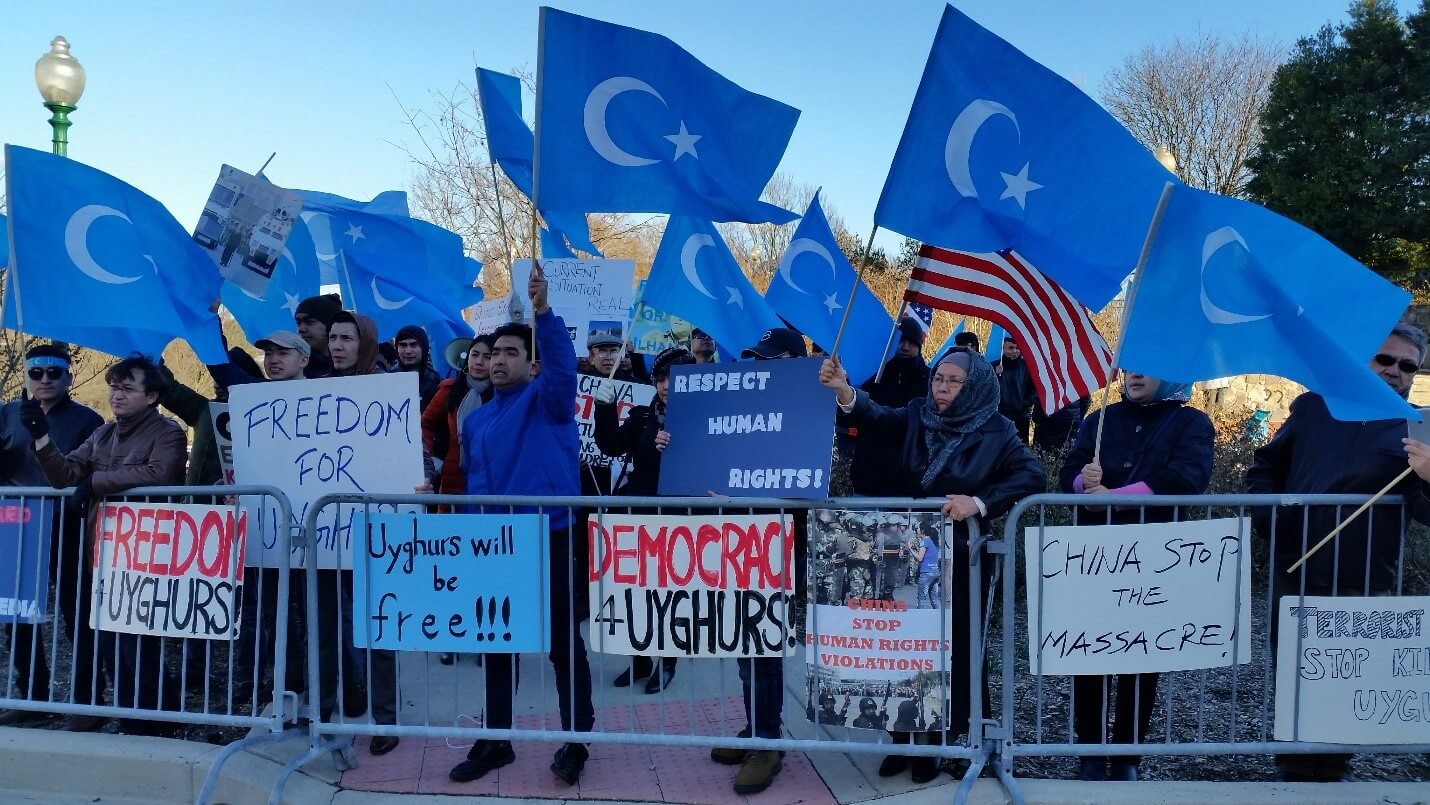
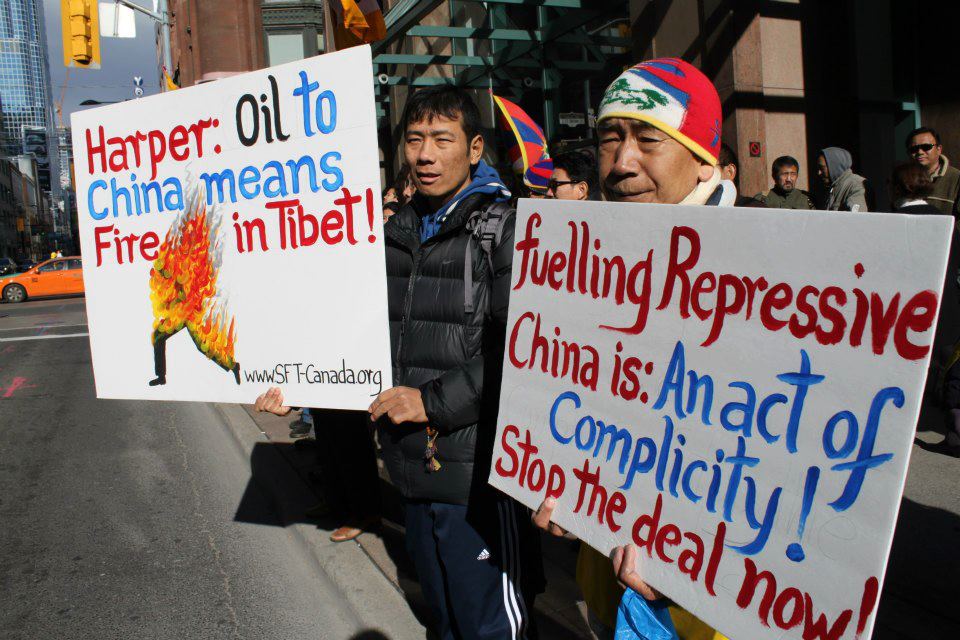
Critics, including human rights groups like the International Campaign for Tibet (ICT), say the law formalizes longstanding policies that pressure ethnic minorities — including Tibetans, Uyghurs and Mongolians — to assimilate into the dominant Han Chinese culture.
China officially recognizes 56 ethnic groups, including the Han majority, which makes up more than 90% of the population, and 55 minority groups that collectively account for tens of millions of people and speak hundreds of languages and dialects.
Despite this diversity, the Chinese government has long rejected the concept of “Indigenous peoples” within its borders. Officials maintain that all ethnic groups in China are part of a single, unified nation, arguing that the country’s history is defined by the integration of its peoples rather than colonization.
The new law reinforces that stance by promoting a unified national identity while discouraging expressions of separate ethnic or cultural identities that could be interpreted as undermining state unity.
According to the ICT, it marks a shift away from earlier policies that emphasized a degree of regional autonomy for minority groups.
“On a surface level, the ‘Ethnic Unity and Progress Law’ does not stipulate eliminating the autonomy system, yet its provisions directly or indirectly unravel and undermine both the Law on Regional Ethnic Autonomy and the underlying constitutional guarantee,” the organization states.
“Consequently, in real terms, the Ethnic Unity and Progress law will override the [People’s Republic of China (PRC)]’s autonomy laws, including through redefining clauses to serve its policy of forced assimilation and advancing a homogeneous Chinese nation.”
The legislation also includes provisions with extraterritorial reach, allowing authorities to pursue individuals or organizations outside China accused of threatening national unity.
“The law effectively grants Chinese authorities jurisdiction over people who are not PRC citizens and are not living in the PRC but whose actions are deemed to ‘undermine national unity and progress’, says the ICT.
The organization highlights another highly problematic clause in the new law that has not yet been covered in the press. Article 20 mandates that “Parents or other guardians of minors shall fulfill their family education responsibilities in accordance with the law, educating and guiding minors to love the Communist Party of China, the motherland, the people, and the Chinese nation.”
“[It’s] a painful resurrection of the Cultural Revolution experience, when reporting within families to ensure political loyalty, including children turning on their parents, was not only encouraged, but enforced,” the ICT observes.
Alongside its emphasis on unity, the law also advances Beijing’s long-standing agenda to promote what it calls “high-quality development” in ethnic minority regions — a term that blends economic growth with political stability and social integration.
Chinese authorities have framed development as a central pillar of ethnic policy, arguing that improved infrastructure, job creation and poverty alleviation will strengthen national cohesion. In official discourse, regions such as Xinjiang, Tibet and Inner Mongolia are frequently described as both economically strategic and historically underdeveloped, requiring targeted investment and modernization to close regional gaps.
The new law reinforces this approach by linking economic advancement directly to ethnic unity, encouraging local governments to align development initiatives with their national identity goals.
In effect, the new law recasts difference as disloyalty, raising major concerns about the long-term social, cultural and political consequences of suppressing the many distinct identities that exist across China.
The vision leaves little room for genuine pluralism. By tying economic opportunity, education and political participation to conformity with a single national identity, the law risks transforming culture into a conditional right that can be expressed only so long as it aligns with state-defined unity.
For communities whose identities are rooted in language, land and tradition, the stakes are profound. The erosion of these foundations is not only a cultural loss, but a disruption of knowledge systems and ways of life that have endured for generations.
Across the world right now, Indigenous peoples are facing a renewed assault on their lands, rights, and ways of life.
From extractive industries pushing deeper into ancestral territories, to governments rolling back hard-won protections,
the threat is global—and it is growing.
What makes this moment especially dangerous is how little attention it receives.
Stories like this are disappearing in real time. Mainstream media
barely covers it and the coverage is fragmented. The public is left without the context
needed to understand what is truly at stake.
That is exactly why IC Magazine exists..
For more than 20 years, IC has reported on Indigenous struggles worldwide — consistently, independently, and without compromise.
We don’t follow news cycles; we trace patterns. We don’t sensationalize; we provide context.
And when the world looks away, we stay focused.
But this work is increasingly difficult to sustain.
We refuse to lock our reporting behind a paywall. We don’t sell access through subscriptions.
And we don’t answer to advertisers. IC Magazine survives solely because readers like you choose to
support independent Indigenous journalism.
Please donate today if you can. Every contribution helps us to continue this crucial work.
Thank you,
John Ahni Schertow
Founder and Editor in Chief