
Last Updated on September 22, 2025
This story was originally published by Grist. Sign up for Grist’s weekly newsletter here.”
Since the 1990s, Martin Egot has protected his tribe’s ancestral homelands near Nigeria’s Cross River National Park. Egot, who is Indigenous Ekuri, helped establish the Ekuri Initiative, an organization dedicated to protecting parts of the rainforest.
In 2009, the Ekuri Initiative successfully pushed the Cross River government, a state in Nigeria, to put a moratorium on logging activity in community-controlled areas of the rainforest, and were able to enforce the logging ban by deploying eco-guards: Ekuri men who patrol the rainforest to deter developers and illegal loggers.
But in 2023, the Nigerian government lifted the moratorium to allow logging. Then, later that year, a local timber company arrived without proper permits. The Ekuri eco-guards confiscated the company’s logging equipment, but their actions caused army personnel to enter the village, firing their weapons. There were no reported injuries, but the violence all but ended the Ekuri Initiative as eco-guards are unable to compete with private and government security forces hired to protect logging companies moving into the area.
“In Cross River, the forest is almost completely gone everywhere else,” said Egot. “What we still have is found around the communities. So there’s a whole lot of pressure.”
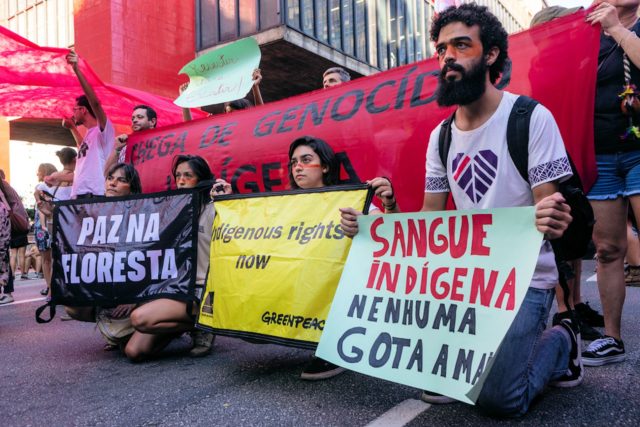
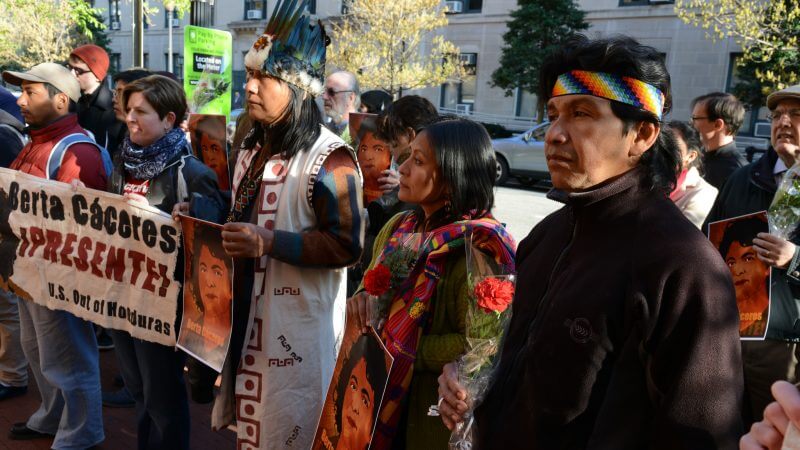
The violence that Ekuri environment and land defenders face isn’t uncommon. This week, Global Witness, an organization that investigates environmental and human rights abuses, released a new report documenting 146 cases of homicides and kidnappings of environmental and land defenders in 2024 — an average of three people killed or disappeared every week. The report’s authors say attacks occurred after speaking out or taking action to defend their lands, with many opposing mining, logging, and other extractive industries.
One-third of the collected incidents happened to Indigenous peoples, while Afro-descendants, people with ancestral ties to enslaved Africans, comprised two cases this year. Most Afro-descendants reside in South America, like Brazil, and are stewards of biodiverse land. Since the organization began tracking violence against land and environment defenders in 2012, there have been a total of 2,253 cases.
“All these years reporting on the realities of defenders across the world, highlight, to me, the disproportionate nature of the attacks that Indigenous peoples in particular, and Afro-descendants, are having to suffer year in and year out,” said Laura Furones, the report’s author.
According to the study, Colombia is considered the deadliest country for land and environment defenders with the highest number of lethal attacks at 48 cases, a third of the total, global amount. However, 80 percent of kidnapping and murder cases occurred in Latin America. Global Witness attributes the high rates of lethal violence to countries with weak state presence that enable corruption and unbalanced legal systems, making resource conflicts more deadly. In Asia, the Philippines saw the highest number of killings and disappearances, with most violence linked to government bodies.
It’s estimated that around 54 percent of the world’s critical mineral deposits needed for green energy and AI needs — cobalt, lithium, nickel, and copper — are located on or near Indigenous lands, often driving violence. “Amid rampant resource use, escalating environmental pressure, and a rapidly closing window to limit [global] warming to 1.5C, [industries] are treating land and environmental defenders like they are a major inconvenience instead of canaries in a coal mine about to explode,” said Rachel Cox, a senior campaigner at Global Witness.
In Nigeria, Egot says he hopes to restore the Ekuri Initiative and find ways to introduce more jobs to the region, including as eco-guards, as a way to curb logging in his community’s homelands.
“We are calling on international communities to continue to talk to our state, our government, because Nigeria signs to a whole lot of environmental treaties,” he said. “So these treaties that they sign into, do they actually respect these treaties? Do they follow up on these treaties?
Across the world right now, Indigenous peoples are facing a renewed assault on their lands, rights, and ways of life.
From extractive industries pushing deeper into ancestral territories, to governments rolling back hard-won protections,
the threat is global—and it is growing.
What makes this moment especially dangerous is how little attention it receives.
Stories like this are disappearing in real time. Mainstream media
barely covers it and the coverage is fragmented. The public is left without the context
needed to understand what is truly at stake.
That is exactly why IC Magazine exists..
For more than 20 years, IC has reported on Indigenous struggles worldwide — consistently, independently, and without compromise.
We don’t follow news cycles; we trace patterns. We don’t sensationalize; we provide context.
And when the world looks away, we stay focused.
But this work is increasingly difficult to sustain.
We refuse to lock our reporting behind a paywall. We don’t sell access through subscriptions.
And we don’t answer to advertisers. IC Magazine survives solely because readers like you choose to
support independent Indigenous journalism.
Please donate today if you can. Every contribution helps us to continue this crucial work.
Thank you,
John Ahni Schertow
Founder and Editor in Chief