Last Updated on April 10, 2025
http://www.youtube.com/watch?v=m0N-lDcq1PQ
A video report from Al Jazeera’s Faultlines, Dec 6, 2013.
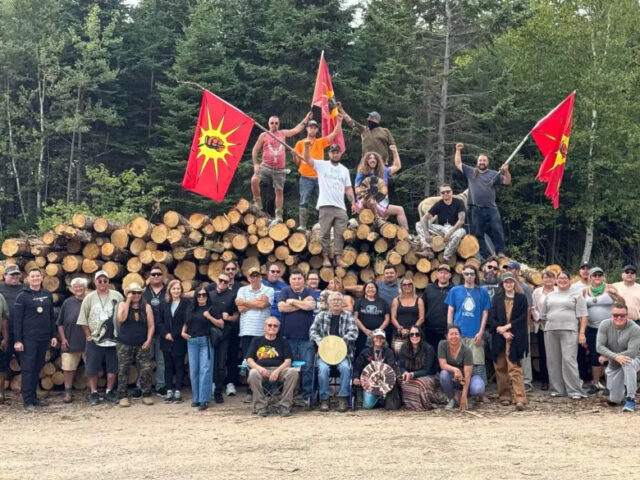
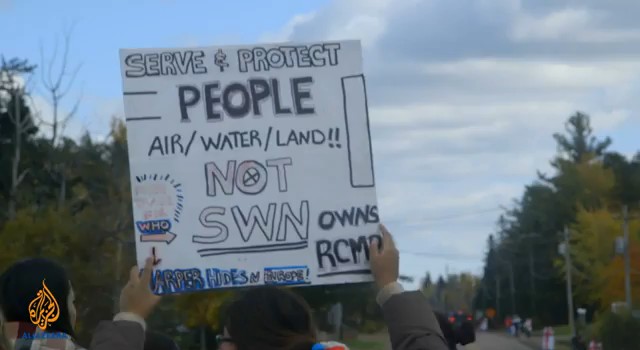
On October 17, the Royal Canadian Mounted Police raided a protest site set up by Mi’kmaq people and their supporters trying to prevent a Texas-based corporation from fracking.
The company had received rights to explore for shale gas by the province of New Brunswick.
The raid carried out by police, with dogs and automatic weapons, turned to chaos as residents of the Elsipogtog First Nation arrived to confront them. Police pepper sprayed the elders and fired sock rounds to control the crowd. Six police vehicles were set ablaze, and some 40 people were arrested.
It was the most spectacular eruption yet, of a struggle led by indigenous people to protect the land they say they have never ceded and water they consider sacred – a struggle that grew quietly for three years, and shows no sign of slowing down.
Fault Lines travelled to New Brunswick to ask why their fight caught fire, and find out what happens when Canada’s First Nations say no to resource extraction projects they oppose.
Across the world right now, Indigenous peoples are facing a renewed assault on their lands, rights, and ways of life.
From extractive industries pushing deeper into ancestral territories, to governments rolling back hard-won protections,
the threat is global—and it is growing.
What makes this moment especially dangerous is how little attention it receives.
Stories like this are disappearing in real time. Mainstream media
barely covers it and the coverage is fragmented. The public is left without the context
needed to understand what is truly at stake.
That is exactly why IC Magazine exists..
For more than 20 years, IC has reported on Indigenous struggles worldwide — consistently, independently, and without compromise.
We don’t follow news cycles; we trace patterns. We don’t sensationalize; we provide context.
And when the world looks away, we stay focused.
But this work is increasingly difficult to sustain.
We refuse to lock our reporting behind a paywall. We don’t sell access through subscriptions.
And we don’t answer to advertisers. IC Magazine survives solely because readers like you choose to
support independent Indigenous journalism.
Please donate today if you can. Every contribution helps us to continue this crucial work.
Thank you,
John Ahni Schertow
Founder and Editor in Chief