
Last Updated on May 18, 2019
Washington, DC – On the fifth anniversary of a deadly confrontation in Peru spurred by controversial policies enacted to comply with the U.S.-Peru Free Trade Agreement (FTA), Amazon Watch and Public Citizen expressed extreme concern over recently revealed U.S. diplomatic cables showing the U.S. government’s role in the violence that resulted in the deaths of at least 32 people.
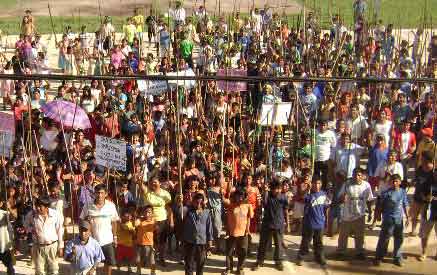
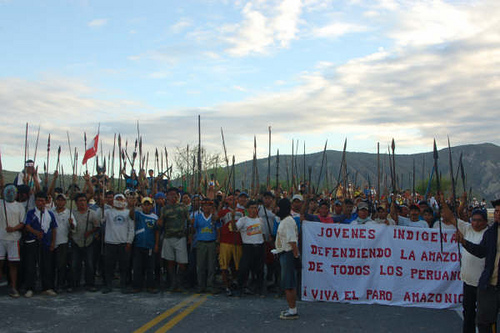
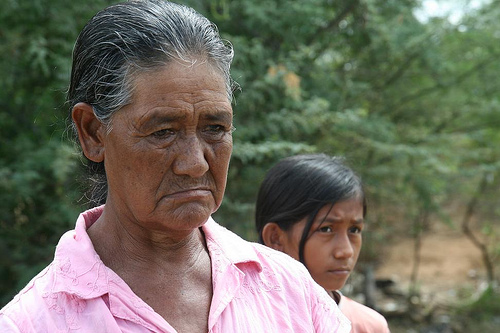
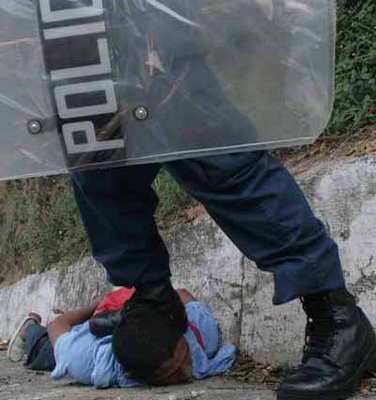
On June 5, 2009, Peruvian security forces attacked several thousand indigenous Awajun and Wambis protestors, including many women and children, who were blocking the “Devil’s Curve,” a jungle highway near Bagua, 600 miles north of Lima. The protestors were demanding revocation of decrees providing new access to exploit their Amazonian lands for oil, gas and logging that had been enacted to conform Peruvian law to FTA requirements.
“The Bagua massacre is emblematic of how so-called free trade agreements enable an environment in which governments trample the basic rights of grassroots communities while promoting the destruction of natural resources,” said Atossa Soltani, founder and executive director of Amazon Watch. “Instead of defending the constitutional rights of Peru’s indigenous peoples, the U.S. government apparently encouraged the Peruvian government to steamroll the people protecting their land from exploitation.”
Public Citizen received only heavily redacted diplomatic cables in response to a Freedom of Information Act request regarding the U.S. role in the 2009 Peruvian crisis over FTA implementation. But now WikiLeaks has published the full text of messages between the State Department and the embassy in Lima.
Four days before the killings, a cable addressed the growing indigenous protests, stating, “Should Congress and [Peruvian] President Garcia give in to the pressure, there would be implications for the recently implemented Peru-US Free Trade Agreement.” This mirrored public comment by Peruvian government officials who argued that acceding to indigenous demands to annul controversial new laws would doom the entire FTA.
U.S. officials argued that the Peruvian government was being too lenient by allowing the indigenous roadblocks to continue. “The government’s reluctance to use force to clear roads and blockades is contributing to the impression that the communities have broader support than they actually do,” the cable read.
On the day of the killings, the U.S. Embassy in Lima sought to justify the government’s actions, stating in another cable that the security forces in Bagua had “reluctantly chosen to enforce the rule of law.” Unacknowledged was the fact that the groups blocking the road at the “Devil’s Curve” had expressed their intention to demobilize on June 5 starting around midday. The Peruvian riot police went in that morning at the break of dawn.
In a letter sent on June 12, 2009, 15 nongovernmental organizations urged the Obama administration to speak out publicly against the violent repression and to state that repeal or reform of the controversial laws would not conflict with Peru’s obligations under the FTA. No public statement was issued.
What has become known as the “Amazon’s Tiananmen” brought the realities of the U.S.-Peru FTA into sharp relief. Rather than being a new trade agreement model, as it was sold, at the FTA’s heart were the same extreme investor rights that animated the North American Free Trade Agreement (NAFTA).
“The fifth anniversary of the Peru FTA Bagua massacre is a most appropriate time to reconsider the U.S. approach to the Trans-Pacific Partnership (TPP),” said Lori Wallach, director of Public Citizen’s Global Trade Watch. “The U.S.-Peru FTA makes clear even improved labor and environmental chapters cannot overcome the NAFTA-style investor protections at the core of the Peru FTA and now TPP.”
When Congress passed the U.S.-Peru FTA in late 2007, a majority of House Democrats opposed the deal. And no labor, environmental, consumer, family farm or faith group supported it. While Democratic House trade committee leaders had forced some improvements with respect to access to medicine and the FTA’s labor and environmental chapters, the pact included an expansion of NAFTA-style investor privileges.
The FTA’s foreign investor privileges were demonstrated when a U.S. firm pressured Peru’s government to reopen a smelter that had severely poisoned hundreds of children in La Oroya, Peru with lead – a story revealed in a Bloomberg exposé.
Now the Obama administration is pushing for inclusion of the same extreme foreign investor privileges in the TPP it is negotiating with Peru and 10 other Pacific Rim countries.
###
Media Contacts
Angela Bradbery: (202) 588-7741 or abradbery@citizen.org
Barbara Holzer: (202) 588-7716 or bholzer@citizen.org
Karilyn Gower: (202) 588-7779 or kgower@citizen.org
Across the world right now, Indigenous peoples are facing a renewed assault on their lands, rights, and ways of life.
From extractive industries pushing deeper into ancestral territories, to governments rolling back hard-won protections,
the threat is global—and it is growing.
What makes this moment especially dangerous is how little attention it receives.
Stories like this are disappearing in real time. Mainstream media
barely covers it and the coverage is fragmented. The public is left without the context
needed to understand what is truly at stake.
That is exactly why IC Magazine exists..
For more than 20 years, IC has reported on Indigenous struggles worldwide — consistently, independently, and without compromise.
We don’t follow news cycles; we trace patterns. We don’t sensationalize; we provide context.
And when the world looks away, we stay focused.
But this work is increasingly difficult to sustain.
We refuse to lock our reporting behind a paywall. We don’t sell access through subscriptions.
And we don’t answer to advertisers. IC Magazine survives solely because readers like you choose to
support independent Indigenous journalism.
Please donate today if you can. Every contribution helps us to continue this crucial work.
Thank you,
John Ahni Schertow
Founder and Editor in Chief