Last Updated on February 27, 2026
Traditional owners from the Pilbara region of Western Australia filed a $1.5 billion lawsuit this week against the Western Australian government, aiming to force long-overdue cleanup and compensation over deadly asbestos contamination that has scarred their Country for generations.
The Banjima Native Title Aboriginal Corporation lodged the claim Tuesday in the Federal Court in Melbourne, alleging that decades of inaction have left millions of tonnes of toxic blue asbestos on Aboriginal lands surrounding the former mining town of Wittenoom — a place now widely recognized as one of the most contaminated sites in the Southern Hemisphere.
“There is not one family that hasn’t been touched by this mesothelioma,” said Banjima traditional owner Johnnell Parker, highlighting the brutal human toll of asbestos exposure on her community. The statement echoes a 2016 Western Australia government report that found Banjima people have the world’s highest per-capita mesothelioma incidence, a disease almost exclusively caused by asbestos exposure.
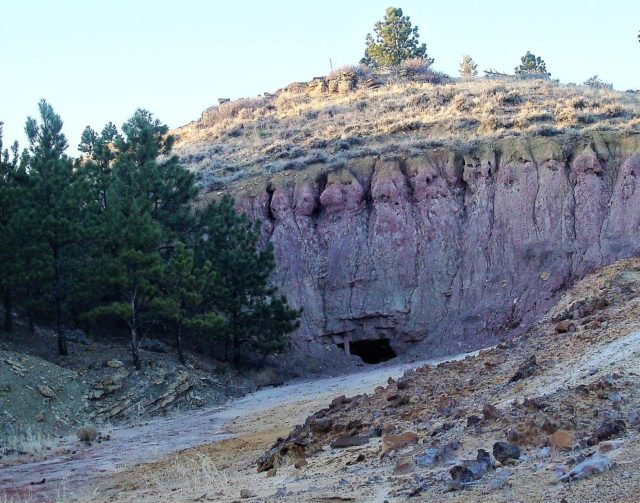
Asbestos tailings at Wittenoom gorge.
Blue asbestos, also known as crocidolite, was mined around Wittenoom from the late 1930s until the mid-1960s and was shipped worldwide before its dangers were widely understood. Though the town was closed in 1978 and later removed from maps, millions of tonnes of tailings laden with microscopic asbestos fibers still litter the landscape. Scientists and community leaders warn that these fibres continue to work their way into waterways and soil, risking further exposure.
The federal claim seeks court orders to seal three abandoned asbestos mines, dismantle contaminated infrastructure such as the Wittenoom racecourse and airport, and remediate polluted gorges and waterways that crisscross Banjima lands. Lawyers representing the group told the court those works could cost $1.5 billion, a figure that pales in comparison to the $70 billion in mining royalties the government earned from the Pilbara region just since 2016.
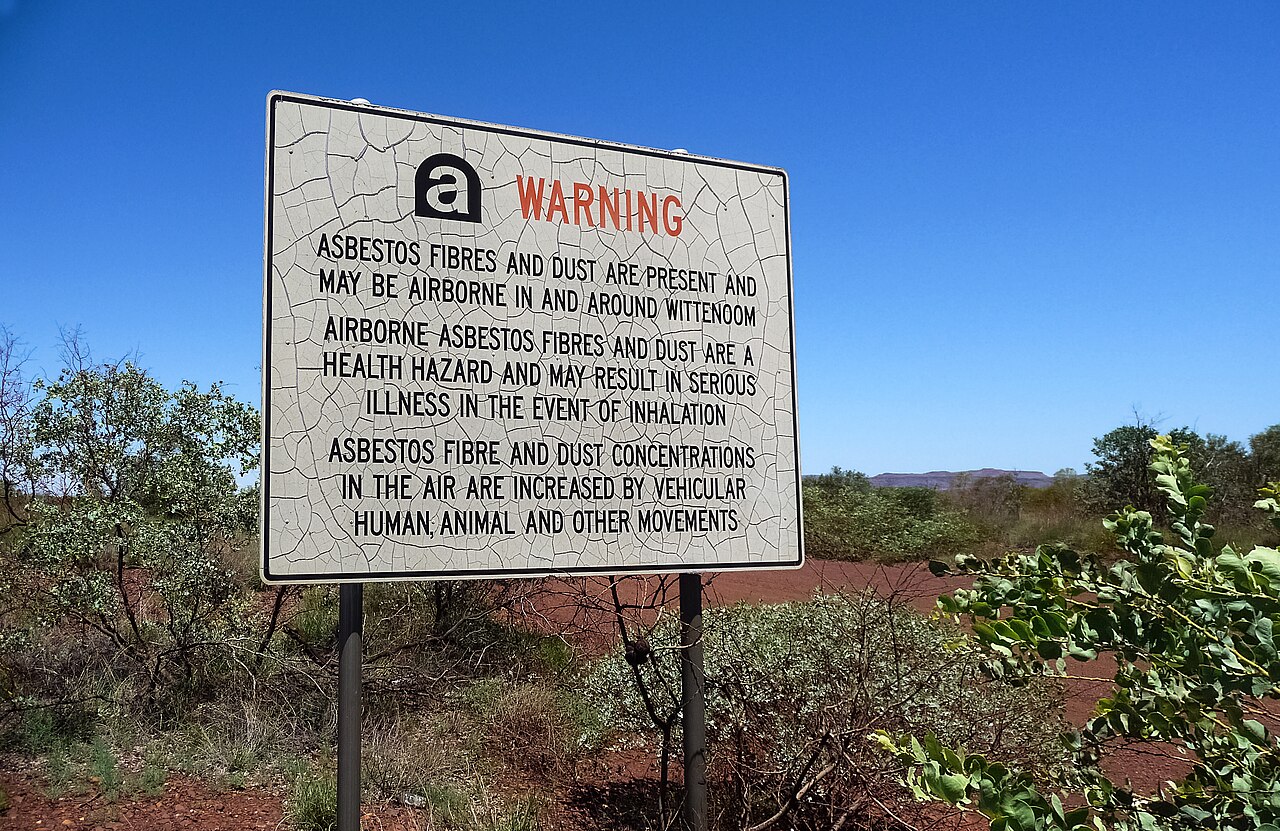
State government warning sign near the entrance to Wittenoom township in Western Australia. Photo: Five Years on Wikimedia (CC)
Banjima legal counsel argue the government has long refused to take responsibility for the asbestos waste — even after a 1992 parliamentary inquiry recommended its removal — and that the ongoing contamination has not only harmed community health but denied traditional owners meaningful access to their Country.
Western Australia Premier Roger Cook acknowledged the legal action and said he respects the Banjima people’s right to pursue justice, while reiterating the state’s preference for a negotiated solution. His office has not committed to funding a cleanup but says government lawyers will vigorously defend the claim.
Across the world right now, Indigenous peoples are facing a renewed assault on their lands, rights, and ways of life.
From extractive industries pushing deeper into ancestral territories, to governments rolling back hard-won protections,
the threat is global—and it is growing.
What makes this moment especially dangerous is how little attention it receives.
Stories like this are disappearing in real time. Mainstream media
barely covers it and the coverage is fragmented. The public is left without the context
needed to understand what is truly at stake.
That is exactly why IC Magazine exists..
For more than 20 years, IC has reported on Indigenous struggles worldwide — consistently, independently, and without compromise.
We don’t follow news cycles; we trace patterns. We don’t sensationalize; we provide context.
And when the world looks away, we stay focused.
But this work is increasingly difficult to sustain.
We refuse to lock our reporting behind a paywall. We don’t sell access through subscriptions.
And we don’t answer to advertisers. IC Magazine survives solely because readers like you choose to
support independent Indigenous journalism.
Please donate today if you can. Every contribution helps us to continue this crucial work.
Thank you,
John Ahni Schertow
Founder and Editor in Chief