
Last Updated on April 10, 2025
From June 20-24, 2011, The fifth meeting of the Conference of the Parties (COP5) to the “Rotterdam Convention on the Prior Informed Consent Procedure (PIC) for Certain Hazardous Chemicals and Pesticides in International Trade” will be taking place in Geneva, Switzerland.
The Rotterdam Convention was first established in 1998 in a global effort to monitor and control the trade of hazardous chemicals like DDT, Mercury compounds, Toxaphene and of course, Asbestos.
Canada, which is still a leading exporter of asbestos to developing countries like India, has repeatedly blocked the addition of Chrysotile Asbestos to the Rotterdam Convention, despite the fact that it is a well-known human carcinogen.
Canada’s manoeuvring against the Convention wreaks of nepotism, especially now that Harper’s in office. By all appearances, Harper is a close personal friend of Bernard Coulombe, the CEO of Jeffrey Mine Inc. the company that runs the largest open-pit asbestos mine in the world. In the lead up to Canada’s election, Stephen Harper–with Coulombe by his side–defended the asbestos industry and proclaimed that he will always support it.
Just a few weeks after that repulsive move, the Quebec government announced that it would be giving Coulombe’s company a $58-million bail-out loan to keep the Jeffrey Mine alive. The company declared bankruptcy years ago.
Both Canada and the Province of Quebec should be letting the industry die out. But instead they’re running to the rescue of a man who claims that people in India just aren’t effected by asbestos like you and me. The reason? According to Coulombe it’s because “they’re used to pollution… It’s like they have a natural antibiotic,” he said.
Since 1960, India has incorporated about 7 million tonnes of asbestos into its buildings.
The majority of workers in India who handle asbestos, don’t get to use any protective gear.
An estimated 30 people in India die every day from what has been termed India’s “asbestos cancer pandemic”.
In light of these and other facts about asbestos, hundreds of health advocates and a surge of organizations are urging Canada to finally ban asbestos.
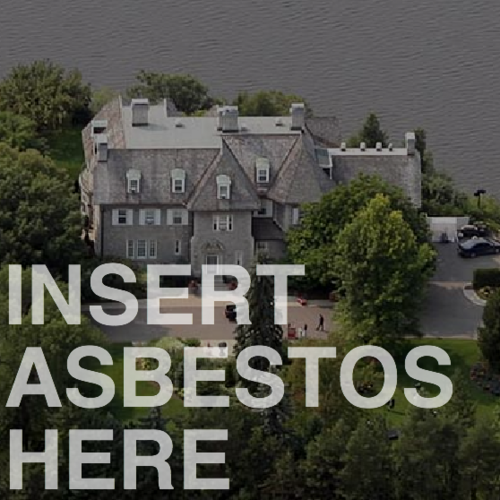
TRUTHFOOL Communications is taking the plea one step further with their online media campaign. They want Canada to ban asbestos, too. But if Canada won’t do it, then they should put it back into the Parliament and the Prime Minister’s own home. If Canada’s such a human-rights champion, than it’s the right thing to do.
Sign the petition at www.CanadaCausesCancer.com
For more information, visit www.rightoncanada.ca and banasbestosindia.blogspot.com
Related News:
The Province: June 21, 2011, Harper is using taxpayer cash for asbestos exports
Montreal Gazette: June 14, 2011, NDP, health experts slam export of asbestos as ‘disgrace’
Calgary Herald: June 14, 2011, Canada can’t defend shipping asbestos to Third World while banning it at home
Canadian Press: June 14, 2011, Groups Ask Harper to put global health ahead of interests of asbestos lobby”
Gazette Quebec Bureau: June 14, 2011, UN body aims to regulate asbestos.
CBC News: June 13, 2011, “Health Canada’s asbestos advice rejected by government”
Marketwire: June 13, 2011, “Georgetti Praises ILO Decision on Canada and Asbestos”
Vancouver Sun: June 8, 2011, “European Parliament slams Canada’s oilsands, asbestos, sealing industries”
Across the world right now, Indigenous peoples are facing a renewed assault on their lands, rights, and ways of life.
From extractive industries pushing deeper into ancestral territories, to governments rolling back hard-won protections,
the threat is global—and it is growing.
What makes this moment especially dangerous is how little attention it receives.
Stories like this are disappearing in real time. Mainstream media
barely covers it and the coverage is fragmented. The public is left without the context
needed to understand what is truly at stake.
That is exactly why IC Magazine exists..
For more than 20 years, IC has reported on Indigenous struggles worldwide — consistently, independently, and without compromise.
We don’t follow news cycles; we trace patterns. We don’t sensationalize; we provide context.
And when the world looks away, we stay focused.
But this work is increasingly difficult to sustain.
We refuse to lock our reporting behind a paywall. We don’t sell access through subscriptions.
And we don’t answer to advertisers. IC Magazine survives solely because readers like you choose to
support independent Indigenous journalism.
Please donate today if you can. Every contribution helps us to continue this crucial work.
Thank you,
John Ahni Schertow
Founder and Editor in Chief