
Last Updated on July 31, 2025
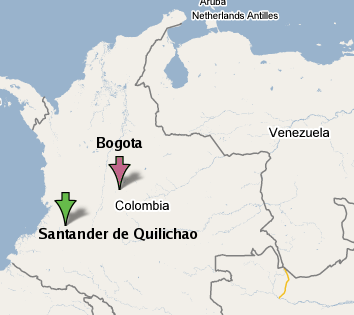
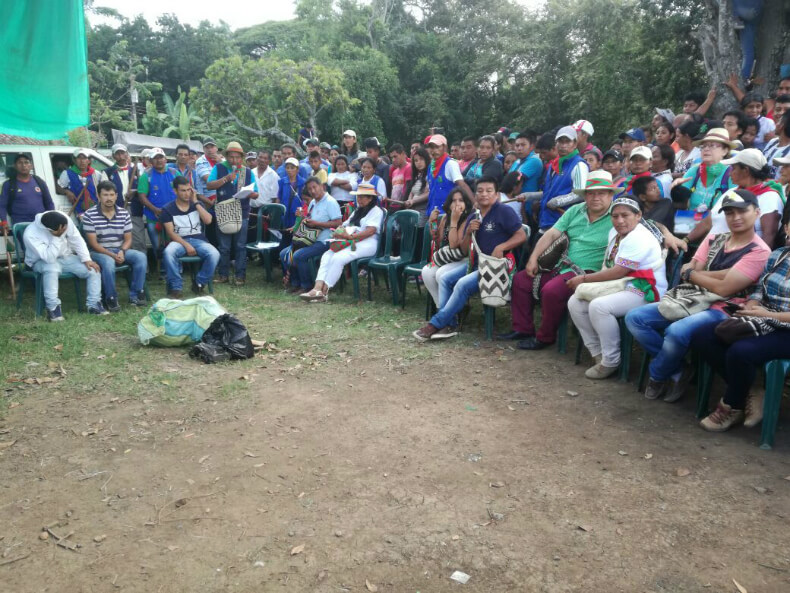
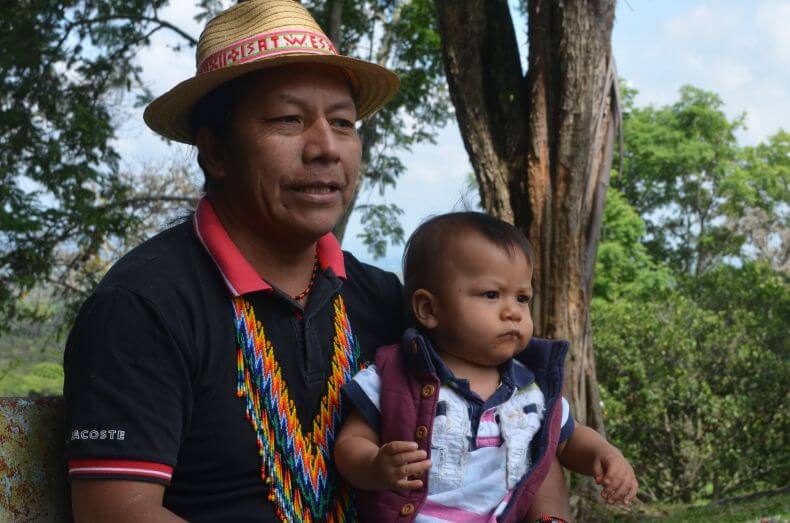
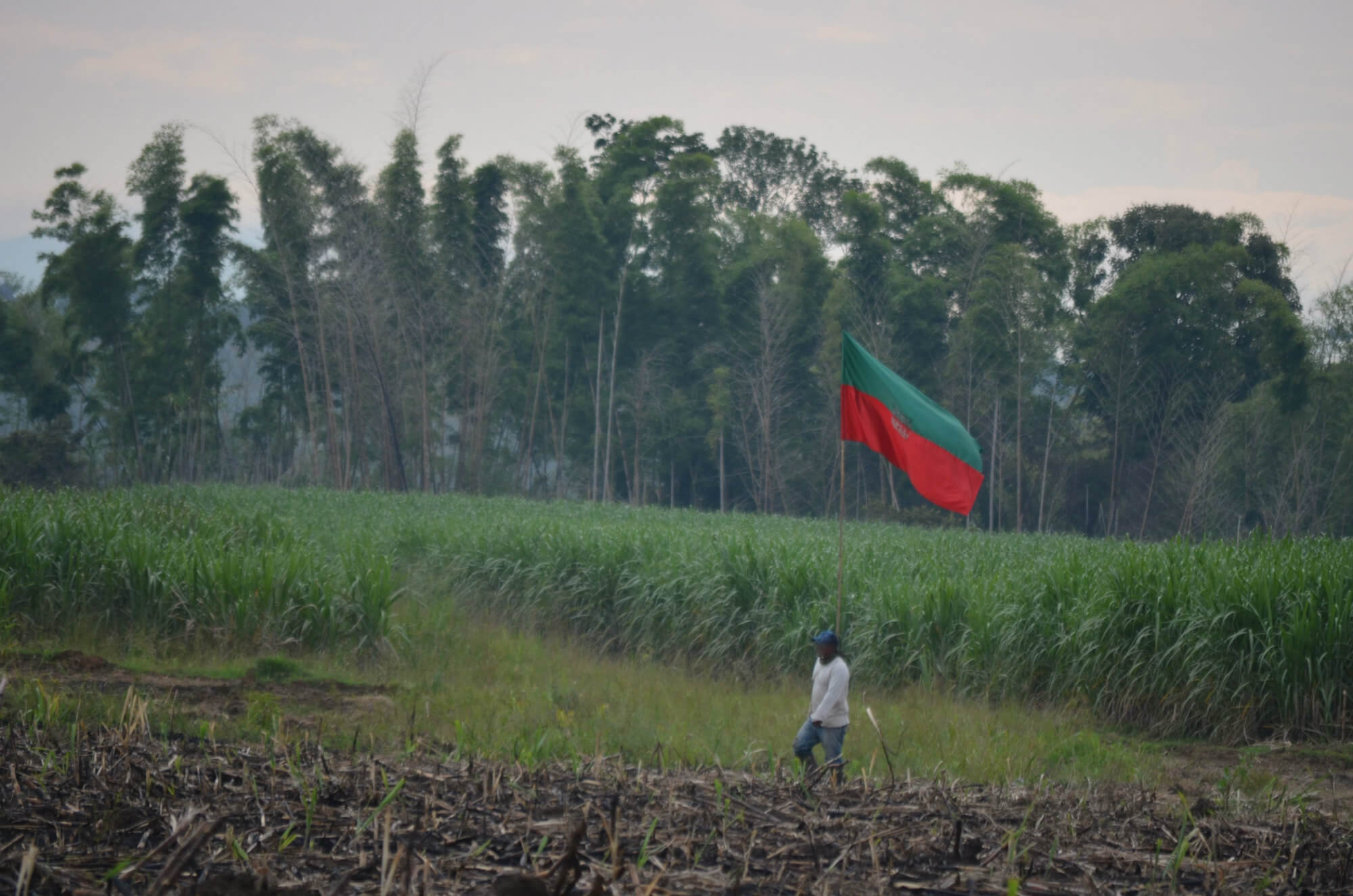
“We protect the natural riches in this territory,” says Gilberto Yonda, a member of the Nasa community at the San Rafael Indigenous resguardo in Putumayo, Colombia. Yonda describes himself as a water protector.
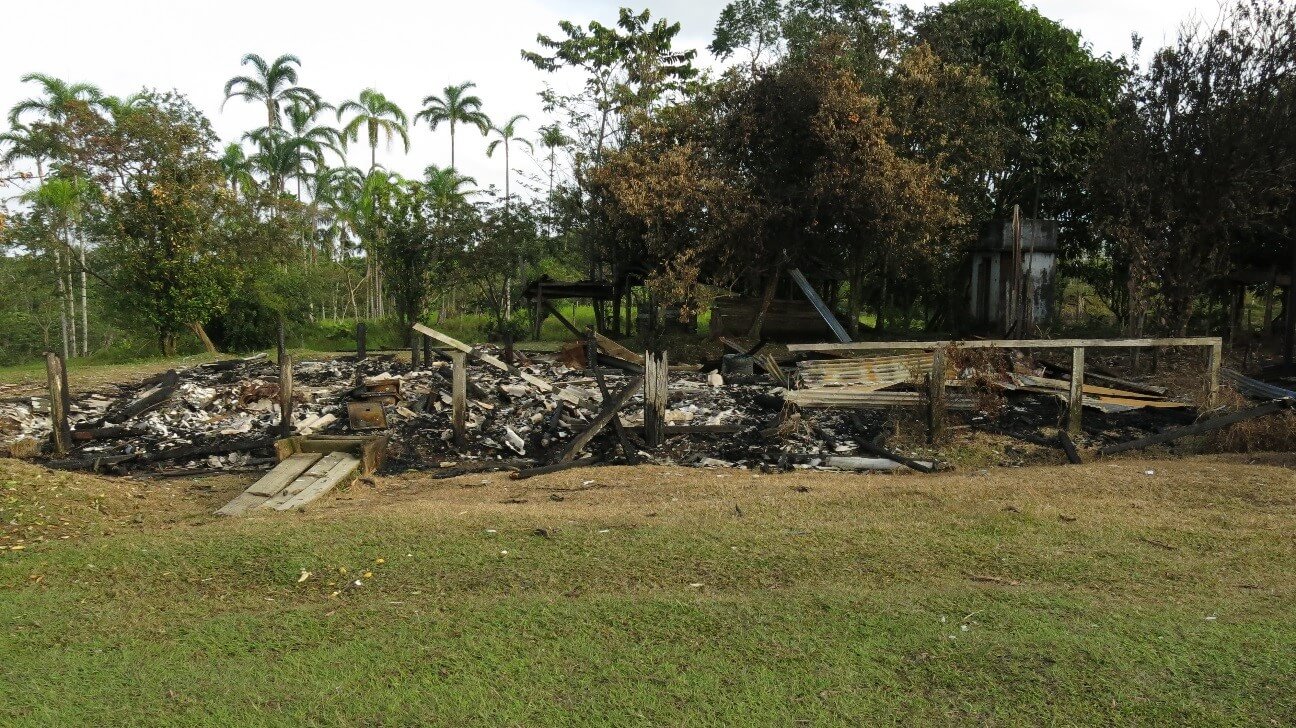
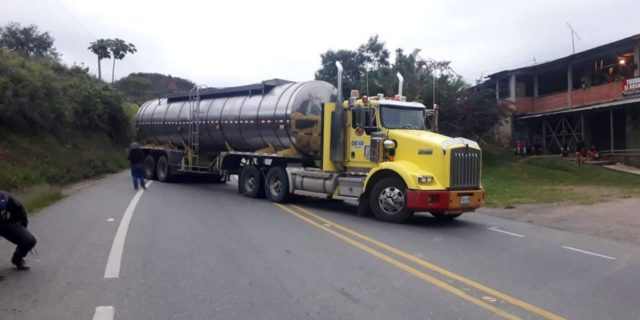
In Putumayo, oil spills from destructive extraction projects have damaged the water in his lands before. Now his community is organizing new resistance against an old foe: Canadian oil companies who want to expand production in his homelands.
Last year, the Canadian oil company Gran Tierra Energy announced the discovery of significant reserves in two regions of Putumayo where the company has been conducting exploration operations. As a result, Gran Tierra has announced new investments and expansions of their activities in the department. The exploration blocs stretch into Indigenous reserve areas and the traditional and ancestral lands of several non-titled Indigenous reservations.
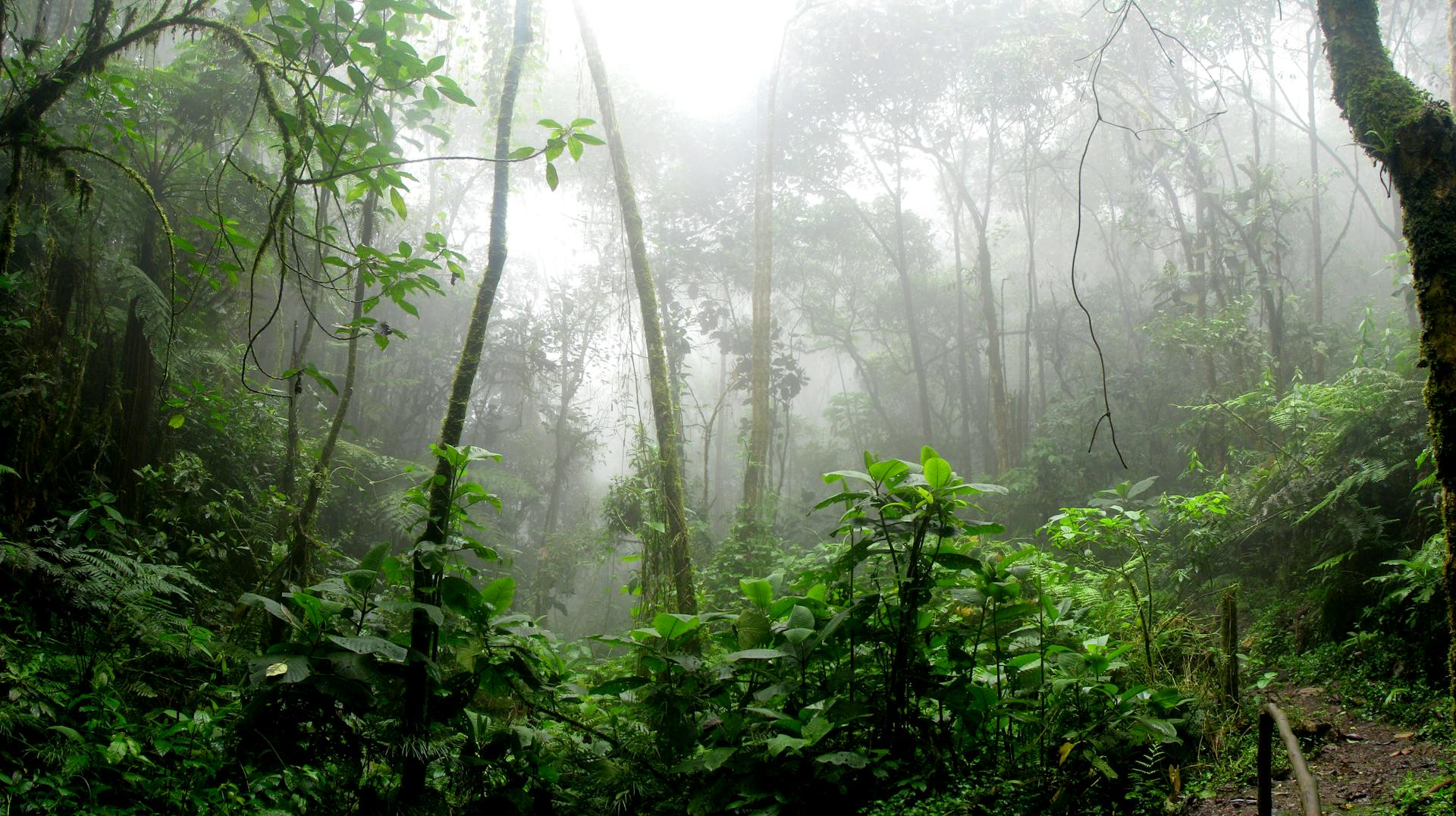
Activists among affected communities in the region have demanded a halt to Gran Tierra’s activities, which threaten delicate ecosystems in the Amazon Rainforest and exacerbate conflict in their homelands. Yet their appeals to the national government for formal meetings and a pledge to halt extractive activity in their lands have, according to activists, fallen on deaf ears.
Gustavo Petro, the first leftist to hold the presidency in the country in modern history, has made environmental regulation and investment in clean energy two of the main talking points of his presidency. But much to their disappointment, land defenders like Yolanda are learning that there are political and economic limits to stopping lucrative oil extraction projects —even in Colombia’s delicate rainforests.
Gran Tierra Energy has operated in the tropical rainforests of Putumayo, in the Colombian-Ecuadorian borderlands, for decades. The name of the company has changed often as part of mergers, acquisitions, or rebranding efforts—often in response to public scandals, court rulings, or broken promises to the communities who live there.
This legacy of scandals and broken promises have led Indigenous communities to mount fierce resistance to the company’s projects in the region. Between 2015 and 2022, the Inga community fought to remove the Canadian oil giant from lands they have possessed for thousands of years. They organized sustained and large protests against the ecological and social damage caused by Gran Tierra — including two massive oil spills on Indigenous lands.
After more than six years of legal and social battles, Gran Tierra eventually withdrew the project—a decision the Inga celebrated as a major victory. This history of successful struggle against extractive industry in Putumayo inspires Nasa activists today, who hope to achieve a similar outcome. Nonetheless, as the country’s armed conflict has deepened, the stakes of resistance have only become more intense.
Indeed, companies like Gran Tierra do more than despoil the environment and fail to keep their promises of development. They also partner with armed groups to silence opposition and drive divides in the very social fabrics of vulnerable Indigenous communities in the regions they operate.
“We don’t really understand exactly what the link is between armed groups and oil companies, or if the link is even direct,” said Luis Ulcué, an Indigenous leader in the nearby municipality of Macoa. “But when these oil projects arrive, armed actors often follow, and their presence makes people scared to speak out.”
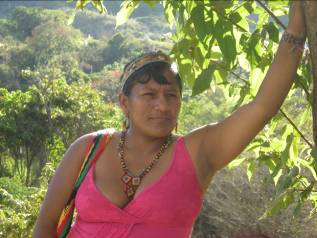
“We’ve lost so many strong leaders over the years,” said one resident of an Indigenous Nasa community, who asked that her name be withheld for security reasons. “Here it is a crime to defend our culture. It is a crime to defend nature.”
Colombia has long ranked among the most dangerous countries in the world for environmental activists and land-defenders, according to human rights watchdog group Global Witness. More than 450 have been killed since 2012, a number that accounts for nearly 40 percent of the total number of land defenders killed globally. According to a 2024 report by Ambiente y Sociedad, an NGO that advocates for environmental regulations in Colombia, the presence of armed groups in Putumayo is intrinsically linked to the oil industry.
The effective hegemonic criminal power in the region is currently Comandos de la Frontera, an organization that evolved from an alliance between two dissident fronts of the Revolutionary Armed Forces of Colombia (FARC). After rejecting the rebel group’s historic 2016 peace deal, the Comandos forged alliances with some of the same right-wing paramilitary structures they fought against during the civil war, and quickly became the strongest criminal power in Putumayo. They use the region for coca production, extortion, smuggling across the Ecuadorian and Peruvian borders, and illegal mining. They also act as private security for pipelines and oil and gas exploration fields, demanding protection money in return for the service, according to the same Ambiente y Sociedad report.
Groups like the Comandos have strong motives to eliminate resistance to oil projects in the regions they control. They often use threats to silence community leaders who oppose oil projects—and when that doesn’t work, violence or even murder. Colombia’s ombudsman’s office has stated that Gran Tierra’s operations in Putumayo have indirectly acted as a magnet for criminal activity by armed groups like Comandos de la Frontera.
But much to the disappointment of local community members, government reports on the destabilizing effects of the oil industry have failed to translate into government action to offer redress. As the Nasa engage in a fight they consider existential, their petitions to Bogotá have encountered little but procedural delay.
Historically, the state has acted as ally and facilitator of international mining operations—activities they view as critical economic development and a source of foreign investment. On the campaign trail, Petro promised to break this historical cycle.
One of his first actions after assuming office in 2022 was to suspend the granting of new oil exploration licenses. Environmental activists praised the decision, but Petro faced intense domestic and international criticism from pro-business sectors. The production and exportation of petroleum products account for a majority of government funding in the country.
Later that same year, Colombia signed the international Escazu Agreement, a legally binding treaty that is designed to facilitate more transparent decision-making around issues that affect the environment, such as mining or oil extraction projects. The accord is also intended to offer protection to social leaders and environmental activists, as well as grant Indigenous communities more autonomy in decisions over extraction projects that impact their lands.
But implementation of the Escazu Agreement has been slow, and for many communities, promises of autonomy have failed to arrive.
“Escazú is a step forward,” said María Arango Zambrano, a lawyer for the Forest Peoples Programme, an NGO that advocates for environmental protection. “But it has not led to significant improvement in the daily struggles for environmental rights and access to information, especially in the face of new mineral industries [that extract metals necessary] for a clean energy transition.”
In addition to the Escazu Agreement’s flawed implementation, companies have found ways to undermine resistance to oil projects via “tactics to divide communities, delegitimize social processes, and evade the right to consultation and prior informed consent,” said Arango. Sometimes they are able to do so “thanks to permissions granted by the Ministry of the Interior, which has denied the existence or affectation of Indigenous peoples in areas of exploitation.”
In a statement released shortly after Colombia’s Constitutional Court ratified the agreement in 2024, the Ministry of the Environment announced that they are working with affected communities to create “strategic routes,” including “workshops, socialization tables and the creation of a protocol to react to risk and aggression against environmental defenders.”
But obstacles remain. A lack of state presence in regions that have been plagued by the country’s long-running armed conflict, like Putumayo, has made guaranteeing the security of Indigenous communities impossible.
Furthermore, companies that offer substantial investment and promises of economic development can undermine the goals of the Escazu Agreement by sowing division within communities themselves. In the San Rafael resguardo, members of the Nasa community report that Gran Tierra has managed to persuade some residents to support the project with promises of development projects, and other who oppose oil exploration have been threatened into silence by armed groups.
“Sometimes they promise communities schools or new roads,” said Juan Pilcué Cuni, a Nasa resident of San Rafael. “Other times, they simply try to buy us. There is enormous pressure to let these projects proceed. They generate income for both the state and armed groups.”
Arango says the ratification of the Escazu agreement is certainly progress, but “in many ways it is still a symbolic rather than a concrete victory for Indigenous peoples. Implementation is still being developed.”
The Petro administration has launched investments in clean energy through state-owned oil company Ecopetrol, but many Indigenous residents in Putumayo say the current government, much like administrations before it, has prioritized development in urban centers and neglected rural regions, particularly those plagued by conflict.
Some community members interviewed for this article feel that Petro, with less than a year remaining in office, has used his political capital to push other policies, such as a hard-fought struggle to implement labor reforms. They feel that Indigenous and environmental issues are being left behind as the country once again approaches elections in 2026.
Activists in Putumayo have called for legislation to protect their communities from future extraction and oil infrastructure projects. They have also called for a “Minga,” a form of collective protest common in Colombia and organized by multiple Indigenous communities in alliance to demand increased autonomy over their own lands.
As part of those efforts, representatives from 10 Indigenous communities recently travelled to Bogotá to raise awareness of the devastating effects extractive projects have had on their lands and communities.
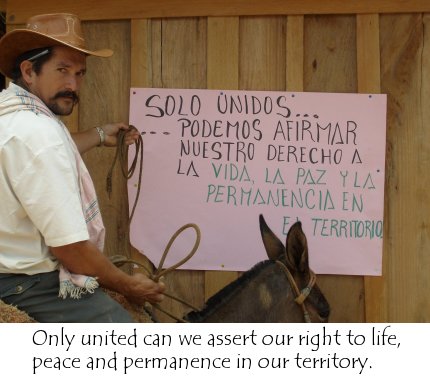
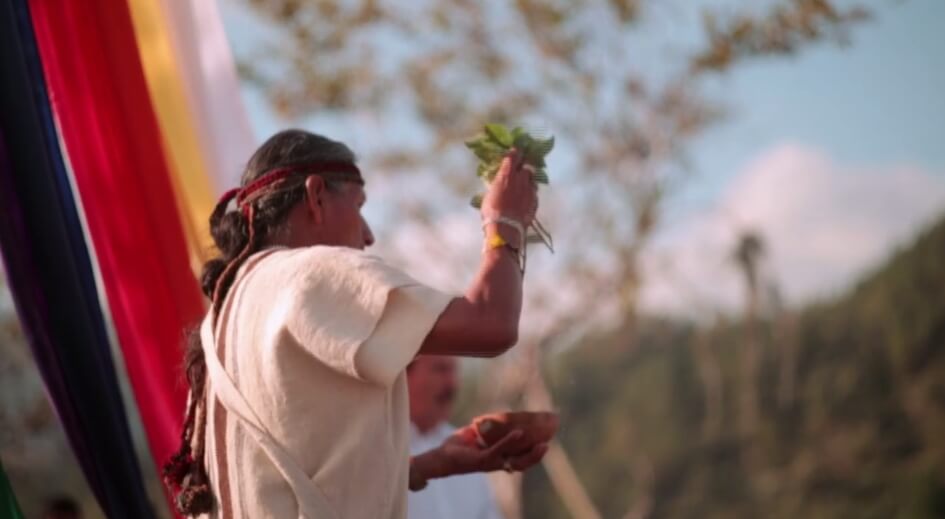
“This territory, to us, is the most sacred thing that exists,” said Jose Rolfo Pilcué, another San Rafael resident. “This is our culture. This is where we grow our ancestral medicines. The territory is our life… But more than just for us, this fight is for the world. These [rainforests] must be protected.”
Daniela Díaz is a journalist in Mexico focused on implementation of peace and women’s issues. She has been published at VICE World News, World Politics Review, and a host of Colombian media companies.
Joshua Collins is a freelance reporter in Colombia focused on civil rights, migration, and the impact of crime upon human rights.
This article was originally published at NACLA. It has been re-published at IC Magazine with permission.
Across the world right now, Indigenous peoples are facing a renewed assault on their lands, rights, and ways of life.
From extractive industries pushing deeper into ancestral territories, to governments rolling back hard-won protections,
the threat is global—and it is growing.
What makes this moment especially dangerous is how little attention it receives.
Stories like this are disappearing in real time. Mainstream media
barely covers it and the coverage is fragmented. The public is left without the context
needed to understand what is truly at stake.
That is exactly why IC Magazine exists..
For more than 20 years, IC has reported on Indigenous struggles worldwide — consistently, independently, and without compromise.
We don’t follow news cycles; we trace patterns. We don’t sensationalize; we provide context.
And when the world looks away, we stay focused.
But this work is increasingly difficult to sustain.
We refuse to lock our reporting behind a paywall. We don’t sell access through subscriptions.
And we don’t answer to advertisers. IC Magazine survives solely because readers like you choose to
support independent Indigenous journalism.
Please donate today if you can. Every contribution helps us to continue this crucial work.
Thank you,
John Ahni Schertow
Founder and Editor in Chief