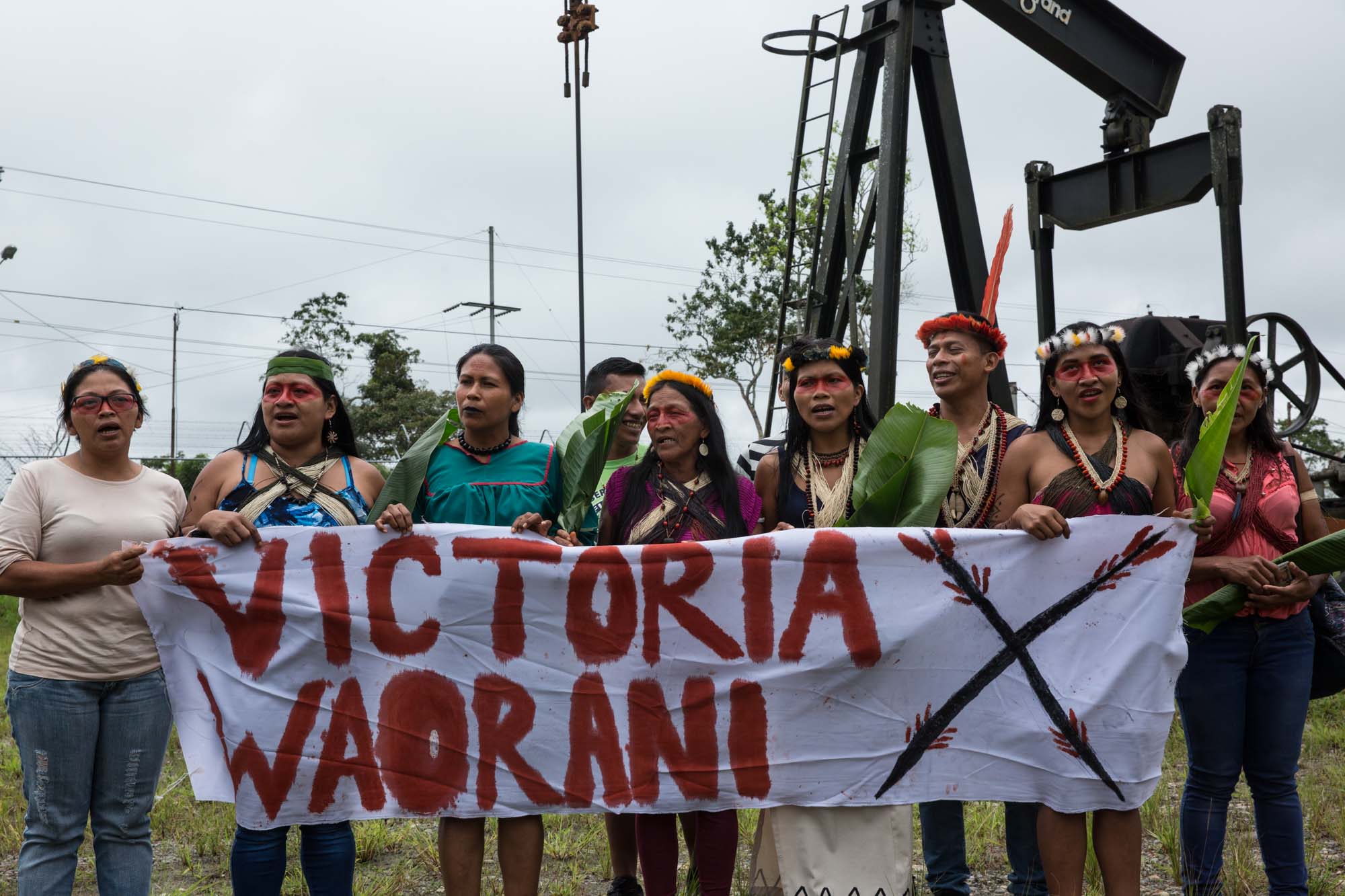
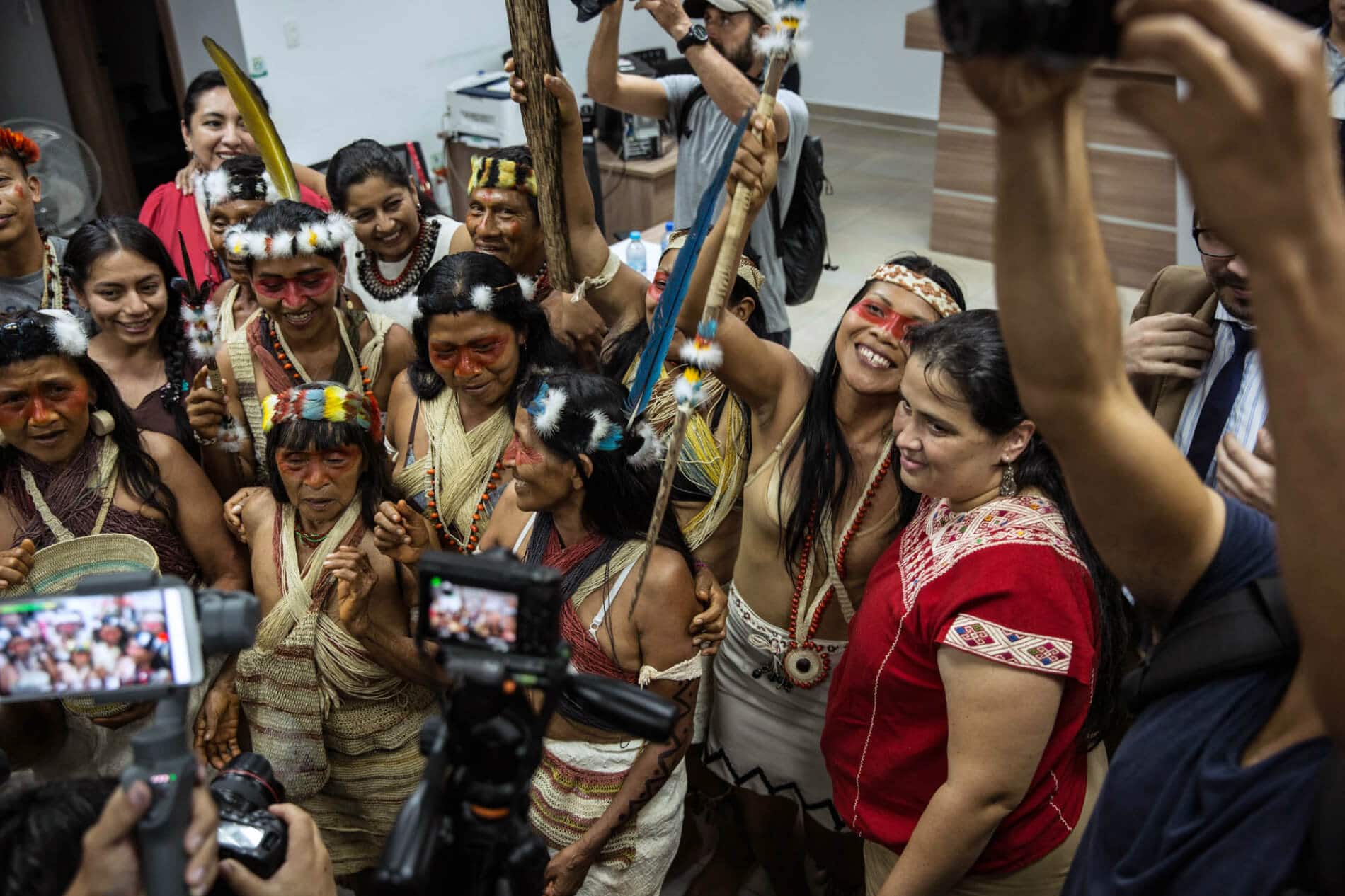
The Waorani are an Indigenous nation whose ancestral lands lie deep within the Amazon rainforest of eastern Ecuador. Known for their expert knowledge of the jungle, intricate use of medicinal plants, and traditional hunting practices using blowguns and spears, the Waorani have lived in close harmony with one of the most biodiverse ecosystems on Earth. Their language, Wao Tededo, and spiritual worldview are intimately tied to the rivers, trees, and animals of their territory. For the Waorani, the forest is not just a home but a sacred living entity, interwoven with ancestral wisdom and survival.
The Waorani face significant challenges from oil extraction and infrastructure development imposed on their territory without free, prior, and informed consent. These activities have led to deforestation, pollution of waterways, and social fragmentation. Despite legal victories, such as a landmark 2019 court ruling that blocked oil drilling in a portion of their land, threats persist from expanding concessions and political pressure. The intrusion of outside influences also brings risks of cultural erosion, as younger generations navigate between ancestral traditions and a rapidly modernizing world. Ongoing battles for land demarcation and recognition continue to define their resistance.
What is profoundly uplifting about the Waorani is their fierce defense of the Amazon and their model of Indigenous leadership. Women have taken center stage in advocacy, bridging traditional roles with global platforms to speak out against environmental destruction. Community-led mapping projects, eco-tourism initiatives, and alliances with global environmental movements have amplified their voice and visibility. The Waorani are not only fighting for their land but for the health of the entire planet. Their courage, innovation, and unwavering connection to the forest serve as a powerful symbol of Indigenous resistance and ecological stewardship in the face of modern threats.