
Last Updated on July 13, 2019
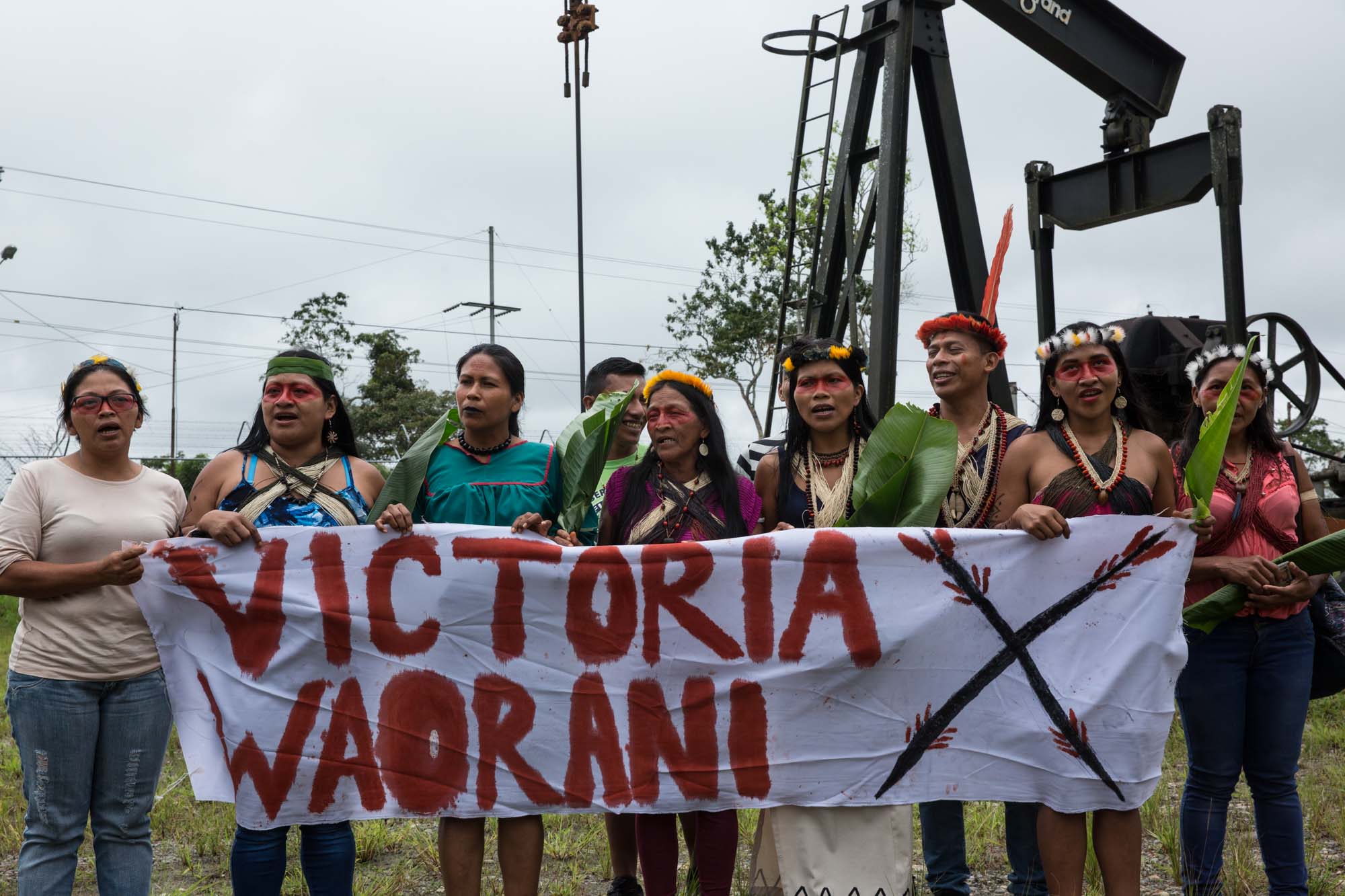
After a hard-fought appeal, the Waorani people of Pastaza won a historic and final appellate ruling in Ecuadorian court protecting half a million acres of their territory in the Amazon rainforest from being earmarked for oil drilling. The decision by the three-judge panel of the Pastaza Provincial Court permanently voids the consultation process with the Waorani undertaken by the Ecuadorian government in 2012, indefinitely suspending the auctioning of their lands to oil companies. The now final verdict also jeopardizes the contemplated auctioning of 16 oil blocks that cover over 7 million acres of indigenous territory by providing an invaluable legal precedent for other indigenous nations across the Ecuadorian Amazon.
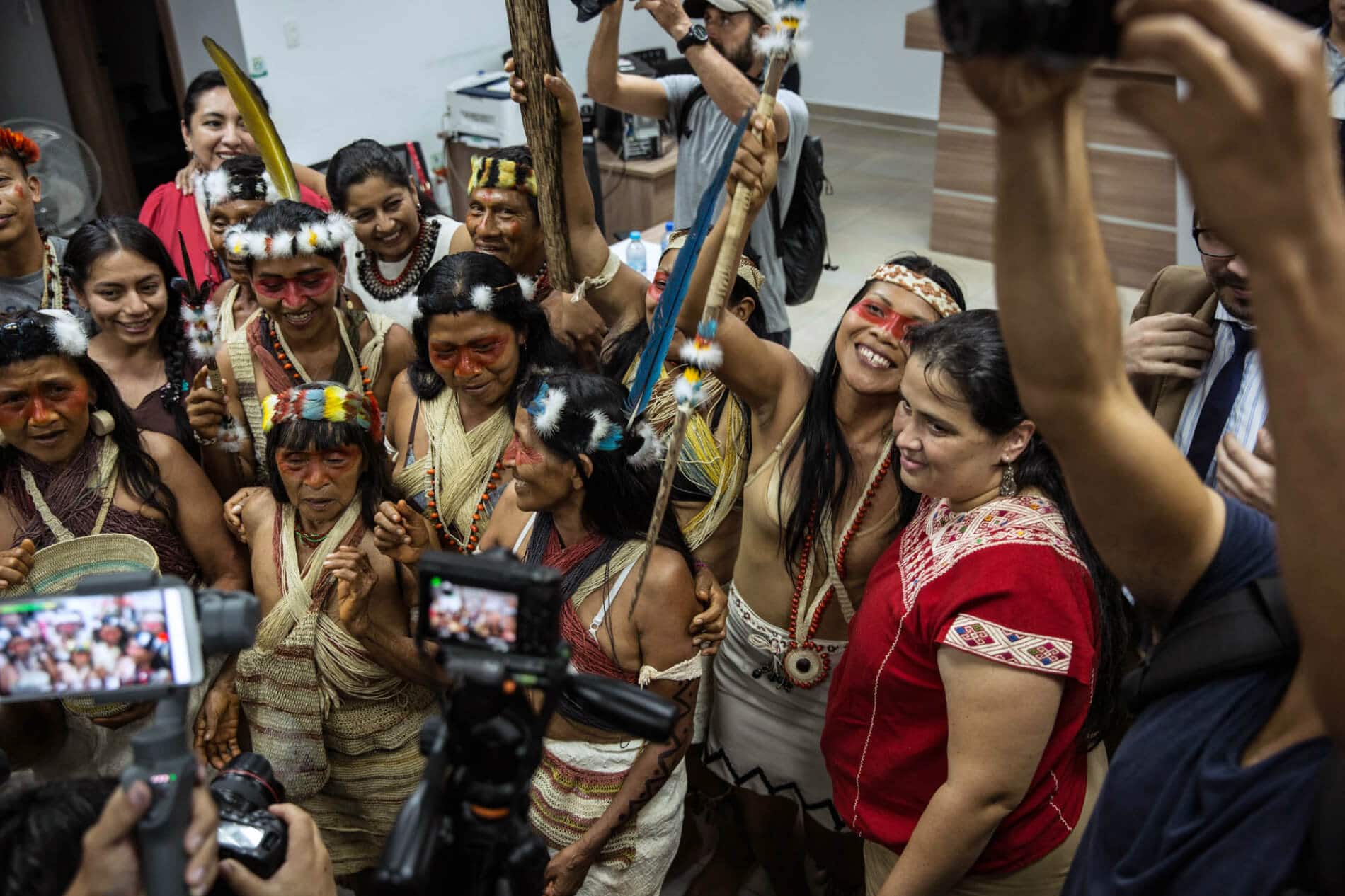
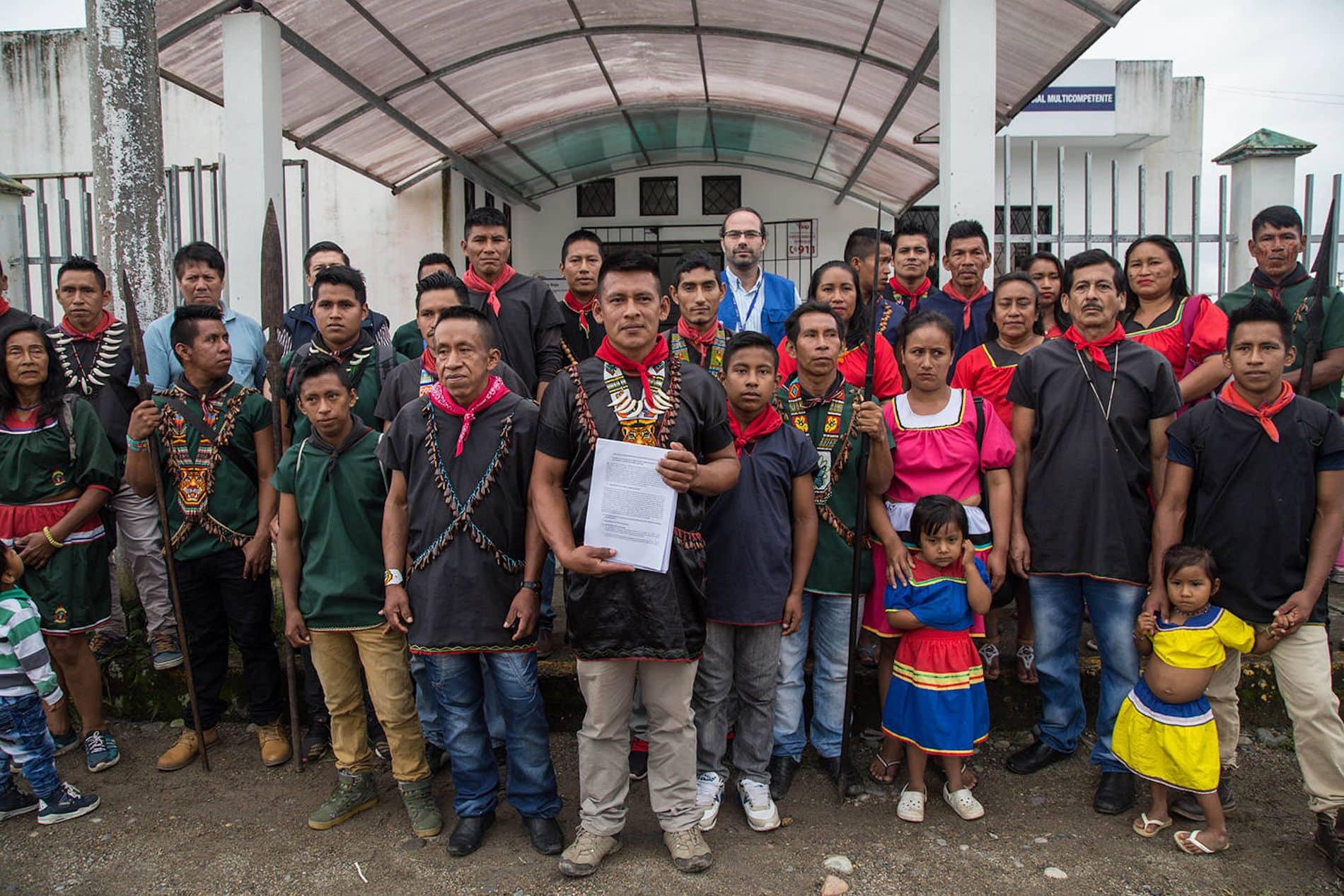
“This victory is for my ancestors. It’s for our forest and future generations. And it’s for the whole world,” said Nemonte Nenquimo, President of the Waorani Pastaza Organization (CONCONAWEP) and plaintiff in the lawsuit. “We have shown that life is more important than oil and that united we can protect our way of life, the Amazon rainforest, and our planet from destruction.”
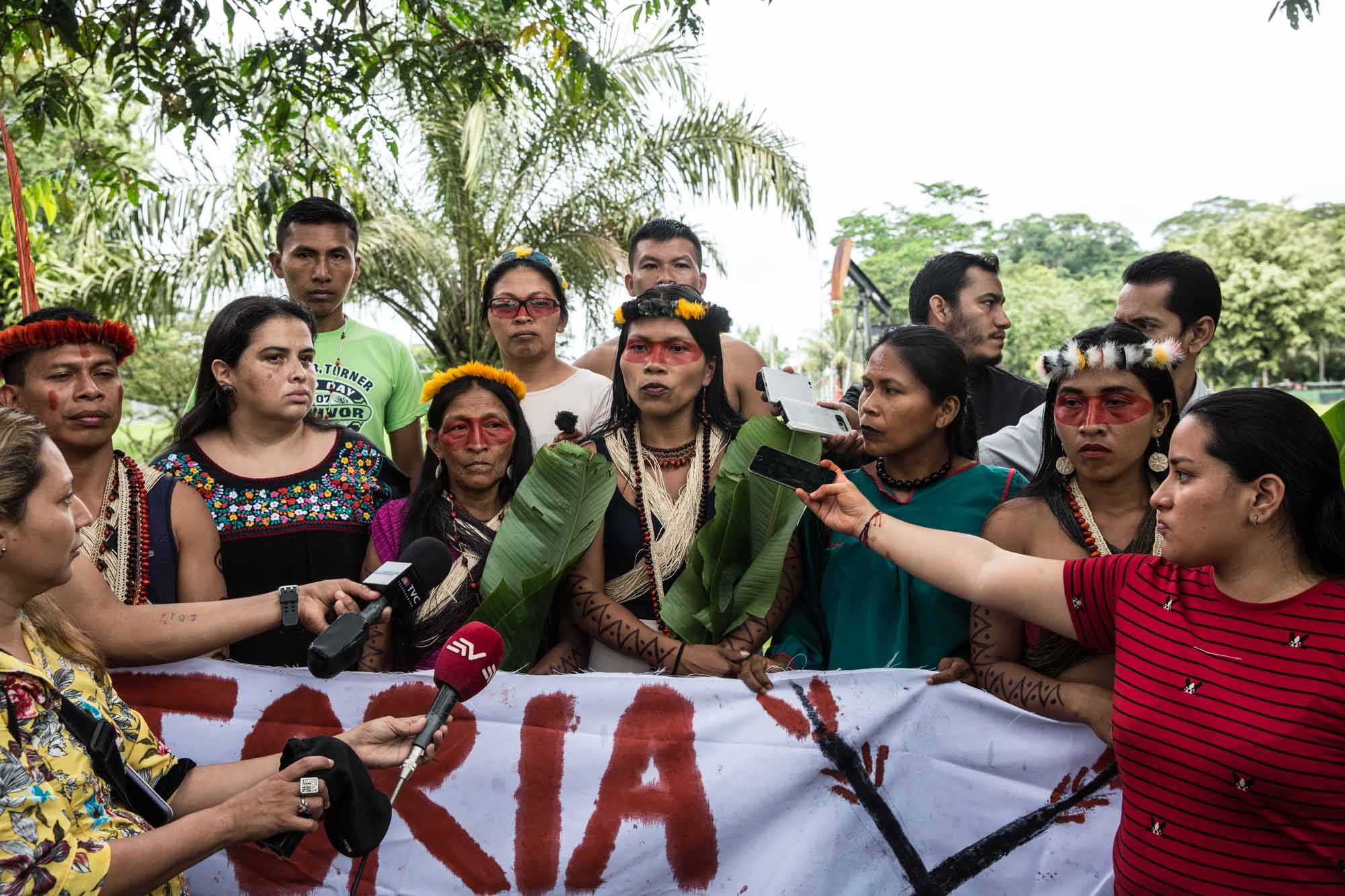
“This victory is for my ancestors. It’s for our forest and future generations. And it’s for the whole world,” said Nemonte Nenquimo (center). Photo: Amazon Frontlines
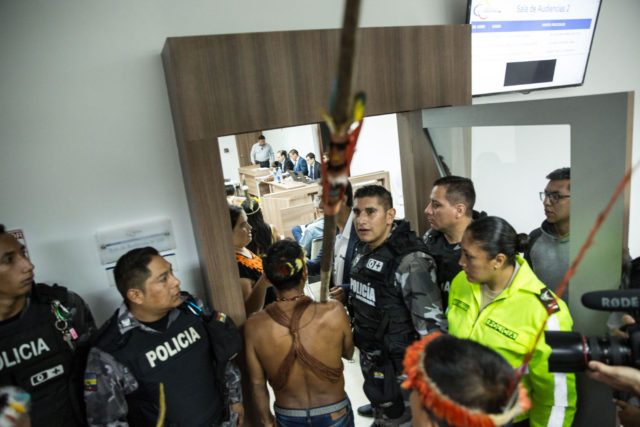
After a contentious appellate hearing and public pressure by the Ministry of Energy and Non-renewable Resources and the Ministry of the Environment to reverse the lower-court’s ruling and permit the government’s oil auction to move forward in Waorani territory, the decision on appeals represents a major setback for the Ecuadorian Government, and marks a watershed moment in the indigenous movement to permanently protect their rainforest from oil drilling, and other extractive projects. The panel of judges ratified the ruling, forcing the Ecuadorian government to repeat the prior consultation process according to the standards of international law and the Constitutional Court of Ecuador in order to initiate any future oil activities. Additionally, the sentence orders the Ministry of Energy and Non-renewable Resources and the Ministry of the Environment to sufficiently train government officials regarding the right to free, prior and informed consultation and self-determination before sending them out into the field. The appellate court also expanded the ruling by demanding an investigation into the actions by government officials involved in the unlawful prior consultation process.
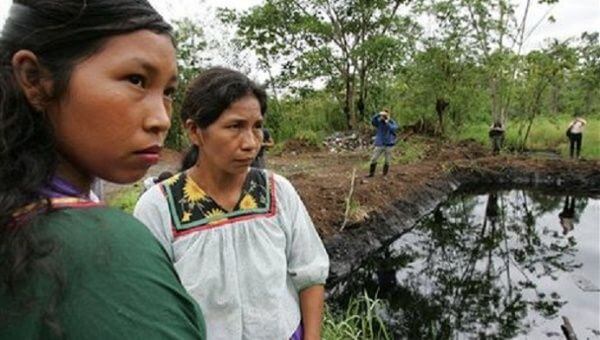
The Waorani people’s lawsuit has emerged as a flashpoint in the South American country, highlighting the stark gap between the Ecuadorian government’s thirst for oil revenues to relieve international debt and indigenous peoples’ internationally recognized rights to free, prior and informed consent, self-determination, collective territory and the rights of nature. Amidst the backdrop of decades of contamination and cultural disruption in indigenous territories across the Amazon by oil operations, the Waorani’s court ruling stands as a landmark victory for indigenous nations fighting to protect the last bastions of wild-standing forest.
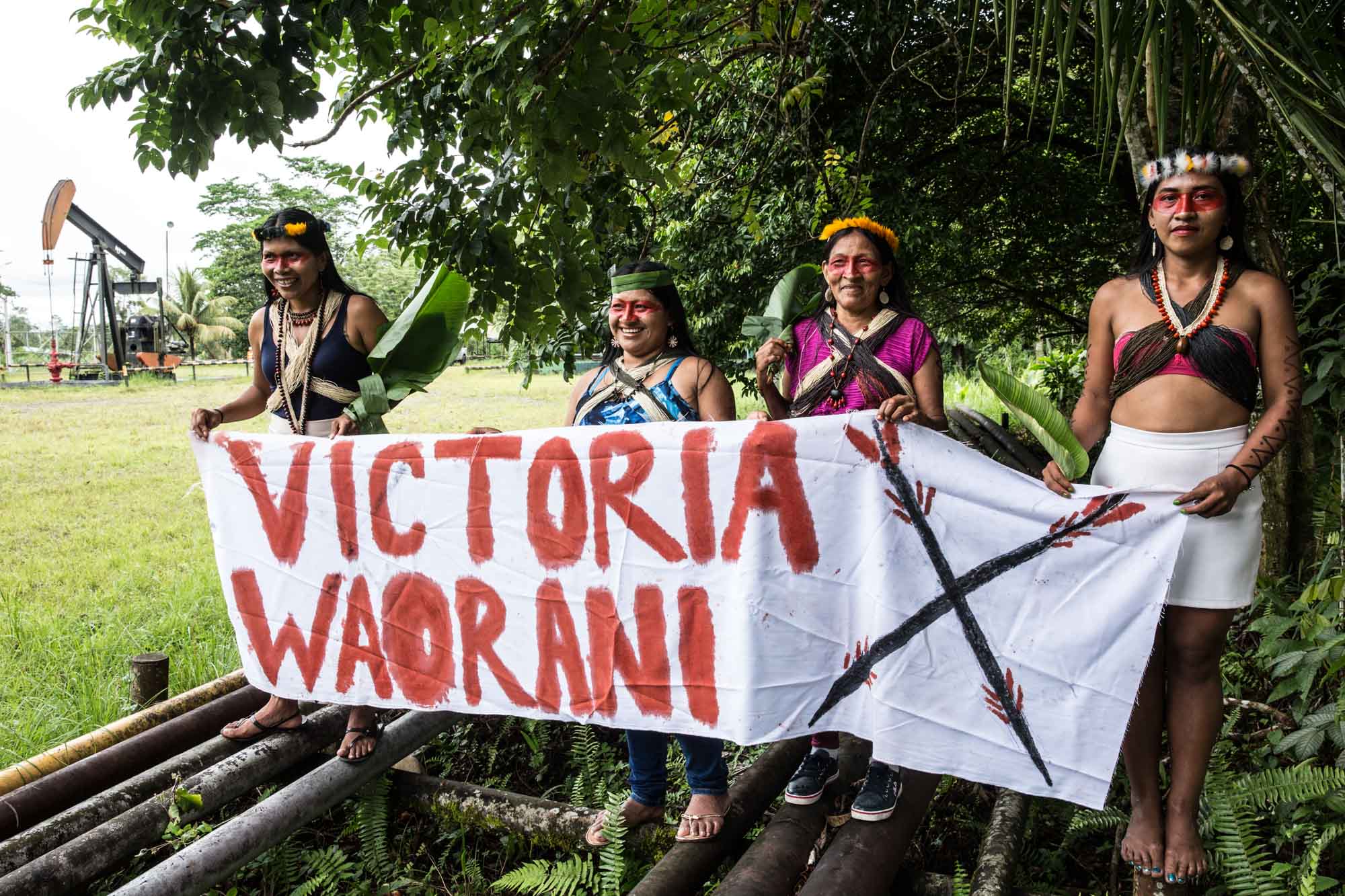
Photo: Amazon Frontlines
“The appellate court’s verdict clearly confirms that the Waorani have the right to decide over their lives, their territory and their future,” said Lina Maria Espinosa, lawyer for the Waorani from Amazon Frontlines. “And it shows that the Ecuadorian government has been systematically violating that right for decades. This is a precedent for Ecuador and the world.”
Now attention turns to neighbouring indigenous nations whose 7 million acres of rainforest homelands are threatened by the same oil auction, and who as victims of the same flawed prior consultation process in 2012 will benefit immediately from the precedent set by the Waorani verdict. The appellate court ruling should effectively nullify the entire prior consultation process undertaken by the government in 2012 and block the planned auction of 16 oil blocks across the South-Central Ecuadorian Amazon, although the government has given no hints of abandoning the auction yet.
“Indigenous peoples collectively own nearly 70% of the Ecuadorian Amazon, but they also control more than a quarter of the entire Amazon basin,” said Mitch Anderson, Executive Director of Amazon Frontlines. “This battle goes beyond the courtroom, it’s a testament to the Waorani people’s knowledge of their forest, their way of life and their resilience in defending their homeland against all odds. Indigenous stewardship is the key to safeguarding the Amazon from destruction.”
Key to the victory was the Waorani’s global digital campaign to warn the Ecuadorian government that “Waorani territory is not for sale”, which has built a global movement of solidarity with the struggle, garnering more than 340,000 signatures and public support from international celebrities such as Leonardo DiCaprio and Mark Ruffalo.
The Waorani’s lawsuit was co-filed by CONCONAWEP (Coordinating Council of the Waorani Nationality of Ecuador-Pastaza) and Ecuador’s Human Rights Ombudsmen.
Across the world right now, Indigenous peoples are facing a renewed assault on their lands, rights, and ways of life.
From extractive industries pushing deeper into ancestral territories, to governments rolling back hard-won protections,
the threat is global—and it is growing.
What makes this moment especially dangerous is how little attention it receives.
Stories like this are disappearing in real time. Mainstream media
barely covers it and the coverage is fragmented. The public is left without the context
needed to understand what is truly at stake.
That is exactly why IC Magazine exists..
For more than 20 years, IC has reported on Indigenous struggles worldwide — consistently, independently, and without compromise.
We don’t follow news cycles; we trace patterns. We don’t sensationalize; we provide context.
And when the world looks away, we stay focused.
But this work is increasingly difficult to sustain.
We refuse to lock our reporting behind a paywall. We don’t sell access through subscriptions.
And we don’t answer to advertisers. IC Magazine survives solely because readers like you choose to
support independent Indigenous journalism.
Please donate today if you can. Every contribution helps us to continue this crucial work.
Thank you,
John Ahni Schertow
Founder and Editor in Chief