Last Updated on April 10, 2019
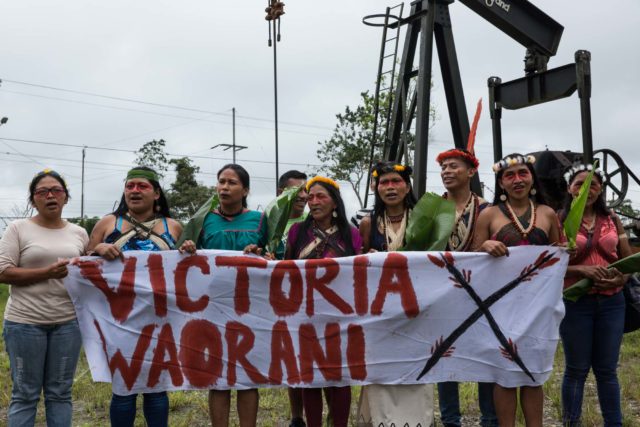
Puyo, Ecuador – On April 11th in the city of Puyo, Ecuador, the Waorani people of the Pastaza province, an indigenous Amazonian tribe, will take the Ecuadorian government to trial alleging numerous human rights violations in the government’s efforts to earmark their lands for oil extraction.
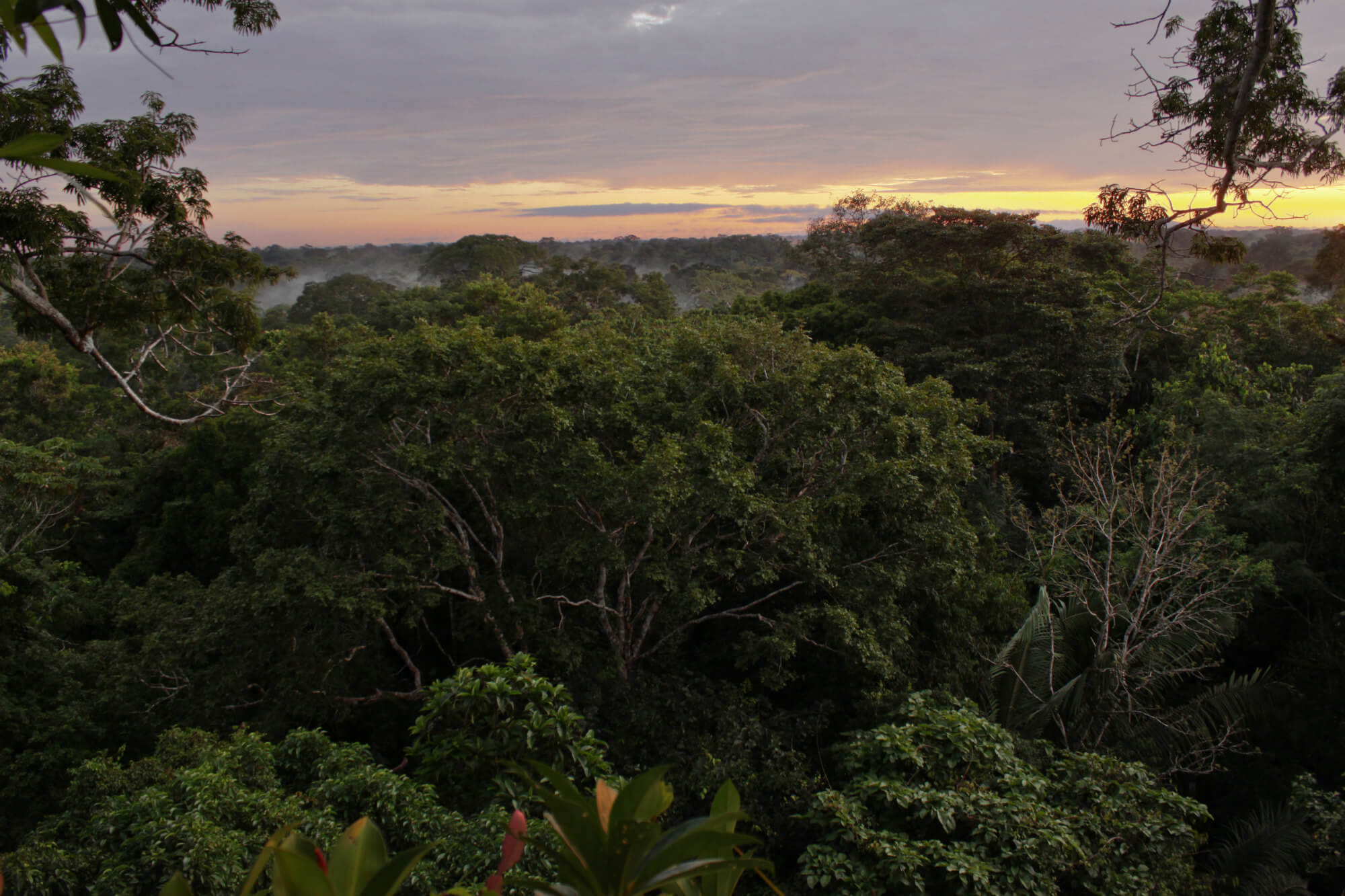
The Waorani people’s efforts to protect their ancestral territory from oil extraction – nearly 500,000 acres of highly biodiverse, primary rainforest – has emerged as a flashpoint in the South American country, highlighting the stark gap between the Ecuadorian government’s thirst for oil revenues to relieve international debt and indigenous peoples’ internationally recognized rights to free, prior and informed consent, self-determination, collective territory and the rights of nature. Amidst the backdrop of decades of contamination and cultural disruption in indigenous territories across the Amazon by oil operations, the Waorani’s lawsuit aims to protect their homeland, one of the last bastions of wild-standing forest, from a similar fate.
While international and Ecuadorian law recognize indigenous peoples’ right to free, prior and informed consent over any decision that affects their lands, the Waorani’s lawsuit, cofiled with Ecuador’s Human Rights Ombudsmen, alleges that the Ecuadorian government employed time-tested tactics of misinformation and manipulation within Waorani communities in order to deceive the Waorani and get the signatures required to put their land up for auction.
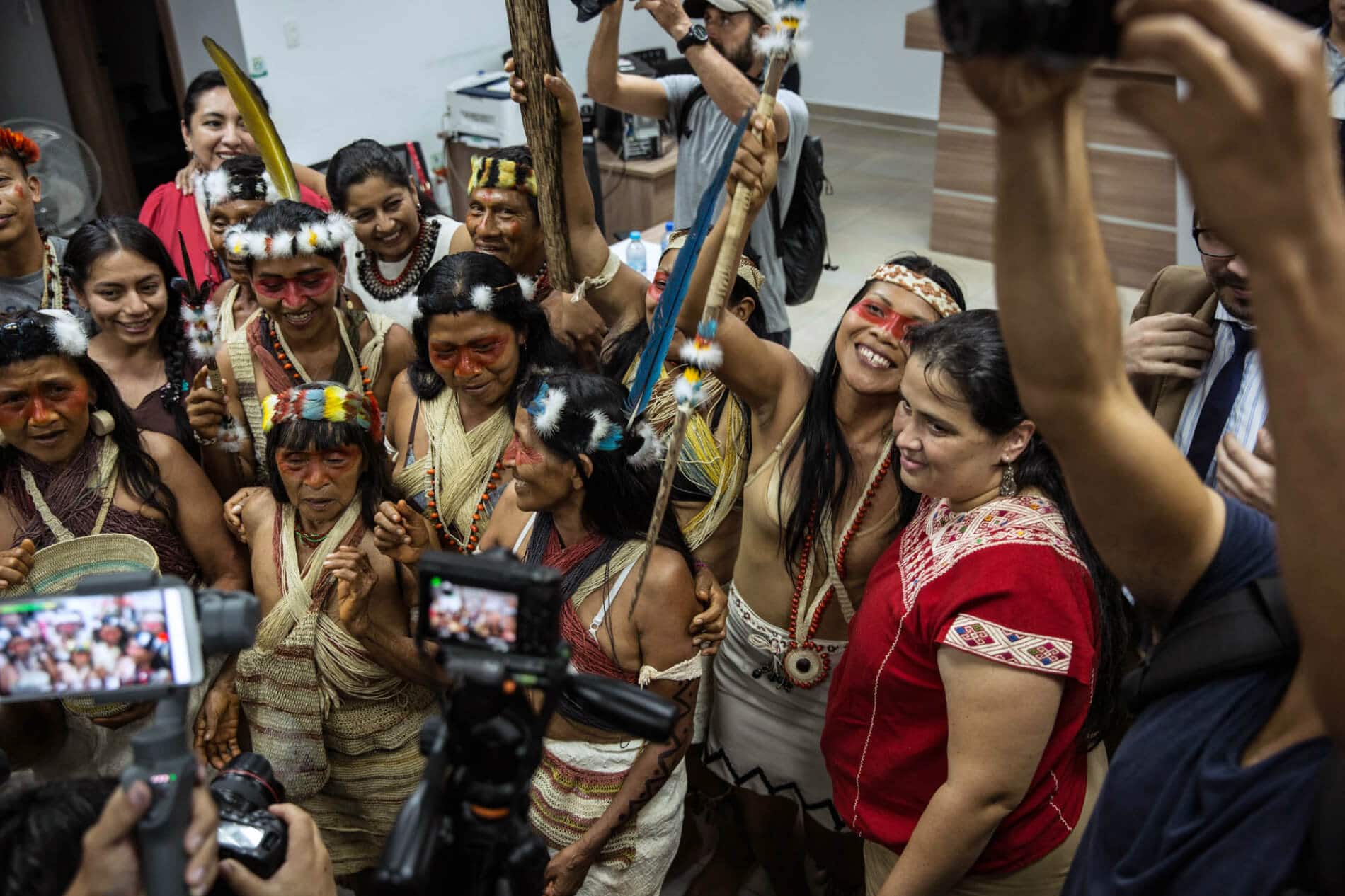
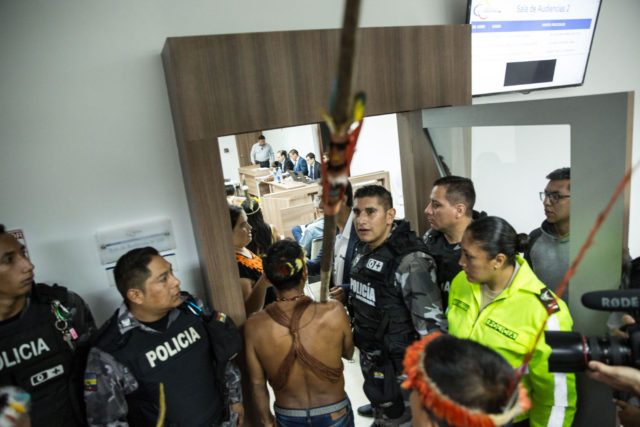
The trial will bring hundreds of Waorani youth and elders from their jungle communities to the city of Puyo, where they will be joined by other indigenous nations from across the country and North America for a march and a forum on the systematic violations to the fundamental rights of indigenous peoples and the threats to their territories in the Amazon basin. The first hearing in the case, held on March 13th, was suspended after Waorani women took over the courtroom with song in protest of unfair treatment by the judge.
If successful in their lawsuit against the Ecuadorian Ministry of Energy and Non-Renewable Natural Resources, the Secretary of Hydrocarbons and the Ministry of Environment, the Waorani people will effectively protect their ancestral lands from destructive oil drilling, disrupt the contemplated auctioning of 7 million acres of indigenous territory, forge a legislative path forward for the strengthening of indigenous rights, and provide an invaluable precedent for other indigenous nations across Ecuador, and the Amazon, to do the same.
In mid-2018, the Waorani launched a global digital campaign to warn potential oil investors that “Waorani territory is not for sale”, which included a petition to the international oil industry and the President of Ecuador, the publication of powerful drone imagery, and a cutting-edge interactive map of over 180,000 hectares of oil-free Waorani territory. The Waorani’s struggle has already garnered major media attention and over 73,000 signatures to the ongoing petition. http://waoresist.amazonfrontlines.org/
For more information, interviews, or photo/video requests, please contact:
Sophie Pinchetti, Communications Coordinator
sophie@amazonfrontlines.org
Across the world right now, Indigenous peoples are facing a renewed assault on their lands, rights, and ways of life.
From extractive industries pushing deeper into ancestral territories, to governments rolling back hard-won protections,
the threat is global—and it is growing.
What makes this moment especially dangerous is how little attention it receives.
Stories like this are disappearing in real time. Mainstream media
barely covers it and the coverage is fragmented. The public is left without the context
needed to understand what is truly at stake.
That is exactly why IC Magazine exists..
For more than 20 years, IC has reported on Indigenous struggles worldwide — consistently, independently, and without compromise.
We don’t follow news cycles; we trace patterns. We don’t sensationalize; we provide context.
And when the world looks away, we stay focused.
But this work is increasingly difficult to sustain.
We refuse to lock our reporting behind a paywall. We don’t sell access through subscriptions.
And we don’t answer to advertisers. IC Magazine survives solely because readers like you choose to
support independent Indigenous journalism.
Please donate today if you can. Every contribution helps us to continue this crucial work.
Thank you,
John Ahni Schertow
Founder and Editor in Chief