Last Updated on December 3, 2015
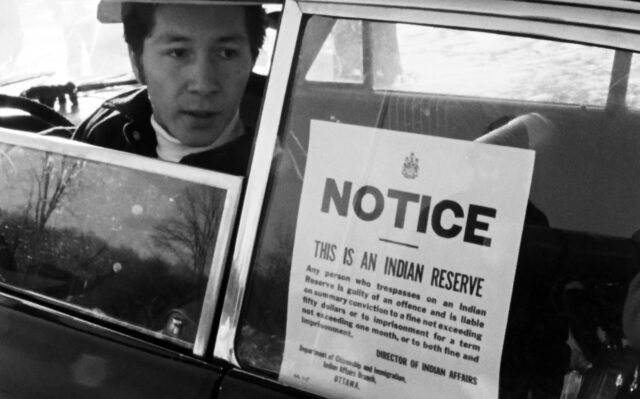
On July 11, 1990, the Mohawk Peoples of Kanehsatà:ke stood up against a legacy of fraudulent theft when the Municipality of Oka, in collusion with the Federal and provincial governments, tried to make way for the expansion of a 9-hole golf course and a new condominium project.
In the weeks and months that followed, Canada’s glowing image was tarnished forever. Many of us were shown for the first time the kind of treachery and brute force ways of the Canadian Government. Treachery and brute force that continues to this day.
The Oka Crisis also showed us just how entrenched racism is among Canadian citizens, particularly at the Mercier Bridge on August 28, 1990 — when a violent mob assaulted a convoy of Mohawk Elders, Women, and Children seeking refuge away from their community. The police stood by and watched. Alanis Obomsawin produced a documentary about this event, titled “Rocks at Whiskey Trench.”
Obomsawin also produced the film Kanehsatake 270 Years of Resistance, which takes us through the history and the events that took place at OKA.
Across the world right now, Indigenous peoples are facing a renewed assault on their lands, rights, and ways of life.
From extractive industries pushing deeper into ancestral territories, to governments rolling back hard-won protections,
the threat is global—and it is growing.
What makes this moment especially dangerous is how little attention it receives.
Stories like this are disappearing in real time. Mainstream media
barely covers it and the coverage is fragmented. The public is left without the context
needed to understand what is truly at stake.
That is exactly why IC Magazine exists..
For more than 20 years, IC has reported on Indigenous struggles worldwide — consistently, independently, and without compromise.
We don’t follow news cycles; we trace patterns. We don’t sensationalize; we provide context.
And when the world looks away, we stay focused.
But this work is increasingly difficult to sustain.
We refuse to lock our reporting behind a paywall. We don’t sell access through subscriptions.
And we don’t answer to advertisers. IC Magazine survives solely because readers like you choose to
support independent Indigenous journalism.
Please donate today if you can. Every contribution helps us to continue this crucial work.
Thank you,
John Ahni Schertow
Founder and Editor in Chief