Last Updated on September 29, 2025
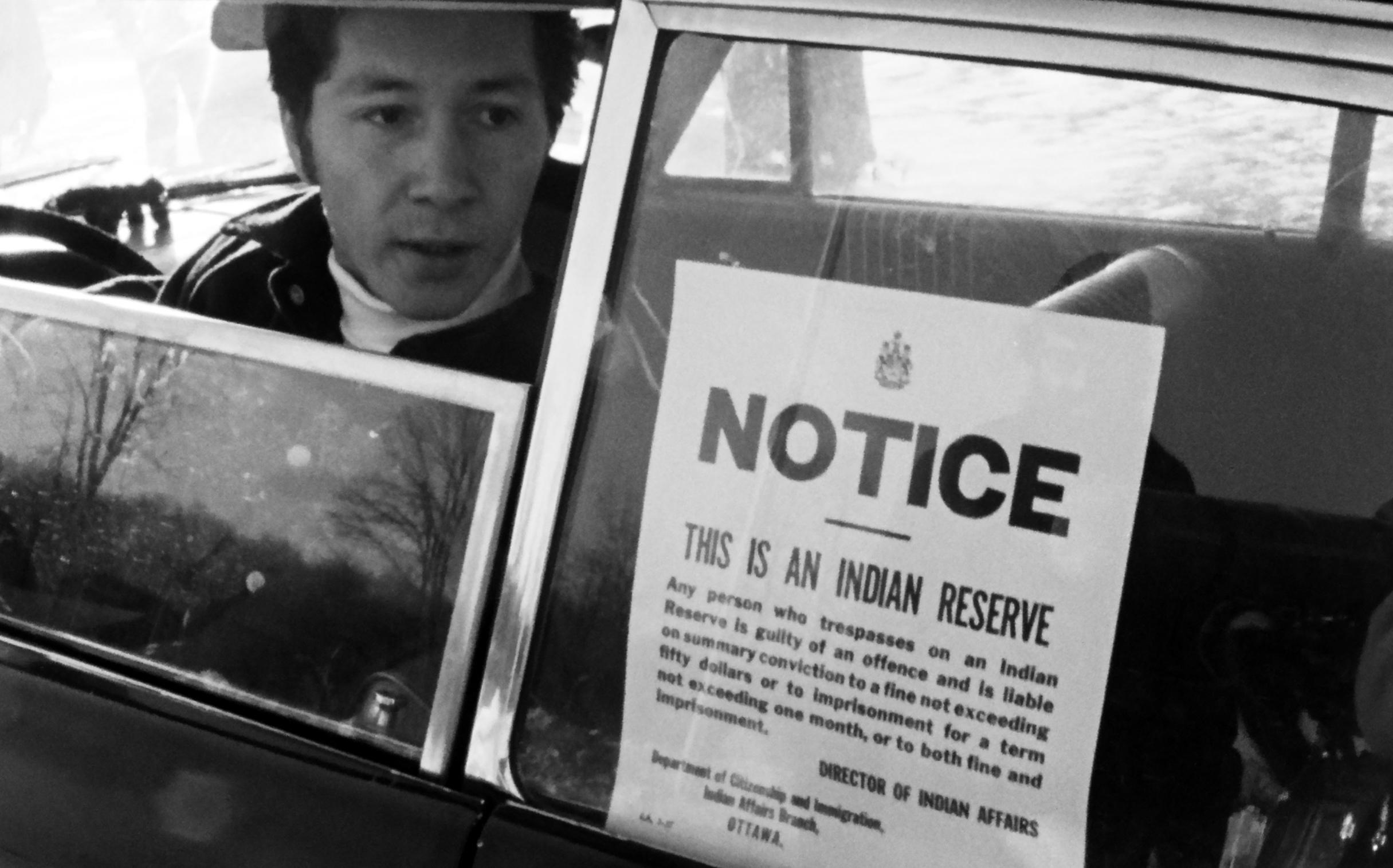
You Are on Indian Land was one of the first films in Canada to give voice to the concerns of Indigenous People.
Produced in 1969, the film documents a protest that was led by Mohawks from the Haudenosaunee community of Akwesasne on December 20, 1968.
At the time, community members were being forced to pay duty on purchases they made in the United States, despite the fact that the Jay Treaty of 1794, also known as the “Treaty of Amity, Commerce and Navigation”, affirmed that they were not required to do so.
The issue surrounding the Treaty has yet to be resolved, as a protest earlier this month reminds us.
The recent protestwas quite different from the one that took place 40 years ago. In ’68 members from the community blocked off the bridge linking Canada to the United states, which literally cuts through Akwesasne. Confrontation ensued.
“While the news media focused on altercations with the police”, says Albert Ohayonas on the NFB website, filmmaker Mort Ransen took a decidedly different approach. “Ransen showed what led to these altercations and let the Mohawks of the Reserve speak for themselves and tell their own story.”
Across the world right now, Indigenous peoples are facing a renewed assault on their lands, rights, and ways of life.
From extractive industries pushing deeper into ancestral territories, to governments rolling back hard-won protections,
the threat is global—and it is growing.
What makes this moment especially dangerous is how little attention it receives.
Stories like this are disappearing in real time. Mainstream media
barely covers it and the coverage is fragmented. The public is left without the context
needed to understand what is truly at stake.
That is exactly why IC Magazine exists..
For more than 20 years, IC has reported on Indigenous struggles worldwide — consistently, independently, and without compromise.
We don’t follow news cycles; we trace patterns. We don’t sensationalize; we provide context.
And when the world looks away, we stay focused.
But this work is increasingly difficult to sustain.
We refuse to lock our reporting behind a paywall. We don’t sell access through subscriptions.
And we don’t answer to advertisers. IC Magazine survives solely because readers like you choose to
support independent Indigenous journalism.
Please donate today if you can. Every contribution helps us to continue this crucial work.
Thank you,
John Ahni Schertow
Founder and Editor in Chief