Last Updated on November 14, 2011
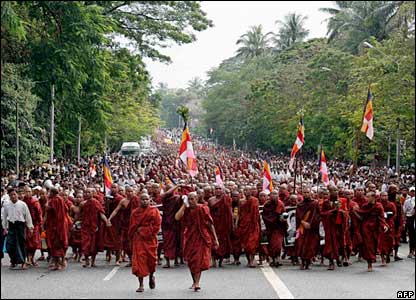
On April 8th, around 80 people gathered at a Barrick Gold mine at Lake Cowal in central New South Wales and entered the mine, the offices, and chaining themselves to the machinery – grinding mining operations to a halt.
The next day, the police arrested 14 people at the site, charging them with entering “inclosed land”, under the obscure Inclosed Land Act of 1901.
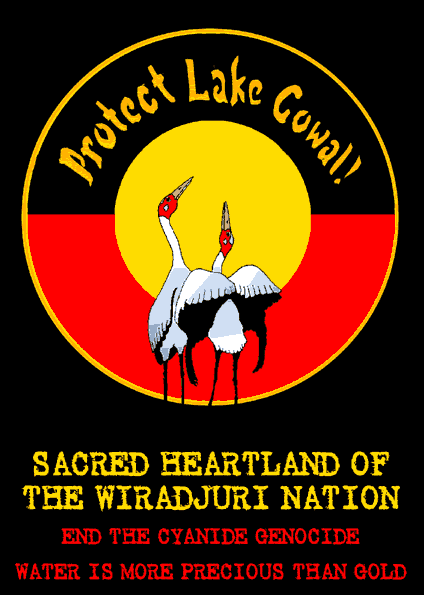
From an April 9 Media Release on Save Lake Cowal:
Wiradjuri Traditional Owners have been holding convergences at Lake Cowal for a number of years as part of their campaign to raise awareness about the destruction of their ancient cultural heritage and their demands for the mine to be closed.
During yesterday’s protest, a Barrick Gold mine manager refused to accept an eviction notice from Traditional Owner, Neville “Chappy” Williams. Mine Manager, Bill Shallvey, rudely refused to take the notice, the fourth issued to Barrick since 2002, shouting that Williams and his supporters were “misleading people”.
“Our Aboriginal People are being denied access to our sacred ground. Protestors from around the world are here to support our claim for access to our ancient lands. Australian Aboriginal Peoples have the oldest continuing living culture in the world. We Wiradjuri People are also being denied the right of spiritual and religious freedom under s.116 of the Australian Constitution,” Mr Williams said.
“Barrick is desecrating our sacred site and Dreaming Place and denying us access to our traditional lands. The company has moved or destroyed more than 10 000 artefacts including marked trees, damaging the integrity of the area forever.
“The company did a deal with five unauthorised Wiradjuri, who signed away the ancient inheritance of over 30 000 people of the Wiradjuri Nation. After signing the secret agreement with Barrick they discontinued their Native Title Claim over the area. Our Mooka and Kalara united families’ claim is still active in the Federal Court and is proceeding towards determination. Our claim group is more than several thousand people who have bloodline back to Country over thousands and thousands of years (read the full Media Release)
NOTICE TO BARRICK GOLD TO CEASE ILLEGAL OCCUPATION OF LAKE COWAL
I, Neville Williams, on behalf of the Traditional Owners of Lake Cowal have already issued Barrick Gold with three Notices to Quit our sacred ground. Under Wiradjuri Custom, Tradition and Law/Lore, you have received your three warnings. You must now respect the unceded sovereignty of the Wiradjuri Nation and cease all operations, restore the landscape; remove all equipment and replace all artefacts to their GPS’d positions. This is to be done under supervision of the Traditional Owners of Lake Cowal. We reserve our right to take further action as necessary.
Signed this day 8 April 2007.
Neville “Chappy” Williams for and on behalf of the Mooka/Kalara united families within the Wiradjuri Nation.
Further Reading
Learn about the campaign to Save Lake Cowal
Across the world right now, Indigenous peoples are facing a renewed assault on their lands, rights, and ways of life.
From extractive industries pushing deeper into ancestral territories, to governments rolling back hard-won protections,
the threat is global—and it is growing.
What makes this moment especially dangerous is how little attention it receives.
Stories like this are disappearing in real time. Mainstream media
barely covers it and the coverage is fragmented. The public is left without the context
needed to understand what is truly at stake.
That is exactly why IC Magazine exists..
For more than 20 years, IC has reported on Indigenous struggles worldwide — consistently, independently, and without compromise.
We don’t follow news cycles; we trace patterns. We don’t sensationalize; we provide context.
And when the world looks away, we stay focused.
But this work is increasingly difficult to sustain.
We refuse to lock our reporting behind a paywall. We don’t sell access through subscriptions.
And we don’t answer to advertisers. IC Magazine survives solely because readers like you choose to
support independent Indigenous journalism.
Please donate today if you can. Every contribution helps us to continue this crucial work.
Thank you,
John Ahni Schertow
Founder and Editor in Chief