Last Updated on August 14, 2026
In a landmark decision this month, the African Union endorsed a 2009 ruling by the African Commission on Human and Peoples’ Rights which ordered the Kenyan government to restore the traditional land base of the Endorois People.
In May 2009, the Pan-African Commission found the government was guilty of violating the Endorois’ rights to property, health, culture, religion, and natural resources when, in 1973, they began to evict the population to make way for a national wildlife reserve and various tourist facilities. The eviction continued until 1986.
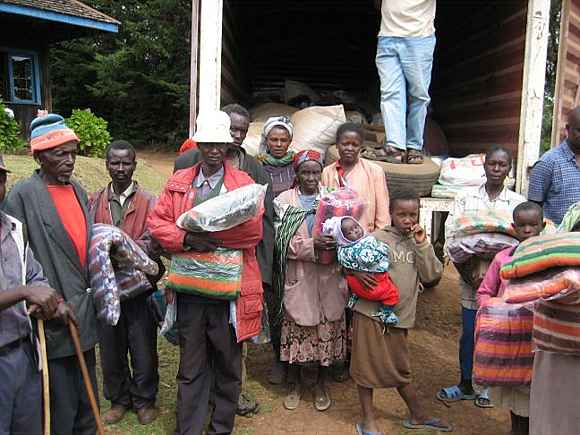
Today, notes VOA News, the Endorois are “forced to live in an arid, poverty-stricken area of Kenya, largely dependent on food aid.”
After numerous attempts at justice were blocked by various authorities, in 2003, Minority Rights Group International (MRG) and the Kenyan-based Centre for Minority Rights Development (CEMIRIDE) lodged a complaint with the African Commission, alleging the government violated the African Charter by evicting the Endorois because they did not protect the Endorois’ land rights and failed to compensate them.
As part of their case, CEMIRIDE collaborated with WITNESS to provide the Commission with video evidence demonstrating how the African Charter was breached and also to bring the Endorois’ voice to the Commission. They also produced a 16-minute documentary, “Rightful Place: Endorois’ Struggle for Justice.”
Ultimately, the commission found that Kenya had indeed violated the African Charter; specifically, Articles 1, 8, 14, 17, 21 and 22.
“The Endorois decision, the first of its kind, can help many others across Africa who have been forced from their homes,” says Clive Baldwin, a senior legal advisor at Human Rights Watch who acted as co-counsel for the Endorois when he was employed with MRG. “The African Commission is clear: the land where the Endorois historically lived is their property and must be returned to them.”
“This ruling is good for every Kenyan,” adds Korir Singo’ei, who represented the Endorois while director of CEMIRIDE. “The law that treats some communities as children, unable to own their own land, is a colonial relic that needs to be changed.”
On top of the land restitution, the Commission ordered Kenya to compensate the Endorois and to begin the process within the next three months.
In New York, Clive Baldwin (English, French): +1-917-880-8756
In Nairobi, Korir Singo’ei (English, Swahili): +254-722-776994
In London, Cynthia Morel (English, French): +44-79-527-19484
In New York, Bukeni Waruzi (Swahili, English, and French) : +1-718-783-2000, ext. 307
Across the world right now, Indigenous peoples are facing a renewed assault on their lands, rights, and ways of life.
From extractive industries pushing deeper into ancestral territories, to governments rolling back hard-won protections,
the threat is global—and it is growing.
What makes this moment especially dangerous is how little attention it receives.
Stories like this are disappearing in real time. Mainstream media
barely covers it and the coverage is fragmented. The public is left without the context
needed to understand what is truly at stake.
That is exactly why IC Magazine exists..
For more than 20 years, IC has reported on Indigenous struggles worldwide — consistently, independently, and without compromise.
We don’t follow news cycles; we trace patterns. We don’t sensationalize; we provide context.
And when the world looks away, we stay focused.
But this work is increasingly difficult to sustain.
We refuse to lock our reporting behind a paywall. We don’t sell access through subscriptions.
And we don’t answer to advertisers. IC Magazine survives solely because readers like you choose to
support independent Indigenous journalism.
Please donate today if you can. Every contribution helps us to continue this crucial work.
Thank you,
John Ahni Schertow
Founder and Editor in Chief