Last Updated on March 31, 2016
(Coast Salish Territory / Vancouver BC – March 30, 2016) The Yinka Dene ‘uza’hné from Nadleh Whut’en and Stellat’en have enacted a water management regime for the regulation of the surface waters throughout the whole of their Territories. This regime comprises the Yinke Dene ’Uza’hné Surface Water Management Policy and Yinke Dene ’Uza’hné Guide to Surface Water Quality Standards.
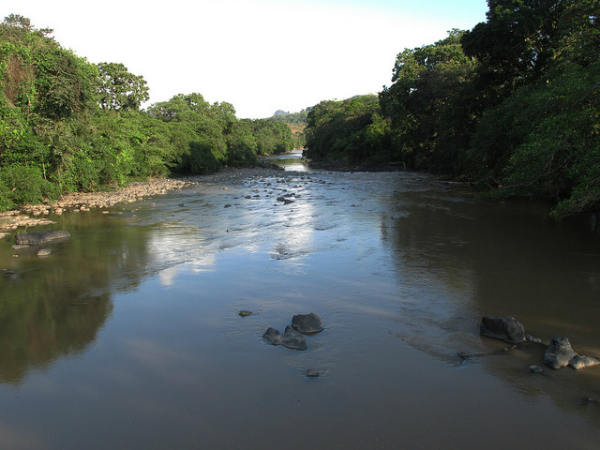
“Our policy will protect the water quality and flow of our rivers, lakes, streams, creeks, and everything they touch and give life to, including the land, animals, air, plants and humankind,” said Yutunayeh (George George Sr.). “It was developed to fulfill our inherent obligations as Yinka Dene to look after our waters and to respond to the ongoing impacts to our waters. All outside users of our surface waters will be required to meet our surface water quality standards and guidelines including existing projects, proposed projects and all decisions related to such projects must comply.”
Yinka Dene laws have governed the collective Territories for thousands of years. Members of the Nadleh Whut’en and Stellat‘en are affiliated with clans that include hereditary leaders. known as ‘uza’hné, who are responsible for land and resource management territories known as keyah associated with extended family units. The primary institution for governing keyah and clans is through the potlatch system of governance known as bahlats.
“Our policy is an expression of our living governance and laws,” declared Dzih Bhen (Tannis Reynolds). “The health of surface waters throughout our Territories, and the life they sustain, are of fundamental importance to our continued enjoyment of our inherent Aboriginal title and rights. We will protect the quality of our surface waters by setting higher standards than the Province of British Columbia, and ensure that any impacts are addressed for the benefit of our members and future generations.”
In addition to meeting higher water quality standards, any impacts to surface waters will be addressed in the implementation of the policy on a project-by-project basis. Assessing and repairing existing damages to water quality will be required. For approved projects that comply with the policy, economic accommodation of impacts through instruments such as revenue sharing agreements, impact management and benefits agreements and/or project equity arrangements will also be required. Consent will be required for all decisions affecting rivers, lakes, streams and creeks. Agreement to be bound by and follow the policy is a necessary part of seeking consent of the Nadeh Whut’en and Stellat’en.
Nadleh Whut’en elected Chief Martin Louie stated in closing, “Our ‘uza’hné have spoken and we have received clear direction that any governments or companies proposing economic development in our Territories must follow the laws of the Yinka Dene which protect our entire environment including water, air and land. This is an opportunity for the Province of British Columbia to collaborate with us to implement real environmental protection for the benefit of all. We believe our policy is a fair and balanced approach offering a much-needed shift in water management, and could eventually be a successful model to be used in other territories as a stepping stone for future environmental policy development throughout our respective territories.”
MEDIA CONTACT:
Nadleh Whut’en Chief Martin Louie – 1-250-690-7211
###
Across the world right now, Indigenous peoples are facing a renewed assault on their lands, rights, and ways of life.
From extractive industries pushing deeper into ancestral territories, to governments rolling back hard-won protections,
the threat is global—and it is growing.
What makes this moment especially dangerous is how little attention it receives.
Stories like this are disappearing in real time. Mainstream media
barely covers it and the coverage is fragmented. The public is left without the context
needed to understand what is truly at stake.
That is exactly why IC Magazine exists..
For more than 20 years, IC has reported on Indigenous struggles worldwide — consistently, independently, and without compromise.
We don’t follow news cycles; we trace patterns. We don’t sensationalize; we provide context.
And when the world looks away, we stay focused.
But this work is increasingly difficult to sustain.
We refuse to lock our reporting behind a paywall. We don’t sell access through subscriptions.
And we don’t answer to advertisers. IC Magazine survives solely because readers like you choose to
support independent Indigenous journalism.
Please donate today if you can. Every contribution helps us to continue this crucial work.
Thank you,
John Ahni Schertow
Founder and Editor in Chief