Last Updated on March 13, 2013
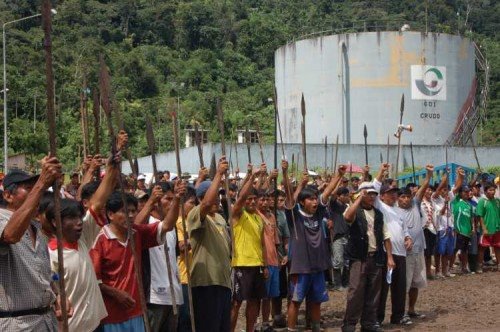
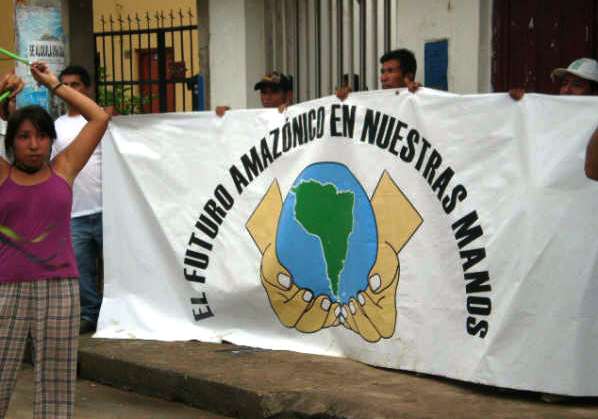
Here is a story from Village Earth which focuses on the work of the Shipibo People in Peru to defend the rainforest and their own communities — as well as a project to aid in the defense and protection of Shipibo territory, by creating GIS layered maps of the region.
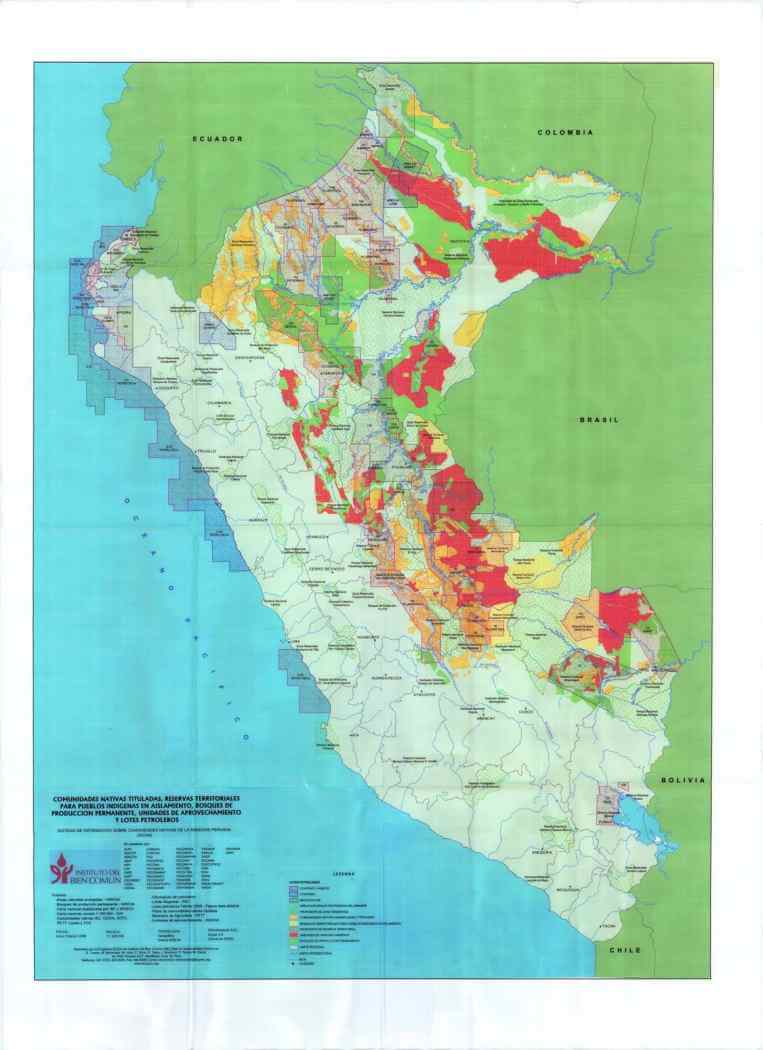
From the article “an aggressive program of Amazonian “development” has been promoted during the past 50 years, which has fragmented Shipibo territory by the incursion of non-indigenous colonists, government “development” projects, and foreign corporations exploiting the land by logging, hydrocarbon extraction, and industrial-scale agriculture. However, protecting indigenous land rights has come to the forefront in their struggles for self-determination as the Peruvian government continues to open up the farthest reaches of the Amazon basin for oil exploration and other extractive enterprises.” (source)
Aswell, here’s another story about the work of the Shipibo against the Mahogony industry.
I admit, the article says some pretty poor things like “stone age tribes” – but they interviewed Julio Cusurich, who started the Native Federation of Madre de Dios, which brought together 27 communities in the region. He had some good things to say:
“Changes happen little by little,” Cusurichi said. “You have to do your work looking at the whole picture. You have to make sure the things you do today won’t hurt your people tomorrow. Keep that in mind and you can be confident things will work out.”
Across the world right now, Indigenous peoples are facing a renewed assault on their lands, rights, and ways of life.
From extractive industries pushing deeper into ancestral territories, to governments rolling back hard-won protections,
the threat is global—and it is growing.
What makes this moment especially dangerous is how little attention it receives.
Stories like this are disappearing in real time. Mainstream media
barely covers it and the coverage is fragmented. The public is left without the context
needed to understand what is truly at stake.
That is exactly why IC Magazine exists..
For more than 20 years, IC has reported on Indigenous struggles worldwide — consistently, independently, and without compromise.
We don’t follow news cycles; we trace patterns. We don’t sensationalize; we provide context.
And when the world looks away, we stay focused.
But this work is increasingly difficult to sustain.
We refuse to lock our reporting behind a paywall. We don’t sell access through subscriptions.
And we don’t answer to advertisers. IC Magazine survives solely because readers like you choose to
support independent Indigenous journalism.
Please donate today if you can. Every contribution helps us to continue this crucial work.
Thank you,
John Ahni Schertow
Founder and Editor in Chief