
Last Updated on May 18, 2019
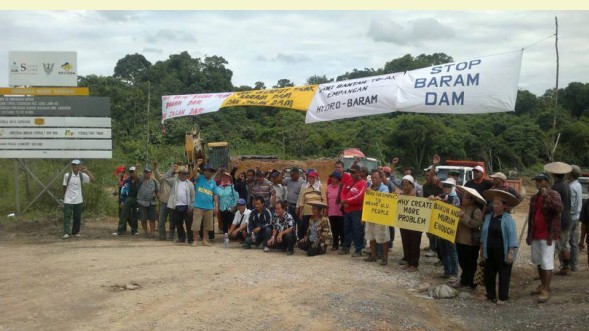
Anti-dam protestors confront workers at planned dam site, vow to uphold their protest for an extended period.
(LONG NAAH, SARAWAK / MALAYSIA) Native communities from Malaysia’s remote Baram district on the island of Borneo have warned state-owned electricity provider Sarawak Energy today to remove its construction machinery from their lands within three days. The machinery had been transported to the Baram region in order to prepare the construction of a 1200 MW dam that would displace up to 20’000 natives and flood a rainforest area of 400km2.
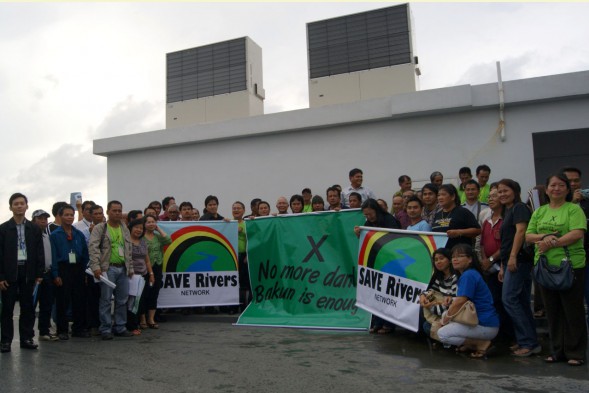
According to Sarawak’s Save Rivers network, a group of 30 workers had been found to conduct rock testing activities at the planned dam site at Long Naah. The workers were told to pack up and leave the native lands immediately. “The workers tried to negotiate but were told in no uncertain terms that there was no need for further negotiations as the communities rejected the dam project.”
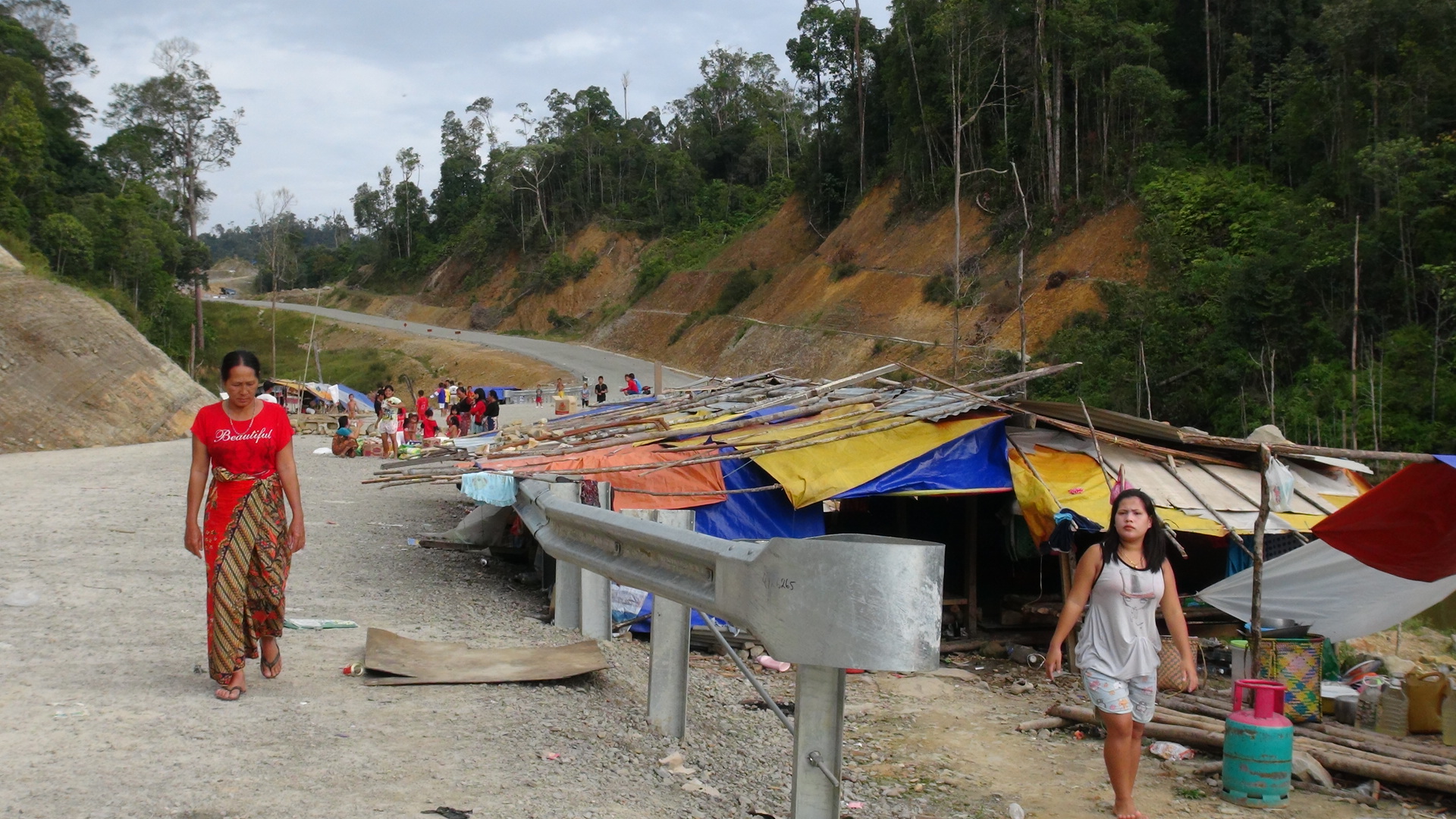
Sarawak Energy was given a three-day ultimatum to remove its machinery from the native lands. A group of villagers set up a camp at the planned dam site to monitor the implementation of their demands.
Villagers upholding a second road blockade site near Long Lama today informed that their blockade was successful and no new construction equipment had been transported into the interior.
Further information on the dam protest would be released by Radio Free Sarawak (www.radiofreesarawak.org) on SW 15420 KHZ between 7 pm and 8.30 pm local time.
The Bruno Manser Fund calls on the Malaysian government and on Sarawak Energy to halt all works on the planned Baram dam and to create full transparency on the costs and contracts related to the construction of the Murum dam.
Across the world right now, Indigenous peoples are facing a renewed assault on their lands, rights, and ways of life.
From extractive industries pushing deeper into ancestral territories, to governments rolling back hard-won protections,
the threat is global—and it is growing.
What makes this moment especially dangerous is how little attention it receives.
Stories like this are disappearing in real time. Mainstream media
barely covers it and the coverage is fragmented. The public is left without the context
needed to understand what is truly at stake.
That is exactly why IC Magazine exists..
For more than 20 years, IC has reported on Indigenous struggles worldwide — consistently, independently, and without compromise.
We don’t follow news cycles; we trace patterns. We don’t sensationalize; we provide context.
And when the world looks away, we stay focused.
But this work is increasingly difficult to sustain.
We refuse to lock our reporting behind a paywall. We don’t sell access through subscriptions.
And we don’t answer to advertisers. IC Magazine survives solely because readers like you choose to
support independent Indigenous journalism.
Please donate today if you can. Every contribution helps us to continue this crucial work.
Thank you,
John Ahni Schertow
Founder and Editor in Chief