Last Updated on April 10, 2025
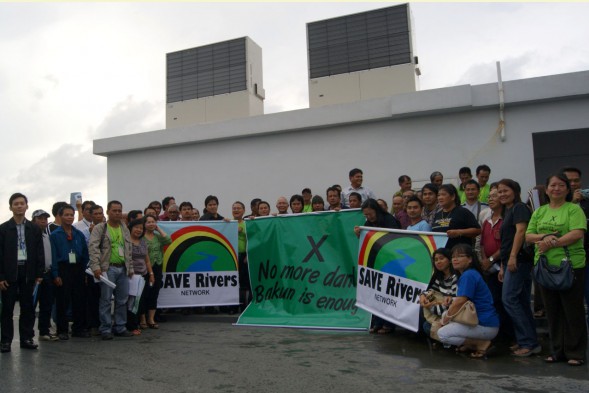
Residents from 10 Bidayuh villagers this week set fire to five logging camps and thirteen heavy machines in a stark protest against logging activities on their land, in the Malaysian state of Sarawak.
As reported by Free Malaysia Today, the Bidayuh villagers took matters into their own hands because of the governments refusal to address their complaints about logging activities within their Native Customary Rights (NCR) land.
One village leader, who did not wish to be identified, explained to reporters that, “We have made several reports to the authorities and yet the logging activities still continue[d],” adding that crops, fruit trees and land had already been destroyed by the activities.
He also said that they warned the workers to stop what they were doing, but the workers ignored them, much like the government. “We gave them ample time, and when they failed to adhere to our warning, we have to take action,” he said.
Shortly after the fire, an unnamed villager was quoted as saying, “They have tested our patience and we just cannot take it anymore. We have lodged several reports and complaints to the authorities, but the logging activities continued. We are fed up. Our rights have been encroached, our crops destroyed.”
Dr. Christopher Kiyui of the People’s Justice Party (PKR), who lost to Manyin in Sarawak’s recent election, told Radio Free Sarawak that 500 villagers had “burnt 13 Caterpillar and tractor machines and some lorries, around 10 in the morning [of May 9th, 2011]. About 50 people came from each village.”
Fortunately, no one was injured during the agitation. Similarly, no arrests have been made; however the police did step in several hours after the fires began. They just couldn’t do anything because they were so outnumbered.
Leading up to May 9th, the Bidayuh were already busy blocking the access road used by the workers to defend their land. Local assembly representative and state Infrastructure Development and Communications Minister Michael Manyin Jawong had also incensed the Bidayuh when he claimed that the protesters were merely a group of “trouble makers” who were “causing a ruckus” to get some money from the logging company.
A spokesperson for the communities said that Manyin was lying. The villagers rejected the company’s intrusion, he said, because “our NCR land and our jungle… are our ancestral properties.” Properties that the Bidayuh clearly want to protect.
Agitations such as these are few and far in between, but have occurred in other parts of the world. In 2009, for instance, the Maya reportedly burned equipment at a gold mine in Guatemala; and the Lepcha took action against the Panan hydel power project in Sikkim, India. Similarly, in 2008, the Enawene Nawe completely levelled a hydro dam construction site in Brazil.
Governments and Industry spokespersons tried to dismiss these actions as mere vandalism, as if Indigenous Peoples have nothing better to do than trash private property. But the fact is, with more than 5,000 industrial projects taking place on Indigenous lands around the world, it’s no wonder it doesn’t happen more often.
Especially since the stakes are so high. Companies may offer a few short term jobs and maybe even free bubble gum for the kids, but Indigenous people face the depletion of their water supply, the destruction of their food sources, the loss of their cultural property and the overall devastation of their homelands.
The burden is simply too great for anyone to carry.
Thanks to @Uriohau and @funnywhitedog for the initial report.
Across the world right now, Indigenous peoples are facing a renewed assault on their lands, rights, and ways of life.
From extractive industries pushing deeper into ancestral territories, to governments rolling back hard-won protections,
the threat is global—and it is growing.
What makes this moment especially dangerous is how little attention it receives.
Stories like this are disappearing in real time. Mainstream media
barely covers it and the coverage is fragmented. The public is left without the context
needed to understand what is truly at stake.
That is exactly why IC Magazine exists..
For more than 20 years, IC has reported on Indigenous struggles worldwide — consistently, independently, and without compromise.
We don’t follow news cycles; we trace patterns. We don’t sensationalize; we provide context.
And when the world looks away, we stay focused.
But this work is increasingly difficult to sustain.
We refuse to lock our reporting behind a paywall. We don’t sell access through subscriptions.
And we don’t answer to advertisers. IC Magazine survives solely because readers like you choose to
support independent Indigenous journalism.
Please donate today if you can. Every contribution helps us to continue this crucial work.
Thank you,
John Ahni Schertow
Founder and Editor in Chief