Last Updated on May 21, 2025
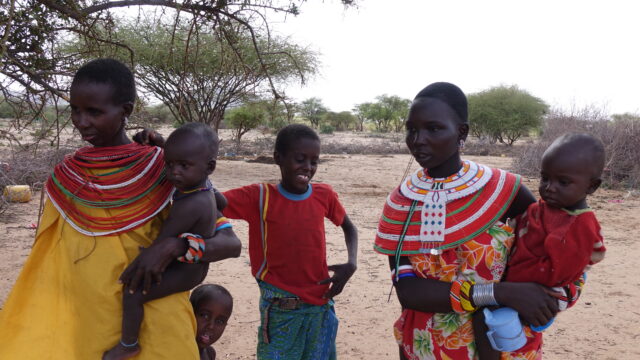
A conflict is underway in scenic Kajiado County, Kenya, near the Tanzanian border, with Indigenous Maasai communities rising up against coercive environmentalism on their ancestral homelands.
The source of the current conflict is a proposed 40-year land lease between the Kenyan government and foreign-backed firms that seek to convert a 68,000-hectare parcel of land within the Oldonyonyokie Group Ranch in southern Kenya into a for-profit carbon sink.
The proposed carbon credit initiative is backed by the United Arab Emirates-based company, Blue Carbon, and local partners in Kenya, according to the SEMAFOR news site. It aims to turn traditional Maasai grazing lands into carbon sinks that can be sold as carbon credits to firms in the global north like Meta and Netflix.
Carbon credits are generated by forest conservation and renewable energy projects that reduce or remove carbon emissions from the atmosphere. Companies purchase carbon credits, which allow them to emit a certain amount of greenhouse gases. The offset will enable them to appear environmentally conscious while not substantially changing their operations.
Aside from the obvious shortcoming of the system, which is that the corporations purchasing the credits aren’t reducing their carbon emissions, the arrangement is rapidly creating a widespread land grab, in which companies in the global north can “offset” their pollution by purchasing carbon credits produced by lands in the global south.
The heart of the problem is that the Indigenous communities living on the land are not being consulted about the creation of these carbon sinks. They are also being forcefully removed from their lands, which is destroying their livelihoods, traditions, and history. This highlights a broader legal concern that their right to Free, Prior and Informed Consent (FPIC), a core concept in the UN Declaration on the Rights of Indigenous Peoples (UNDRIP), is not being respected.

Location of Kajiado County in Kenya By Karte: NordNordWest, Lizenz: Creative Commons by-sa-3.0 de, CC BY-SA 3.0 de
While the carbon sinks are created in the name of environmentalism, activists and watchdog organizations argue that carbon offset projects too often bypass genuine community engagement in pursuit of quick climate wins.
“These schemes put a price tag on nature and make African communities bear the burden of a crisis they did not create, while enriching foreign middlemen and questionable local entities,” wrote Sheri Gakjii in a Greenpeace news article on the subject.
“This is climate colonialism, plain and simple,” said Amos Wemanya, Responsive Campaign Lead at Greenpeace Africa, in the same article. “Carbon offsetting is not a climate solution; it is a dangerous distraction that sells off our future.”
On April 30, tensions escalated in Kajiado County when a protest disrupted a meeting in which project representatives sought to lease land from community elders. Youth from the area stormed the gathering and protested what they believed to be a secretive and exploitative deal that lacked community consultation.
The proposed lease threatens the grazing lands of the Ogiek people and reportedly involves a local firm called Carbon Solve Kenya and the NGO Soils for the Future Africa (SftFA). It promises community development, infrastructure, and revenue-sharing.
However, there’s little transparency, and how SftFA has engaged the community has caused alarm.
“Those taking signatures, they are taking our parents’ signatures without their consent; my parent is not learnt, but they sign the agreement on their behalf. We are warning leaders behind this game,” commented one youth, according to the news site Kenyans.co.ke.
Some government leaders support the deal and see it as a needed economic opportunity. However, those in the community whose livelihoods are directly dependent on the land fear it will restrict their movement and reduce their autonomy.
The unrest affecting Kajiado County is part of a global pattern. Across Africa and beyond, Indigenous peoples are increasingly at the center of climate finance projects — not as beneficiaries, but as obstacles to be negotiated. While carbon credits promise a new green economy, too often they infringe on the rights of Indigenous peoples and threaten their very existence.
In Kenya, where land ownership is a deeply sensitive issue rooted in colonial dispossession and modern inequality, the idea of leasing communal land for international carbon deals is particularly fraught. The general sentiment among Indigenous peoples seems to be that this is just another form of colonialism. Corporations in the global north are using the climate crisis as an excuse to steal Indigenous land and justify their existence.
If this matter were truly about the environment, the people would be empowered to lead, not have their lands stolen.
Across the world right now, Indigenous peoples are facing a renewed assault on their lands, rights, and ways of life.
From extractive industries pushing deeper into ancestral territories, to governments rolling back hard-won protections,
the threat is global—and it is growing.
What makes this moment especially dangerous is how little attention it receives.
Stories like this are disappearing in real time. Mainstream media
barely covers it and the coverage is fragmented. The public is left without the context
needed to understand what is truly at stake.
That is exactly why IC Magazine exists..
For more than 20 years, IC has reported on Indigenous struggles worldwide — consistently, independently, and without compromise.
We don’t follow news cycles; we trace patterns. We don’t sensationalize; we provide context.
And when the world looks away, we stay focused.
But this work is increasingly difficult to sustain.
We refuse to lock our reporting behind a paywall. We don’t sell access through subscriptions.
And we don’t answer to advertisers. IC Magazine survives solely because readers like you choose to
support independent Indigenous journalism.
Please donate today if you can. Every contribution helps us to continue this crucial work.
Thank you,
John Ahni Schertow
Founder and Editor in Chief