Last Updated on August 3, 2018
Between 1910 and 1970, a massive campaign of assimilation was carried out in Australia. Up to 100,000 Aboriginal children were forcibly taken from their homes and families, creating the Stolen Generation
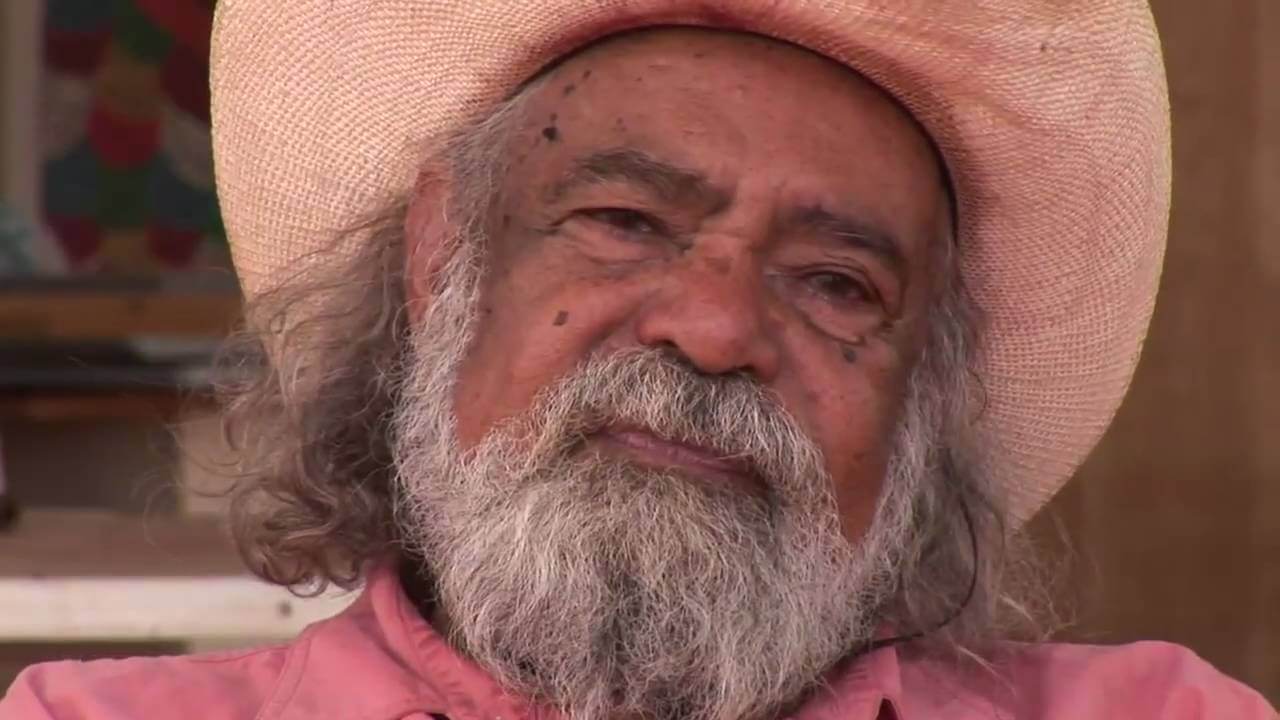
One of those Children taken was Bob Randall, an Yankunytjatjara Elder and Traditional Owner/Representative of Uluru (Ayers Rock)
In the following clip Bob talks briefly out his experience, but focuses more on his Peoples Traditional Relationship with the Land, a relationship that’s inverted in Colonial Society.
Bob was the main subject for the 2006 documentary film Kanyini, which discusses the consequences of colonizing Australia, and explores what needs to be done for the People to move forward. You can see a clip about the film here
Uluru itself is considered to be a major tourist attraction by Australian Society—Last month, after John Howard and Mal Brough announced their plans to undermine and invade atleast 60 Indigenous communities in Australia, naming Mutitjulu (which lives adjacent to Uluru) as the starting point, the Traditional Owners came forward and threatened to ban tourists from climbing and walking on Uluru.
Bob and his daughter Dorothea gave some additional clarity about the situation specific to Mutitjulu, pointing to the fact that the government is now using them as a political football, for their own ends.
This video is part of the Global Oneness Project
Across the world right now, Indigenous peoples are facing a renewed assault on their lands, rights, and ways of life.
From extractive industries pushing deeper into ancestral territories, to governments rolling back hard-won protections,
the threat is global—and it is growing.
What makes this moment especially dangerous is how little attention it receives.
Stories like this are disappearing in real time. Mainstream media
barely covers it and the coverage is fragmented. The public is left without the context
needed to understand what is truly at stake.
That is exactly why IC Magazine exists..
For more than 20 years, IC has reported on Indigenous struggles worldwide — consistently, independently, and without compromise.
We don’t follow news cycles; we trace patterns. We don’t sensationalize; we provide context.
And when the world looks away, we stay focused.
But this work is increasingly difficult to sustain.
We refuse to lock our reporting behind a paywall. We don’t sell access through subscriptions.
And we don’t answer to advertisers. IC Magazine survives solely because readers like you choose to
support independent Indigenous journalism.
Please donate today if you can. Every contribution helps us to continue this crucial work.
Thank you,
John Ahni Schertow
Founder and Editor in Chief