Last Updated on October 10, 2015
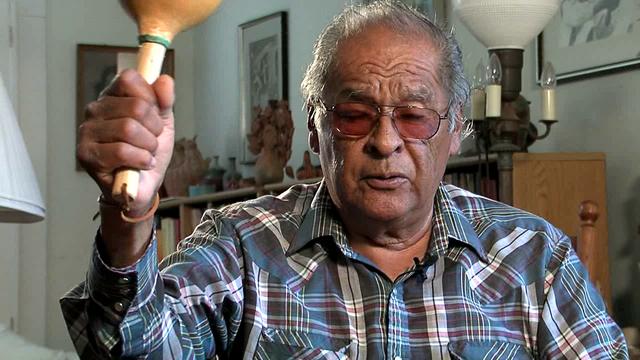
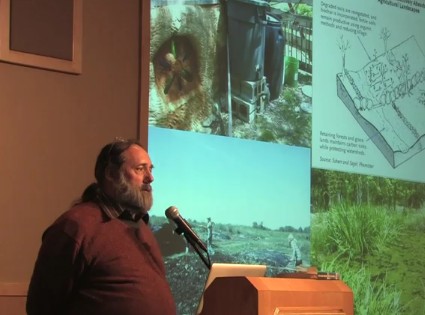
Anishinaabe Activist, Author and Orator Winona LaDuke talks about food sovereignty, renewable energy, sustainable development and indigenous paradigms. Recorded in Vancouver Washington in February 2010.
Winona LaDuke is a member of the Mississippi Band of Anishinaabe from the White Earth Reservation in northern Minnesota.
An internationally acclaimed author, orator and activist, LaDuke has devoted her life to protecting the lands and traditions of Indigenous People.
She serves as Executive Director for Honor the Earth, a non-profit organization that helps build financial support to frontline indigenous environmental groups and raise awareness on environmental issues and concerns like the tar sands. She is Co-Chair for the Indigenous Women’s Network, a North American and Pacific indigenous women’s group focused on increasing the visibility of indigenous Women in political, social and cultural processes.
Laduke also founded the White Earth Land Recovery Project, a reservation-based organization that seeks to restore White Earth’s original land base, “while preserving and restoring traditional practices of sound land stewardship, language fluency, community development, and strengthening our spiritual and cultural heritage.”
In addition to many articles and essays, LaDuke is the author of several fiction and non-fiction books, including “All Our Relations: Native Struggles for Land and Life”, “Last Standing Woman” and “Recovering the Sacred: the Power of Naming and Claiming”.
Across the world right now, Indigenous peoples are facing a renewed assault on their lands, rights, and ways of life.
From extractive industries pushing deeper into ancestral territories, to governments rolling back hard-won protections,
the threat is global—and it is growing.
What makes this moment especially dangerous is how little attention it receives.
Stories like this are disappearing in real time. Mainstream media
barely covers it and the coverage is fragmented. The public is left without the context
needed to understand what is truly at stake.
That is exactly why IC Magazine exists..
For more than 20 years, IC has reported on Indigenous struggles worldwide — consistently, independently, and without compromise.
We don’t follow news cycles; we trace patterns. We don’t sensationalize; we provide context.
And when the world looks away, we stay focused.
But this work is increasingly difficult to sustain.
We refuse to lock our reporting behind a paywall. We don’t sell access through subscriptions.
And we don’t answer to advertisers. IC Magazine survives solely because readers like you choose to
support independent Indigenous journalism.
Please donate today if you can. Every contribution helps us to continue this crucial work.
Thank you,
John Ahni Schertow
Founder and Editor in Chief