Last Updated on August 17, 2018
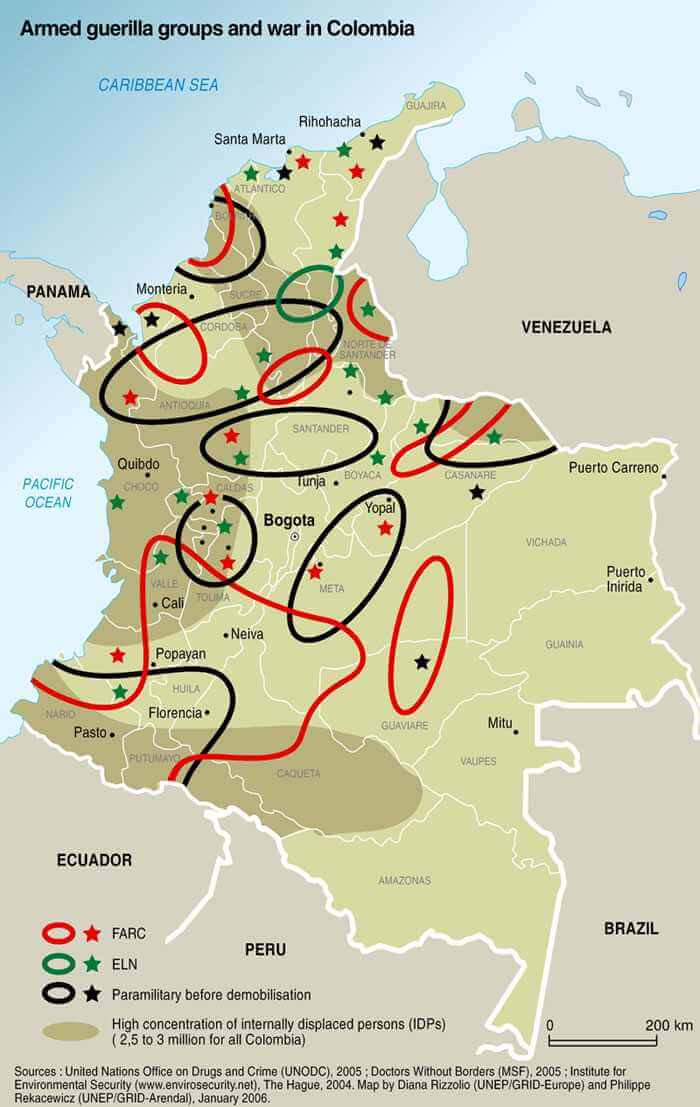
For seven years now, the US government has been dispersing large sums of money to the Colombian Military under the premise of aid, aimed at curbing drug production. So far they have sent out nearly five billion dollars… Every six months though, the US Government must first “certify” Colombia’s human rights progress before any additional monies can be sent out.. For seven years now the US government has given Colombia it’s seal of approval, no contest…
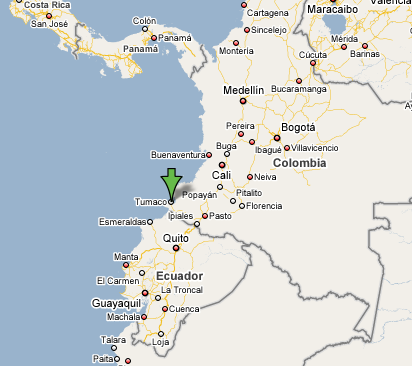
From news.nacla.org – When Miguel Moran Acosta graduated from high school this year in Colombia’s southern jungle province of Putumayo, he went back home to farm with his family in Alto Comboy, an Awa indigenous reserve. Days later, on May 23, Colombian army officials entered the reserve, tied Miguel’s hands and feet together and took him off to a nearby mountain. The following day, Miguel’s lifeless body was put on display in the province’s military barracks as a “guerrilla downed in combat.”1
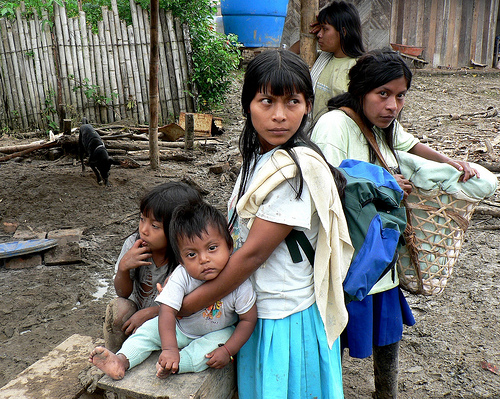
Hundreds of miles away, and just days before Miguel’s death, 700 Embera indigenous people gathered in peaceful protest on the Pan-American Highway in the northwest province of Chocó, demanding social services guaranteed to them under Colombian law. Colombia’s anti-riot squad attacked the protestors on May 26, killing three children—ages 6 to 8—with another 22, including 14 children, unaccounted for.2
Rodolfo Stavenhagen, the United Nations Special Rapporteur on the state of human rights and the fundamental freedoms of indigenous peoples, has warned the violence targeting Colombia’s indigenous communities “are truly acts of genocide and ethnocide against indigenous peoples.”3
Miguel’s death in Putumayo, for example, represents just one of over 1,000 cases of extrajudicial killings by state forces in Colombia over the last four years.4
“Over 100 forced displacements of our people in four years, nearly 600 political assassinations of indigenous peoples in the same time period and 423 illegal detentions. In this war, we understand that the government has an anti-insurgency policy and we understand that the government has an anti-narcotics policy, but we must ask, what is its policy against indigenous peoples—a policy of extermination?” (Read the full story)
For more information, please visit:
Amnesty International news on Colombia
http://www.colombiasolidarity.org/
Across the world right now, Indigenous peoples are facing a renewed assault on their lands, rights, and ways of life.
From extractive industries pushing deeper into ancestral territories, to governments rolling back hard-won protections,
the threat is global—and it is growing.
What makes this moment especially dangerous is how little attention it receives.
Stories like this are disappearing in real time. Mainstream media
barely covers it and the coverage is fragmented. The public is left without the context
needed to understand what is truly at stake.
That is exactly why IC Magazine exists..
For more than 20 years, IC has reported on Indigenous struggles worldwide — consistently, independently, and without compromise.
We don’t follow news cycles; we trace patterns. We don’t sensationalize; we provide context.
And when the world looks away, we stay focused.
But this work is increasingly difficult to sustain.
We refuse to lock our reporting behind a paywall. We don’t sell access through subscriptions.
And we don’t answer to advertisers. IC Magazine survives solely because readers like you choose to
support independent Indigenous journalism.
Please donate today if you can. Every contribution helps us to continue this crucial work.
Thank you,
John Ahni Schertow
Founder and Editor in Chief