Last Updated on August 14, 2026
President Barack Obama has made it clear that Yucca Mountain will never be used as radioactive waste dump site, after cutting out the project’s funding in the recently proposed draft federal budget.
The decision is part of the “new strategy toward nuclear waste disposal” that aims for “improved performance and accountability for the environmental legacy of the Nation’s nuclear weapons program by addressing health and safety risks across the country.”
It is also an important follow-up to promises Obama made during his election campaign that he would bring the project to its death bed.
Keeping in mind that the budget proposal “is the first step in the annual federal budget process,” which “serves as a ‘starting point’ for Congress to consider as it creates, debates and passes the annual spending bills,” as Robert Longley explains, it’s pretty much guaranteed that after two decades of planning, the waste storage project will never see the light of day.
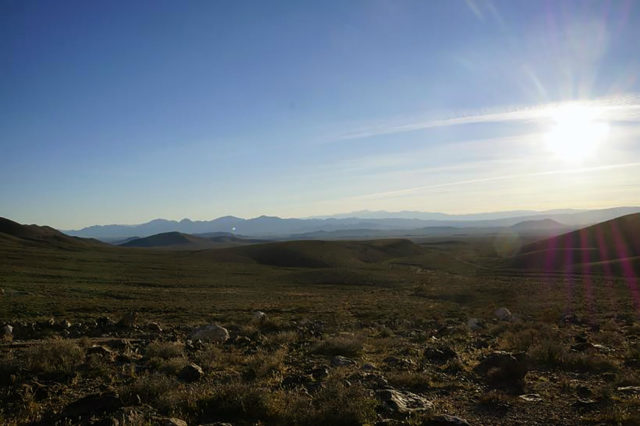
This spells a major victory for Yucca Mountain – located “in the heart of the Western Shoshone Nation” – and to all opponents of the dump site, who’ve continually warned about the danger it would pose to all life in the region.
All it would take is one earthquake.
Over the past 20 years there have been more than 600 recorded seismic events that registered over 2.5 on the Richter scale, all of which occurred within a 50-mile radius of the site – the largest being the 1992 Little Skull Mountain earthquake which registered 5.6 and caused damage to the DOE’s Yucca Mountain project office. Another nearby earthquake occurred 10 years later, measuring 4.2.
The DOE originally claimed the area would only see one earthquake about “every 10,000 years.”
Across the world right now, Indigenous peoples are facing a renewed assault on their lands, rights, and ways of life.
From extractive industries pushing deeper into ancestral territories, to governments rolling back hard-won protections,
the threat is global—and it is growing.
What makes this moment especially dangerous is how little attention it receives.
Stories like this are disappearing in real time. Mainstream media
barely covers it and the coverage is fragmented. The public is left without the context
needed to understand what is truly at stake.
That is exactly why IC Magazine exists..
For more than 20 years, IC has reported on Indigenous struggles worldwide — consistently, independently, and without compromise.
We don’t follow news cycles; we trace patterns. We don’t sensationalize; we provide context.
And when the world looks away, we stay focused.
But this work is increasingly difficult to sustain.
We refuse to lock our reporting behind a paywall. We don’t sell access through subscriptions.
And we don’t answer to advertisers. IC Magazine survives solely because readers like you choose to
support independent Indigenous journalism.
Please donate today if you can. Every contribution helps us to continue this crucial work.
Thank you,
John Ahni Schertow
Founder and Editor in Chief