Last Updated on March 23, 2026
This video is a recording of the joint St. Clair County Community College’s Green Team and Blue Water Sierra Club presentation “Deep Trouble — Nuclear Waste Burial in the Great Lakes Basin.”
The presenters discuss Canadian proposals to bury radioactive waste in the Great Lakes basin. Speakers include John Jackson, interim executive director and director, clean production and toxics, Great Lakes United, and Brennain Lloyd, Northwatch project coordinator and community organizer.
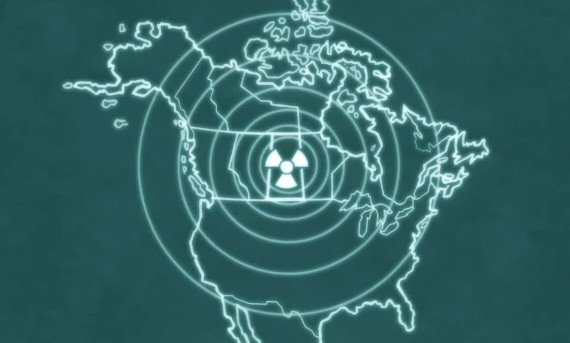
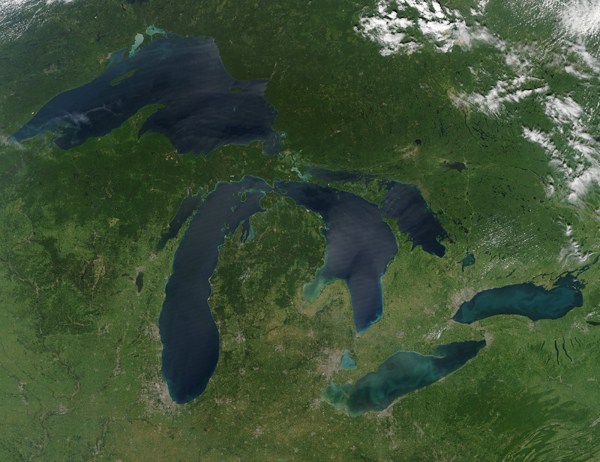
The nuclear industry in Canada is pursuing approval to bury 200,000 cubic meters of radioactive waste below the Bruce Nuclear Generating Station on the eastern shore of Lake Huron and is studying 21 different communities — 15 of them in the Great Lakes basin — as possible burial locations for all of Canada’s high level nuclear fuel waste. The presentation will include descriptions of the burial schemes, the hazards and risks for the Great Lakes community, possible transportation risks and linkages to U.S. nuclear waste issues.
Great Lakes United is a coalition of citizens’ groups representing Canada, the United States, First Nations and Indigenous Peoples in the Great Lakes/St. Lawrence River System. Northwatch is a coalition of environmental and social justice groups in northeastern Ontario.
Resources: Learn the facts and the risks associated with storage of highly radioactive nuclear waste in a deep geological repository
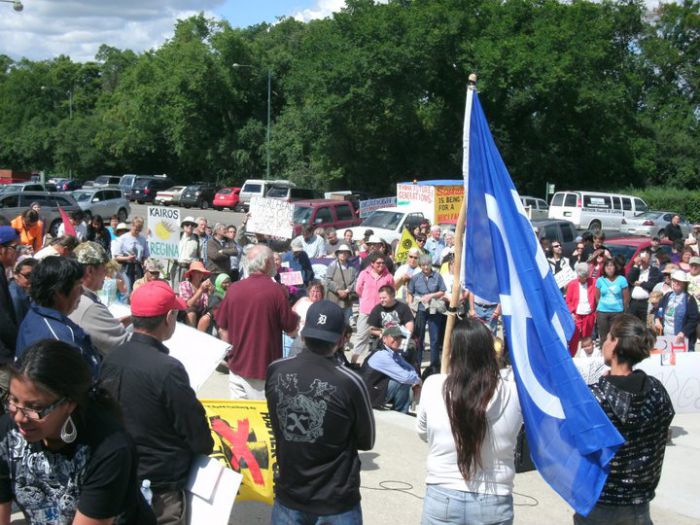
Press Release: First Nations, organizations renew opposition to Bruce Power nuke shipment
Article: Communities, Indigenous organizations pass resolutions against transportation and storage of nuclear waste in Saskatchewan
Article: NWMO Sabotages Healing Circle
Opinion: We move on; the ground beneath us doesn’t
Article: Nuclear Cover-Up Threatens Great Lakes Region (US)
Petition: Save the Great Lakes forever
Petition: Stop plans to build small nuclear reactors in Saskatchewan to power oil extraction from the Alberta Tar Sands
Factsheet: About The Proposed High-Level Nuclear Dgr (PDF)
Across the world right now, Indigenous peoples are facing a renewed assault on their lands, rights, and ways of life.
From extractive industries pushing deeper into ancestral territories, to governments rolling back hard-won protections,
the threat is global—and it is growing.
What makes this moment especially dangerous is how little attention it receives.
Stories like this are disappearing in real time. Mainstream media
barely covers it and the coverage is fragmented. The public is left without the context
needed to understand what is truly at stake.
That is exactly why IC Magazine exists..
For more than 20 years, IC has reported on Indigenous struggles worldwide — consistently, independently, and without compromise.
We don’t follow news cycles; we trace patterns. We don’t sensationalize; we provide context.
And when the world looks away, we stay focused.
But this work is increasingly difficult to sustain.
We refuse to lock our reporting behind a paywall. We don’t sell access through subscriptions.
And we don’t answer to advertisers. IC Magazine survives solely because readers like you choose to
support independent Indigenous journalism.
Please donate today if you can. Every contribution helps us to continue this crucial work.
Thank you,
John Ahni Schertow
Founder and Editor in Chief