Last Updated on March 23, 2026
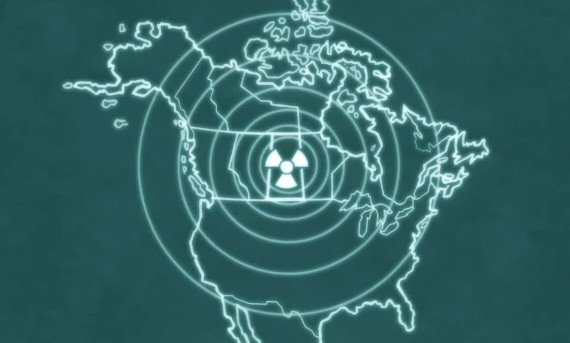
First Nations across Canada are mounting coordinated legal, political and grassroots campaigns to block the siting, transport and burial of radioactive waste — a confrontation that is testing Canada’s commitments to Indigenous rights, environmental protection and reconciliation.
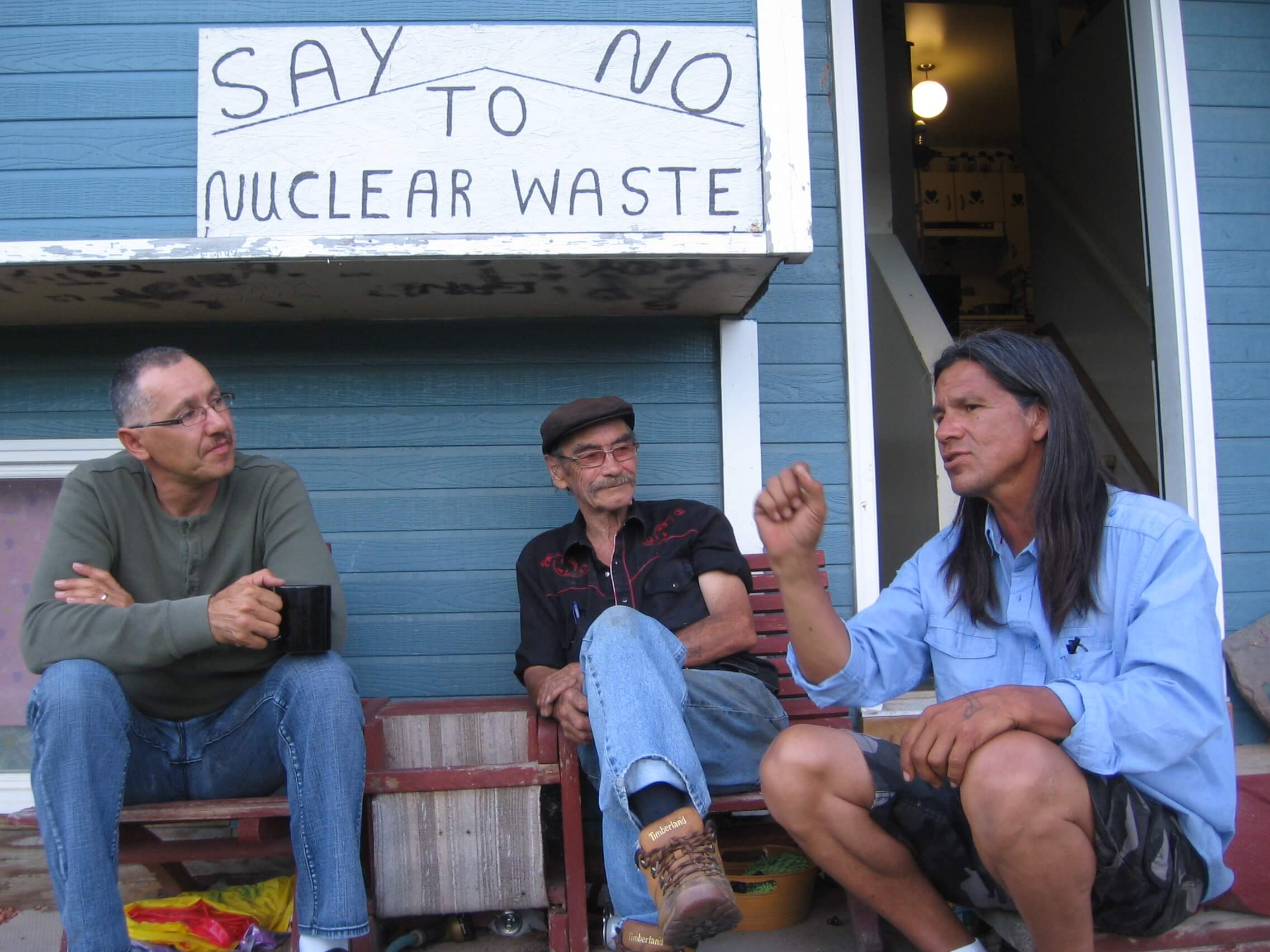
From the banks of the Ottawa River to the remote forests of northwestern Ontario, several Indigenous communities have issued a resounding “no” to proposals for nuclear waste disposal on or near their territories. These objections, grounded in treaty rights, ecological concerns and demands for consent, have triggered court challenges, public rallies and mounting tension between Indigenous nations and federal agencies.
At the heart of the confrontation sits Kebaowek First Nation, whose territory lies close to the Chalk River Laboratories site, roughly 180km northwest of Ottawa. The community has long opposed a proposed Near-Surface Disposal Facility (NSDF) that would store low- to intermediate-level radioactive waste approximately 1km from the Ottawa River.
In early 2025, the Federal Court issued two rulings in favor of Kebaowek. The court found that Canadian Nuclear Laboratories (CNL) and the Canadian Nuclear Safety Commission failed to fulfill their duty to consult adequately and neglected species-at-risk protections.
Under one ruling, the court struck down a permit granted under the Species at Risk Act, citing risks to at least two bat species and the endangered Blanding’s turtle.
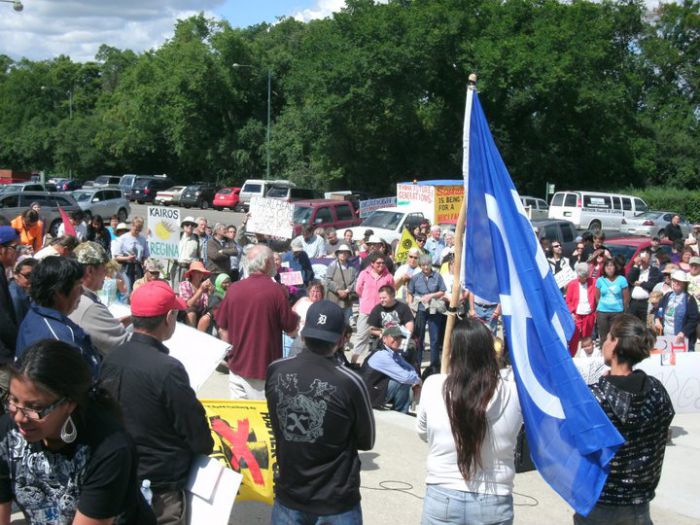
In early October 2025, a small rally of about 50 supporters gathered outside the Federal Court of Appeal in Ottawa to lend visible backing to Kebaowek’s fight. Kebaowek Chief Lance Haymond described the case as “a test of Canada’s commitment to reconciliation to its own constitution and the United Nations Declaration on the Rights of Indigenous Peoples.”
CNL has responded by appealing the rulings and signaling willingness to enter renewed talks with First Nations. The courts, however, have made clear that future consultation must be reformed to align with the United Nations Declaration on the Rights of Indigenous Peoples (UNDRIP).
Legal observers note that Kebaowek’s case may become a benchmark for how courts interpret the Crown’s obligations to consult under Canada’s incorporation of UNDRIP.
Farther west, a much larger and more controversial plan to bury Canada’s most radioactive waste is drawing fierce opposition from Northern Ontario First Nations. The Nuclear Waste Management Organization (NWMO) has selected a site near Revell Lake, between the Township of Ignace and Wabigoon Lake First Nation, as the preferred location for a Deep Geological Repository (DGR).
In December 2024, Eagle Lake First Nation filed an application for judicial review, arguing that the selection process was deeply flawed and bypassed meaningful input from communities whose traditional lands lie downstream. Eagle Lake asserts that Revell Lake is within its asserted territory and that decisions made without its consent constitute a violation of treaty rights.
A number of other First Nations in the region have also pushed back. In October 2024, nine northern Ontario First Nations jointly sent a letter to NWMO stating, “Our Nations have not been consulted, we have not given our consent, and we stand together in saying ‘no.’”
Some communities near the proposed routes of transportation — including Kitchenuhmaykoosib Inninuwug (KIFN), Grassy Narrows, Gull Bay, and the Ojibways of Onigaming and Lac Seul — have also publicly aligned themselves with opposition efforts.
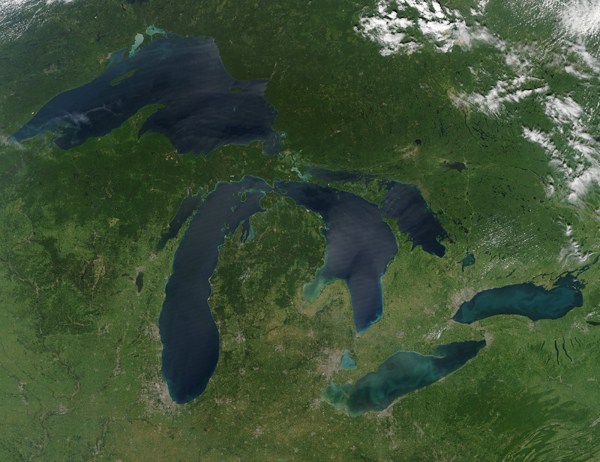
Critics note that NWMO’s “consent-based” model has sometimes excluded key communities from early decision-making, focusing instead on nearby municipalities or more immediately adjacent First Nations. The Assembly of First Nations has repeatedly called on NWMO to extend formal consent-seeking to all potentially impacted First Nations — including those along transport routes and shared watersheds.
The DGR project, when operational, is not expected to be active until the 2040s, following a protracted impact assessment and licensing process. But for many communities, the question of consent and oversight cannot wait.
The struggle over radioactive waste in Canada is part of a larger, recurring pattern in which Indigenous peoples have been placed on the frontlines of the world’s most dangerous industries. For more than seventy years, Indigenous nations worldwide have faced the fallout of uranium mining, weapons testing, and nuclear waste disposal—often without consent, compensation, or lasting remediation.
That legacy has come to define what many scholars and activists describe as nuclear colonialism. From the Shoshone to the Yakama and the Marshall Islands to northern Saskatchewan, Indigenous lands have repeatedly been treated as “sacrifice zones” that left generations of harm in the name of “progress”.
Canada’s current debate reflects that same fault line between progress and precaution. The siting of nuclear waste facilities cannot be separated from questions of sovereignty, trust, and historical accountability. What happens in places like Chalk River or Revell Lake will not only determine where Canada stores its waste—it will signal whether the country is willing to confront the inequities that have defined its own nuclear history, or whether those inequities will simply be buried deep alongside its own nuclear waste.
Across the world right now, Indigenous peoples are facing a renewed assault on their lands, rights, and ways of life.
From extractive industries pushing deeper into ancestral territories, to governments rolling back hard-won protections,
the threat is global—and it is growing.
What makes this moment especially dangerous is how little attention it receives.
Stories like this are disappearing in real time. Mainstream media
barely covers it and the coverage is fragmented. The public is left without the context
needed to understand what is truly at stake.
That is exactly why IC Magazine exists..
For more than 20 years, IC has reported on Indigenous struggles worldwide — consistently, independently, and without compromise.
We don’t follow news cycles; we trace patterns. We don’t sensationalize; we provide context.
And when the world looks away, we stay focused.
But this work is increasingly difficult to sustain.
We refuse to lock our reporting behind a paywall. We don’t sell access through subscriptions.
And we don’t answer to advertisers. IC Magazine survives solely because readers like you choose to
support independent Indigenous journalism.
Please donate today if you can. Every contribution helps us to continue this crucial work.
Thank you,
John Ahni Schertow
Founder and Editor in Chief