Last Updated on April 10, 2025
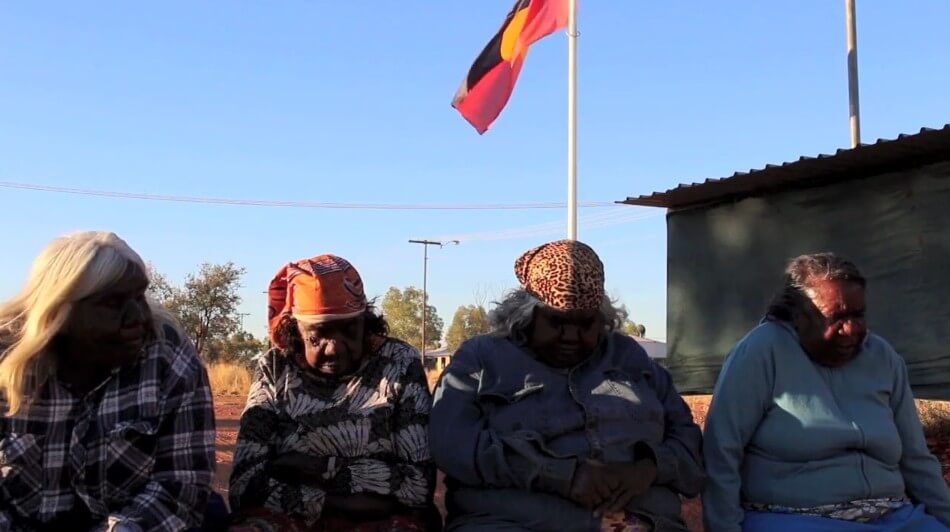
For more than 30 years, The Martu Peoples have defended the uranium on their ancestral lands in Karlamilyi National Park, in the East Pilbara region of Western Australia. Perceiving themselves as custodians, the Martu maintain that it’s their responsibility to keep the uranium in the ground to prevent it from causing any harm. They also maintain that they are responsible for anything the uranium does after it leaves their country.
It is for these reasons that the Martu are challenging an open pit uranium mine proposal by the Canadian mining giant, Cameco and its Japanese partner, Mitsubishi.
In this short video, you will hear Martu elders from the Parnngurr community express their concerns about the Kintyre uranium proposal and the risk of contamination should the project receive final approval.
Cameco and Mitsubishi have said that the mine won’t proceed until the value of uranium price effectively doubles. That may not happen for years, nevertheless, the Martu have no intention of waiting until then. They’re standing up now.
Across the world right now, Indigenous peoples are facing a renewed assault on their lands, rights, and ways of life.
From extractive industries pushing deeper into ancestral territories, to governments rolling back hard-won protections,
the threat is global—and it is growing.
What makes this moment especially dangerous is how little attention it receives.
Stories like this are disappearing in real time. Mainstream media
barely covers it and the coverage is fragmented. The public is left without the context
needed to understand what is truly at stake.
That is exactly why IC Magazine exists..
For more than 20 years, IC has reported on Indigenous struggles worldwide — consistently, independently, and without compromise.
We don’t follow news cycles; we trace patterns. We don’t sensationalize; we provide context.
And when the world looks away, we stay focused.
But this work is increasingly difficult to sustain.
We refuse to lock our reporting behind a paywall. We don’t sell access through subscriptions.
And we don’t answer to advertisers. IC Magazine survives solely because readers like you choose to
support independent Indigenous journalism.
Please donate today if you can. Every contribution helps us to continue this crucial work.
Thank you,
John Ahni Schertow
Founder and Editor in Chief