
Last Updated on June 13, 2026
Traditional Owners in Australia’s Northern Territory have formally dedicated a new Indigenous Protected Area spanning more than 1.6 million hectares, creating a massive, Indigenous-owned conservation corridor.
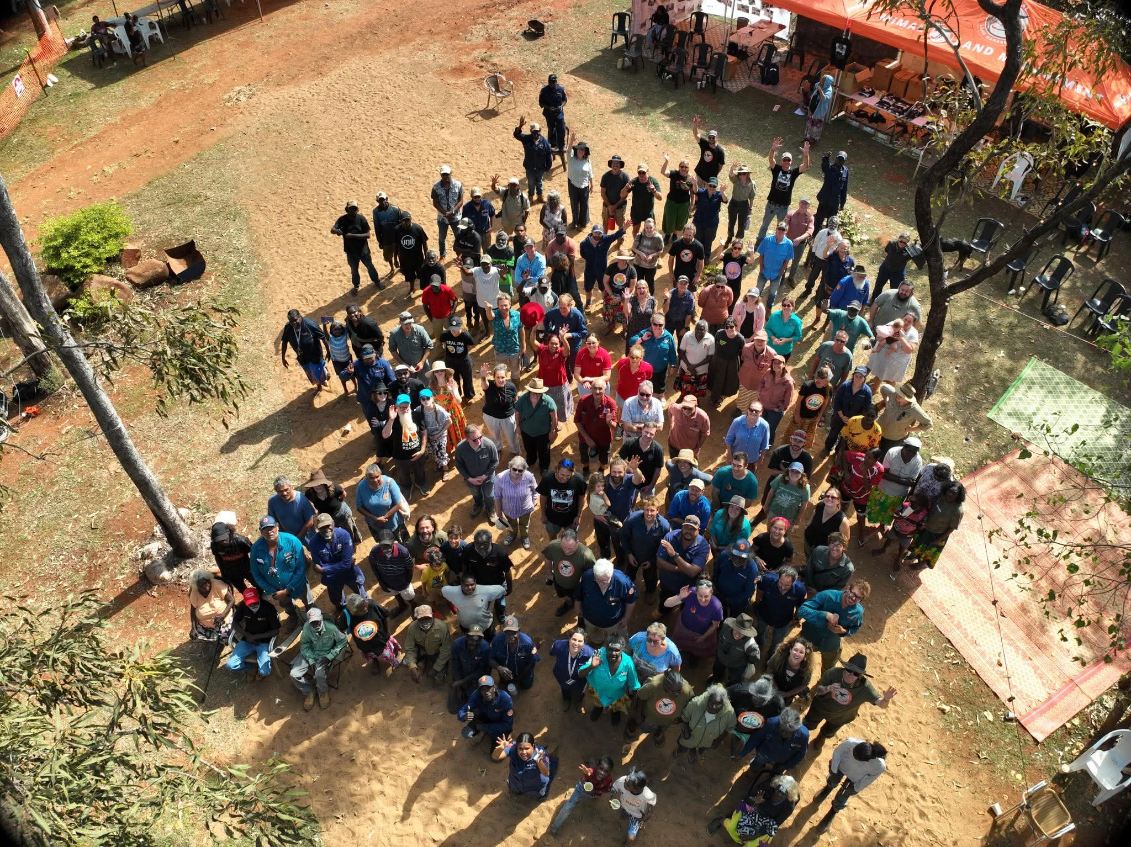
The Mimal Indigenous Protected Area was officially dedicated during a ceremony near the remote community of Bulman in south-central Arnhem Land on Saturday. The protected area encompasses rugged savanna landscapes, river systems, sacred sites and ancient rock art locations while providing habitat for numerous threatened species.
The newly declared reserve is home to nine threatened species, including the northern quoll, black-footed tree-rat and Gouldian finch. It also contains culturally significant dreaming tracks, rock art galleries and sacred places connected to ancestral beings that have long been cared for by Indigenous communities.
The protected area will be managed by the Mimal Land Management Aboriginal Corporation, an Indigenous-led non-profit organization representing the Dalabon, Rembarrnga and Mayili peoples of central Arnhem Land. The corporation has spent years developing plans to formally protect the region while maintaining cultural responsibilities and traditional land management practices.
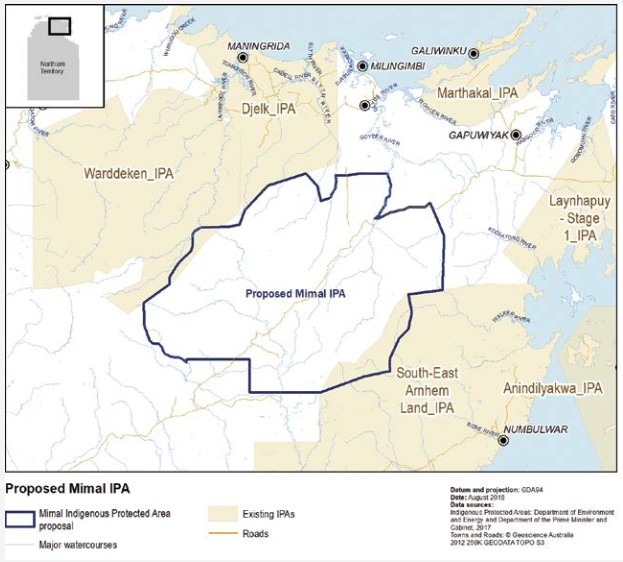
Draft boundary for the Mimal Indigenous Protected Area (Source)
The Mimal Indigenous Protected Area overlaps with several existing Indigenous Protected Areas, including Warddeken, Djelk, South East Arnhem Land and Arafura Swamp, and borders the Wongalara Sanctuary. Together, these protected areas form a vast connected landscape managed by Indigenous peoples, enhancing ecological connectivity across northern Australia.
The reserve will be cared for by the Mimal Rangers and the recently established Mimal Women’s Rangers, whose work includes fire management, invasive species control, biodiversity monitoring and the protection of cultural heritage sites. Indigenous ranger programs have become a cornerstone of conservation efforts across northern Australia, combining traditional ecological knowledge with contemporary environmental science.
“The Albanese Government is proud to back Traditional Owners and First Nations communities to manage land and sea Country through our Indigenous Protected Areas and Indigenous Rangers Programs, delivering positive outcomes for the environment as well as employment and economic development opportunities,” said Minister for Indigenous Australians, Malarndirri McCarthy.
“Traditional Owners have managed their country since time immemorial, and this IPA showcases traditional practices and knowledge can complement modern land conservation techniques. This dedication is a huge win for the local community as it will deliver long term economic benefits while also protecting culture and country for the generations to come,” said Marion Scrymgour, MP for Lingiari.
Indigenous Protected Areas have become a cornerstone of the country’s conservation strategy, with Indigenous-managed lands now accounting for a significant share of Australia’s protected estate. Nearly one-quarter of the nation’s landmass is now under protection, underscoring the growing role of Traditional Owners in safeguarding biodiversity, cultural heritage and ecologically significant landscapes for future generations.
Across the world right now, Indigenous peoples are facing a renewed assault on their lands, rights, and ways of life.
From extractive industries pushing deeper into ancestral territories, to governments rolling back hard-won protections,
the threat is global—and it is growing.
What makes this moment especially dangerous is how little attention it receives.
Stories like this are disappearing in real time. Mainstream media
barely covers it and the coverage is fragmented. The public is left without the context
needed to understand what is truly at stake.
That is exactly why IC Magazine exists..
For more than 20 years, IC has reported on Indigenous struggles worldwide — consistently, independently, and without compromise.
We don’t follow news cycles; we trace patterns. We don’t sensationalize; we provide context.
And when the world looks away, we stay focused.
But this work is increasingly difficult to sustain.
We refuse to lock our reporting behind a paywall. We don’t sell access through subscriptions.
And we don’t answer to advertisers. IC Magazine survives solely because readers like you choose to
support independent Indigenous journalism.
Please donate today if you can. Every contribution helps us to continue this crucial work.
Thank you,
John Ahni Schertow
Founder and Editor in Chief