Last Updated on May 12, 2026
The Federal Court of Australia has ordered mining giant Fortescue to pay the Yindjibarndi Ngurra Aboriginal Corporation more than A$150 million in compensation for cultural loss caused by iron ore mining on Yindjibarndi Country in Western Australia’s Pilbara region, in what is being described as the largest native title compensation ruling in Australian history.
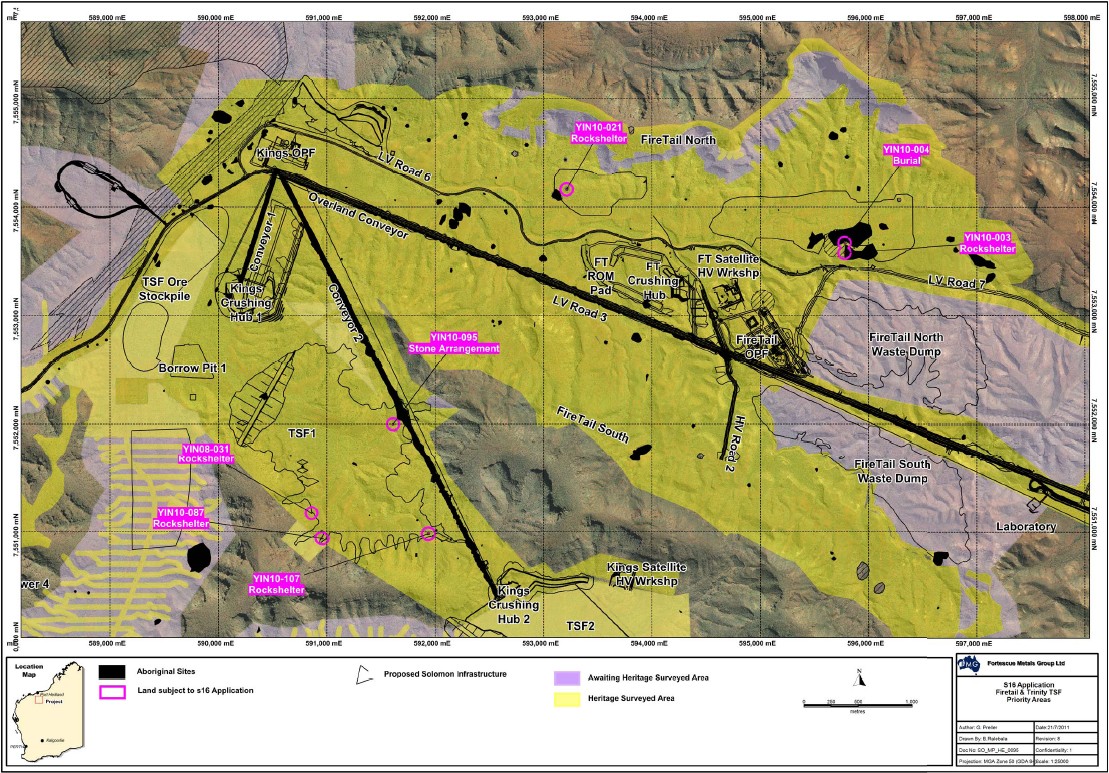
Justice Stephen Burley ruled that Fortescue’s Solomon Hub mining operations caused extensive cultural and spiritual damage to the Yindjibarndi peoples, including the destruction of dozens of culturally significant sites and severe disruption to their relationship with Country. The court also awarded an additional A$100,000 for economic loss.
The compensation case stems from a long-running dispute between the Yindjibarndi and Fortescue, founded by Australian billionaire Andrew Forrest. The mining company began operating the Solomon Hub mine in 2013 without reaching a land use agreement with the Yindjibarndi traditional owners, despite the community’s refusal to authorize the project.
The Yindjibarndi peoples were granted exclusive native title rights over roughly 2,700 square kilometres of land in 2017 following years of litigation, a decision later upheld on appeal. The compensation proceedings formally began in 2022 after negotiations between the parties failed.
Court documents and reporting presented during the hearings alleged that more than 240 cultural and archaeological sites were damaged or destroyed by mining operations, including rock shelters, ceremonial areas and sites connected to Yindjibarndi spiritual law and songlines.
During earlier hearings held on Country near Roebourne, Yindjibarndi elders described the destruction in deeply personal terms. One elder told the court that the land represented “my religion” and said mining activities had destroyed sacred places central to Yindjibarndi identity and law.
The Yindjibarndi had originally sought nearly A$1.8 billion in compensation, arguing the amount should reflect both the scale of cultural loss and the immense profits generated from the mine, which reportedly earned Fortescue around A$80 billion since operations began.
In a statement following the ruling, Fortescue said it accepted the court’s decision and reiterated its commitment to First Nations engagement.
Yindjibarndi leaders, while welcoming the decision as historic, said the ruling also underscored the lasting consequences of mining projects imposed without free, prior and informed consent.
Across the world right now, Indigenous peoples are facing a renewed assault on their lands, rights, and ways of life.
From extractive industries pushing deeper into ancestral territories, to governments rolling back hard-won protections,
the threat is global—and it is growing.
What makes this moment especially dangerous is how little attention it receives.
Stories like this are disappearing in real time. Mainstream media
barely covers it and the coverage is fragmented. The public is left without the context
needed to understand what is truly at stake.
That is exactly why IC Magazine exists..
For more than 20 years, IC has reported on Indigenous struggles worldwide — consistently, independently, and without compromise.
We don’t follow news cycles; we trace patterns. We don’t sensationalize; we provide context.
And when the world looks away, we stay focused.
But this work is increasingly difficult to sustain.
We refuse to lock our reporting behind a paywall. We don’t sell access through subscriptions.
And we don’t answer to advertisers. IC Magazine survives solely because readers like you choose to
support independent Indigenous journalism.
Please donate today if you can. Every contribution helps us to continue this crucial work.
Thank you,
John Ahni Schertow
Founder and Editor in Chief