Last Updated on November 13, 2011
By Nick Puhjera, Times Staff — Delegates from around the world will converge on Hobbema, spotlighting the plight of aboriginal people.
The event marks the first time the United Nations is holding a meeting on First Nations territory and comes as good news to former Wetaskiwin MP Willie Littlechild, a member of the UN permanent forum on indigenous issues.
“Canada should be leading the way (in terms of treaties). We’re going to put our heads together,” he said.
The theme of the meeting is best practices — practical strategies and practices for the implementation of treaties, agreements and other constructive arrangements between states and indigenous peoples.
Originally scheduled for September, the meeting has been postponed until November.
Questions which will be asked include: What is the indigenous understanding of treaties and what would be the Cree understanding of treaties?
The high-security meeting will feature a delegation of 40 to 50 experts, with approximately 200 attendees in all.
In the public eye, treaties are seen as a problem, Littlechild agreed.
“Treaties are a partnership (which) sadly (have) been overlooked. Treaties are seen as a problem. We have existing modern treaties, pre-Confederation treaties.”
He noted the Canadian Constitution is the document which calls the Canadian people to respect treaties.
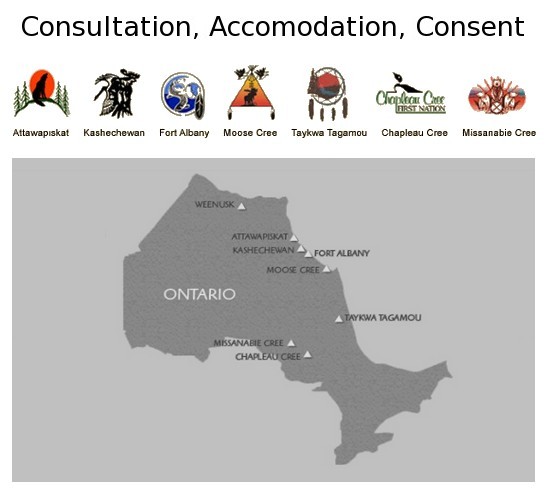
Littlechild agreed the recent water crisis at the Kashechewan Cree First Nations community in Northern Ontario is just one example of a so-called emergency issue.
Whether in Northern Ontario or Hobbema, the problems affecting First Nations are ultimately linked with treaties.
“I’m (at Hobbema) quite a lot. Whether it’s health, housing or education, every emerging issue which has (surfaced) as an emergency issue is treaty-related.”
The Canadian response is often “reactive instead of proactive. A lot of these issues can be prevented before they become an emergency.”
The use of the meeting will also be educational. Littlechild cited the admirable treaty education program in Saskatchewan as one Alberta could emulate.
“In Saskatchewan they have a very good treaty education component. Not just indigenous peoples, but all children (must learn it).
People must not be discouraged that progress regarding First Nations may come slowly. The convention on the rights of the child took 27 years to agree upon, he said.
“It is possible for people to come together. We can respect both individual and collective rights.”
Maskwacis Cree political analyst and UN working group co-ordinator Marlene Buffalo also commented on the significance of the meeting. “For the Muskwacis Cree, it’s the culmination of their 30 years of work on treaties. It’s really an opportunity to have their concerns addressed,” she said.
But the history goes much farther than just three decades. “It’s a follow-up on the recommendations that were made on the treaty report by special rapporteur Miguel Alfonso Martinez. He was instrumental in preparing the final work in the treaty study.”
Buffalo said the seminar will be educational as well.
“I agree it’s an opportunity to become aware of the intricacies of the work that has transpired from the treaty study to now. Our work involving human rights has been 30 years but Treaty 6 was (signed) in the 19th century. The Indian people are not going away.”
There are more than 370 million indigenous people worldwide.
source
Across the world right now, Indigenous peoples are facing a renewed assault on their lands, rights, and ways of life.
From extractive industries pushing deeper into ancestral territories, to governments rolling back hard-won protections,
the threat is global—and it is growing.
What makes this moment especially dangerous is how little attention it receives.
Stories like this are disappearing in real time. Mainstream media
barely covers it and the coverage is fragmented. The public is left without the context
needed to understand what is truly at stake.
That is exactly why IC Magazine exists..
For more than 20 years, IC has reported on Indigenous struggles worldwide — consistently, independently, and without compromise.
We don’t follow news cycles; we trace patterns. We don’t sensationalize; we provide context.
And when the world looks away, we stay focused.
But this work is increasingly difficult to sustain.
We refuse to lock our reporting behind a paywall. We don’t sell access through subscriptions.
And we don’t answer to advertisers. IC Magazine survives solely because readers like you choose to
support independent Indigenous journalism.
Please donate today if you can. Every contribution helps us to continue this crucial work.
Thank you,
John Ahni Schertow
Founder and Editor in Chief