Last Updated on September 18, 2013
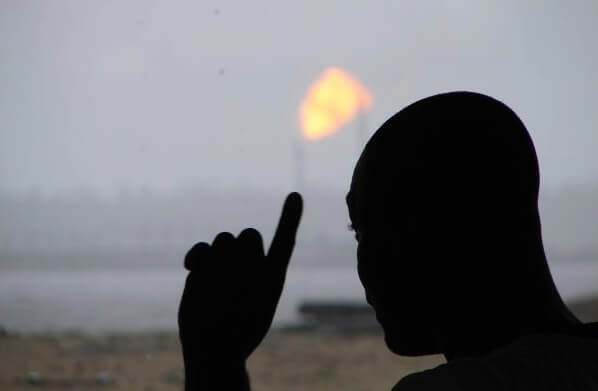
Poison Fire is a grassroots documentary that brings together video testimonies and evidence on the impacts of oil spills and gas flaring in the Niger Delta. Below you will find the film in it’s entirety.
Synopsis from the film’s official website:
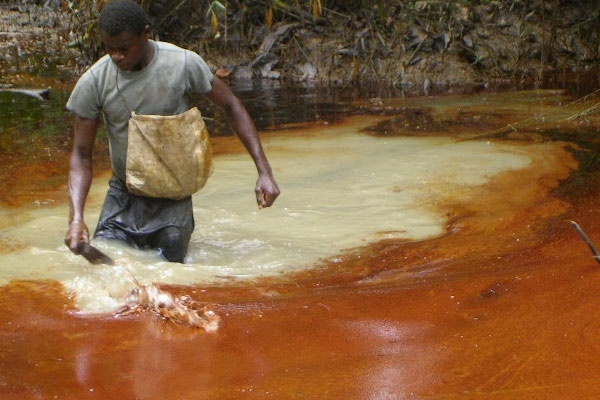
The Niger Delta is an environmental disaster zone after fifty years of oil exploitation. One and a half million tons of crude oil has been spilled into the creeks, farms and forests, the equivalent to 50 Exxon Valdez disasters, one per year. Natural gas contained in the crude oil is not being collected, but burnt off in gas flares, burning day and night for decades. The flaring produces as much greenhouse gases as 18 million cars and emits toxic and carcinogenic substances in the midst of densely populated areas. Corruption is rampant, the security situation is dire, people are dying. But the oil keeps flowing.
Poison Fire follows a team of local activists as they gather “video testimonies” from communities on the impact of oils spills and gas flaring. We see creeks full of crude oil, devastated mangrove forests, wellheads that has been leaking gas and oil for months. We meet people whose survival is acutely threatened by the loss of farmland, fishing and drinking water and the health hazards of gas flaring.
We also meet meet with Jonah Gbemre, who took Shell to court over the gas flaring in his village and won a surprise victory in the court.
Ifie Lott travels to the Netherlands to attend Shell’s Annual General Meeting. She wants to ask a simple question: Is Shell going to obey the court order and stop flaring? There is a demonstration outside the meeting hall. Shell’s CEO shows up for the photo op and shakes her hand, and she meets the MD of Shell-Nigeria, Basil Omiyi. She asks him about the spills and the flaring. He patiently explains Shell’s policies and efforts for social development, but what he says is at odds with reality on the ground.
Back in the Delta, Ifie returns to the communties and shows the taped interview with Omiyo to the victims of the oil industry…
Shell ignored the federal high court ruling. The oil companies continue the illegal gas flaring. Shell has set its own “flares out” deadline to end of 2009. But they have kept saying “next year” for a decade, and in the Delta nobody believes them.
Meanwhile, the oil keeps flowing.
Across the world right now, Indigenous peoples are facing a renewed assault on their lands, rights, and ways of life.
From extractive industries pushing deeper into ancestral territories, to governments rolling back hard-won protections,
the threat is global—and it is growing.
What makes this moment especially dangerous is how little attention it receives.
Stories like this are disappearing in real time. Mainstream media
barely covers it and the coverage is fragmented. The public is left without the context
needed to understand what is truly at stake.
That is exactly why IC Magazine exists..
For more than 20 years, IC has reported on Indigenous struggles worldwide — consistently, independently, and without compromise.
We don’t follow news cycles; we trace patterns. We don’t sensationalize; we provide context.
And when the world looks away, we stay focused.
But this work is increasingly difficult to sustain.
We refuse to lock our reporting behind a paywall. We don’t sell access through subscriptions.
And we don’t answer to advertisers. IC Magazine survives solely because readers like you choose to
support independent Indigenous journalism.
Please donate today if you can. Every contribution helps us to continue this crucial work.
Thank you,
John Ahni Schertow
Founder and Editor in Chief