
Last Updated on January 7, 2019
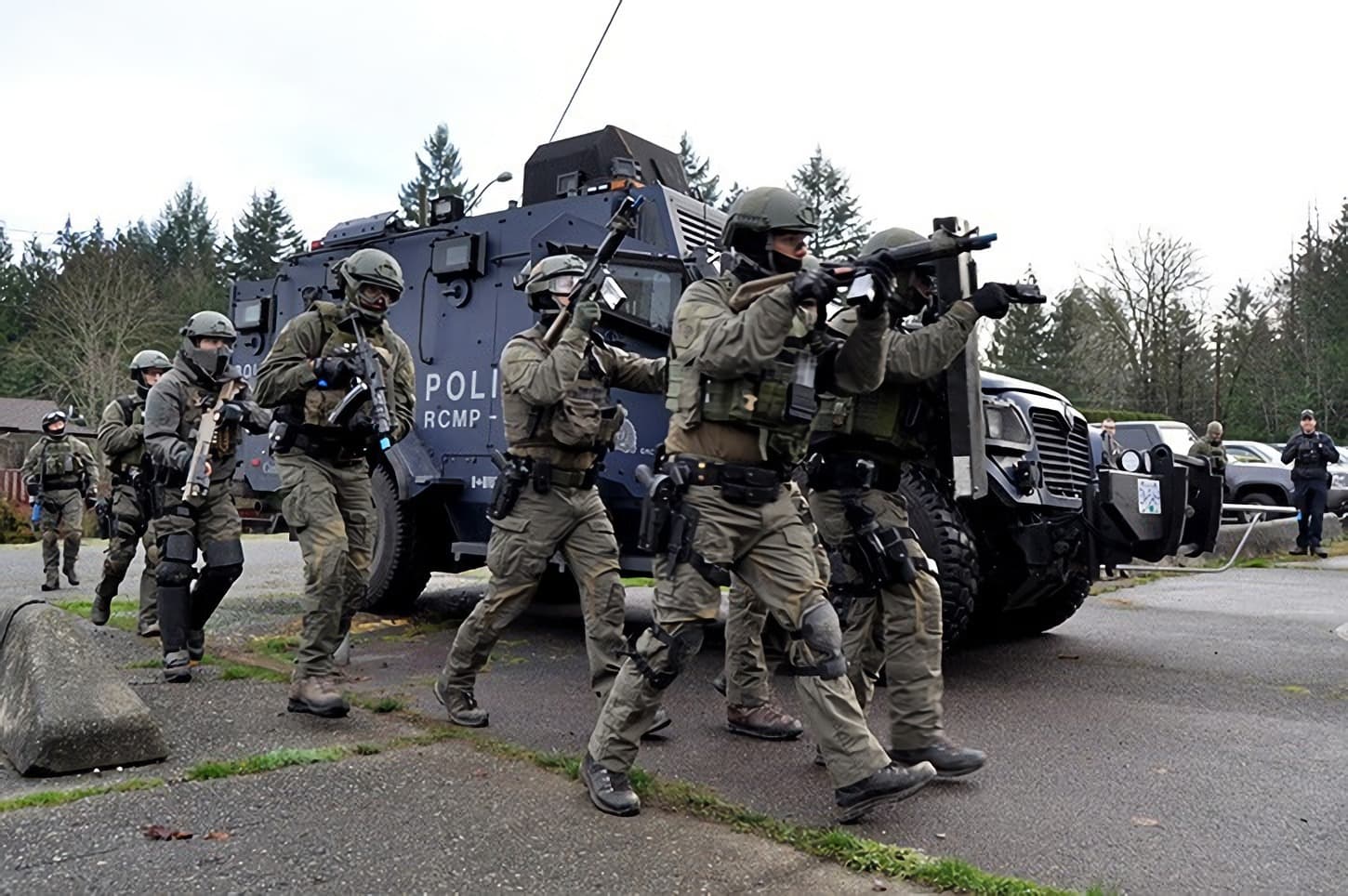
Two days ago, members of the RCMP’s Aboriginal Police Liaison met with the Wet’suwet’en Hereditary Chiefs and indicated that specially trained tactical forces will be deployed to forcibly remove Wet’suwet’en people from sovereign Wet’suwet’en territory.
Police refused to provide any details of their operation to the Dini’ze and Tsake’ze (hereditary chiefs) including the number of officers moving in, the method of forcible removal, or the timing of deployment.
By rejecting the requests for information by the Dini’ze and Tsake’ze the RCMP indicated that they intend to surprise and overwhelm the Wet’suwet’en people who are protecting their territories on the ground.
The RCMP’s ultimatum, to allow TransCanada access to un-ceded Wet’suwet’en territory or face police invasion, is an act of war. Despite the lip service given to “Truth and Reconciliation”, Canada is now attempting to do what it has always done – criminalize and use violence against indigenous people so that their unceded homelands can be exploited for profit.
The RCMP were advised that there are children, elders, and families visiting and present at the Gidimt’en Access Point, to which they did not respond.
Since it was established, the Gidimt’en Access Point has hosted gatherings, workshops, and traditional activities for Wet’suwet’en, and provided an essential space for Wet’suwet’en to reconnect with their traditional territories.
Article 10 of the UN Declaration on the Rights of Indigenous Peoples clearly states “Indigenous peoples shall not be forcibly removed from their land or territories.” Any removal of Wet’suwet’en peoples by the RCMP, or any other authoritarian forces, will directly violate UNDRIP and the Trudeau government’s promise to implement UNDRIP.
We are now preparing for a protracted struggle. The hereditary chiefs of the Wet’suwet’en and the land defenders holding the front lines have no intention of allowing Wet’suwet’en sovereignty to be violated.
In plain language, the threat made by RCMP to invade Wet’suwet’en territories is a violation of human rights, a siege, and an extension of the genocide that Wet’suwet’en have survived since contact.
Canada knows that its own actions are illegal. The Wet’suwet’en fought for many years in the Delgamuukw-Gisday’wa court case to have their sovereignty recognized and affirmed by Canadian law.
In 1997, the Supreme Court of Canada ruled that the Wet’suwet’en people, as represented by their hereditary leaders, had not given up rights and title to 22,000 square kilometres of Northern British Columbia.
Knowing that further litigation would be prohibitively expensive to Indigenous plaintiffs (and that pipeline construction could be completed before any significant legal issues could be further resolved) TransCanada and the provincial and federal governments are openly violating this landmark ruling.
The creation of the Gidimt’en Checkpoint was announced in the Wet’suwet’en feast hall, with the support of all chiefs present. Under ‘Anuc niwh’it’en (Wet’suwet’en law) all five clans of the Wet’suwet’en have unanimously opposed all pipeline proposals.
TransCanada lawyers have argued that the Unist’ot’en are essentially a rogue group without a rightful claim to Aboriginal title. The Gidimt’en intervention shows that the Unist’ot’en are not alone, and that the hereditary chiefs of all clans are prepared to uphold Wet’suwet’en law in refusing CGL
access.
The Wet’suwet’en have laid out a path toward the implementation of UNDRIP, and the Free, Prior, and Informed Consent requirement of international law. Canada has chosen to ignore this path toward reconciliation.
Support the Wet’suwet’en by offering physical support to the camps, monetary or material donation, or by taking action where you stand.
We are conducting peaceful actions as sovereign peoples on our territories, and ask that all actions taken in solidarity are conducted peacefully and according to the traditional laws of other Indigenous Nations.
Forcible trespass onto Wet’suwet’en territories and the removal of Indigenous peoples from their lands must be stopped. Provincial and federal governments must be confronted.
To donate: https://www.gofundme.com/gitdumt039en-access-point or http://unistoten.camp/support-us/donate/
For our guiding principals on how to support, and a fact sheet on the Gidimt’en Access Point, visit: https://www.facebook.com/permalink.php?story_fbid=225163691762758&id=212798726332588
#Notrespass #Wedzinkwa #Wetsuwetenstrong
For reliable updates at any given time please bookmark the official Unist’ot’en Camp Facebook page: https://www.facebook.com/unistoten/ or the Wet’suwet’ten Access Point on Gidumt’en Terriorty.
Across the world right now, Indigenous peoples are facing a renewed assault on their lands, rights, and ways of life.
From extractive industries pushing deeper into ancestral territories, to governments rolling back hard-won protections,
the threat is global—and it is growing.
What makes this moment especially dangerous is how little attention it receives.
Stories like this are disappearing in real time. Mainstream media
barely covers it and the coverage is fragmented. The public is left without the context
needed to understand what is truly at stake.
That is exactly why IC Magazine exists..
For more than 20 years, IC has reported on Indigenous struggles worldwide — consistently, independently, and without compromise.
We don’t follow news cycles; we trace patterns. We don’t sensationalize; we provide context.
And when the world looks away, we stay focused.
But this work is increasingly difficult to sustain.
We refuse to lock our reporting behind a paywall. We don’t sell access through subscriptions.
And we don’t answer to advertisers. IC Magazine survives solely because readers like you choose to
support independent Indigenous journalism.
Please donate today if you can. Every contribution helps us to continue this crucial work.
Thank you,
John Ahni Schertow
Founder and Editor in Chief


