Last Updated on December 15, 2025
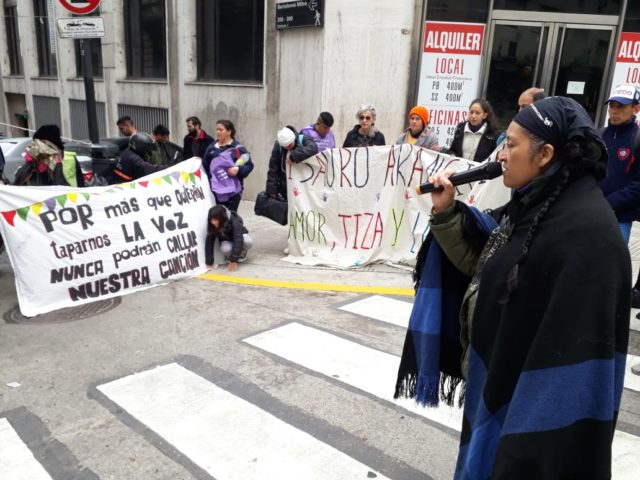
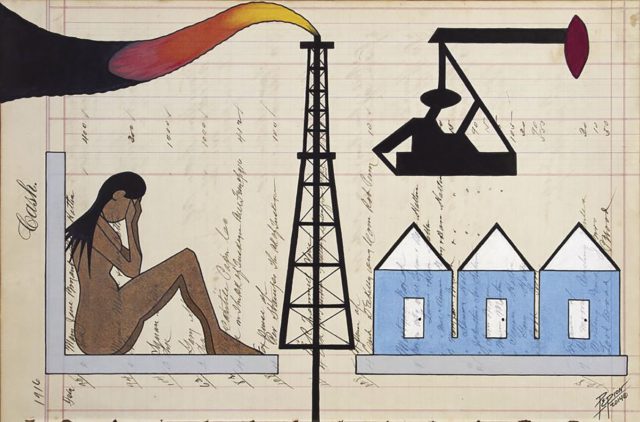
Over 12,000 Indigenous women have been forcibly sterilized in Canada since the 1970s—an abuse that has continued as recently as 2024. Women would enter hospitals seeking routine medical care, only to be pushed into procedures that were framed as harmless contraception. In reality, medical staff carried out irreversible sterilizations without the full understanding or consent of their Indigenous patients. These women put their trust in Canada’s medical institutions, only to be assaulted, having their families and communities altered in ways that can never be undone.
Canada has a long history of eugenic practices dating back to the early 1900s when Alberta and British Columbia adopted legislation, The Sexual Sterilization Acts, which enabled the forced and coercive sterilization of citizens who were deemed “mentally ill” or “deficient.” Combined with the amendments to the Indian Act, Indigenous people declared mentally disabled could be sterilized and have their land repossessed by the government.
Although laws promoting the forced sterilization of Indigenous peoples were repealed in the 1970s, no criminal statute existed, which means forced sterilizations were allowed to continue until the act was criminalized in 2024.
The Survivors Circle for Reproductive Justice is one of the organizations created to help address the history of forced sterilization. The Canadian organization was founded in 2023 to provide healing support to survivors and public education on the history of forced sterilization, and has worked to identify survivors.
Harmony Redsky, its executive director, estimates that there are somewhere between 12,000 and 15,000 survivors in Canada. “And we feel we’ve only scratched the surface… Many more folks who may not previously have been identified are now self-identifying as survivors. So we don’t know what the true number is, and we have a lot of work to do.”
The documentary “The Unforgotten” details the history of systemic racism against Inuit, Métis, and First Nations peoples across their lives. It illustrates how colonial violence is not limited to a single policy or era, but instead unfolds across generations—from residential schools to the Sixties Scoop to the ongoing crises of forced sterilization and Missing and Murdered Indigenous Women, Girls, and Two-Spirit People.
Recent legislation is adding a new chapter to this tragic legacy.
In 2018, the United Nations Committee Against Torture formally recognized forced or coercive sterilization as torture. The Committee stated that the practice is intentional, causes serious harm, and is rooted in discrimination. It also called upon Canada to address this serious human rights violation.
In 2021, Canada introduced Senate Bill S-250, which originally criminalized forced sterilization. In 2025, Senate Bill S-228 was introduced to recognize the government’s role in this aspect of Canada’s long history of genocide.
But do these Bills go far enough?
Indigenous women have been speaking out about their experiences for the last decade, but the most recent case Survivors Circle for Reproductive Justice encountered was in 2024.
Many survivors are unaware that sterilization procedures were performed on them. As Redsky puts it, “For many of the people that have experienced sterilization, they’ve never put words to their experience. They may have been through a procedure, known that something wrong had happened, thought maybe the hospital wasn’t going to do anything about it, and then packed it away for decades, only now to hear that there’s been these words put to the issue to describe that it is actually forced or coerced sterilization that they experienced and that it was malicious in the way it had been proposed or even pushed or forced onto those people.”
In 2018, the United Nations Committee Against Torture formally called on Canada to recognize and make plans to address the forced sterilization of Indigenous women.
But in 2021, the Committee reprimanded Canada for lacking a “coordinated, comprehensive, transparent, and survivor-centered approach to fully address the issue…Canada has ultimately failed to implement the Committee’s very specific and concrete recommendations to investigate the issue of forced and coerced sterilization, ensure non-repetition, and provide justice to survivors and their families, an egregious breach of its obligations under the Convention.”
Senator Yvonne Boyer, a representative for Ontario in Canada’s Senate, introduced the first bill to amend Canada’s Criminal Code to criminalize forced and coercive sterilization.
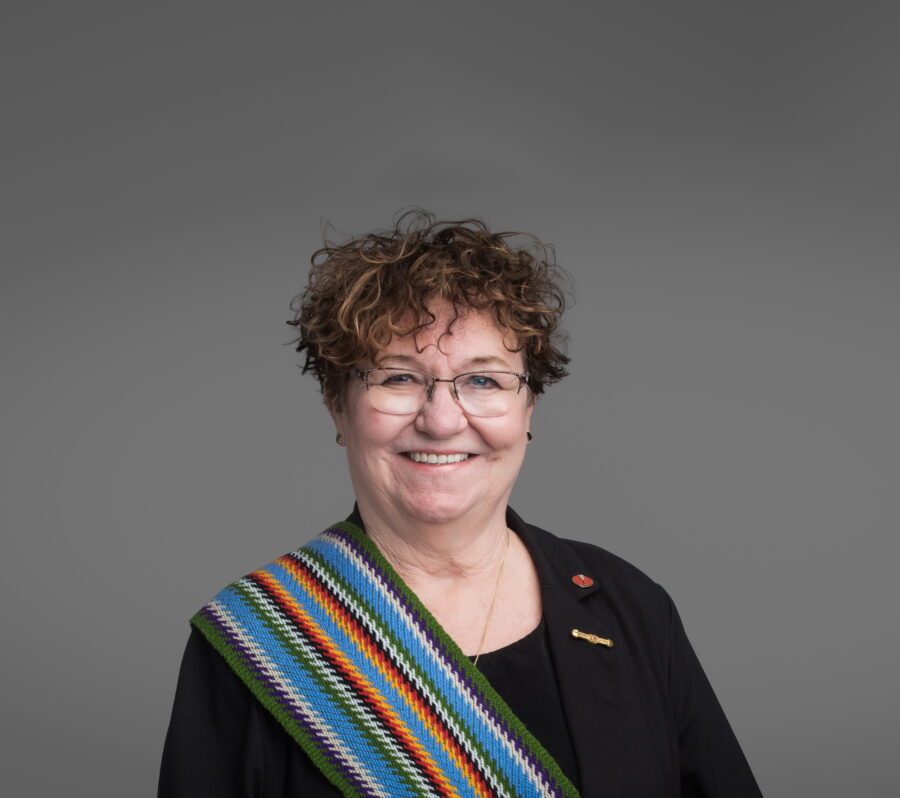
The bill passed in October of 2024. It criminalizes coercive practices and any doctor who performs a sterilization procedure without the informed consent of their patient. The bill also requires medical practitioners to inform patients of other contraceptive options and that patients be able to withdraw consent at any point before the procedure.
The momentum of Bill S-250 has continued with Senate Bill S-228, which was introduced in June of 2025, and is currently working through the House of Commons.
Member of Parliament Jamie Schmale introduced the bill, stating that “coerced or forced sterilization is a deeply troubling violation of human rights with a legacy that has disproportionately affected Indigenous Peoples in Canada. This Bill will ensure that these acts are clearly defined and explicitly criminalized under the law.”
“This Bill represents the wishes of survivors of forced and coerced sterilization to have the practice explicitly criminalized,” added Senator Boyer, as she urged for quick passage of the Bill.
The Bill’s additional protections hope to secure better medical care for minorities and Indigenous peoples across Canada.
Forced sterilization is a dark and rarely discussed part of Canada’s colonial history, but it’s also an ongoing reality. Women across Canada have had their autonomy stolen and lives destroyed, and such assaults were not criminalized until 2024.
Forced sterilization isn’t unique to Canada either. It has been forced upon Indigenous peoples in the United States, Peru, Greenland, and numerous other countries. While most settler colonial nations used forced sterilization to quietly eliminate Indigenous nations, Canada’s government paved a legal route supported by government funds to sterilize and destroy Indigenous nations.
New legislation finally criminalizes the act, but the lack of government acknowledgement and apology begs the question: is it enough?
In 2025, Denmark issued a formal apology to the thousands of Inuit women and girls, some as young as 12, who were forcibly sterilized in Greenland between the 1960s and 1990s in a eugenics program that was designed to curb Indigenous birth rates in their own homelands. However, repairing the damage done to individuals, families, communities, and nations across generations remains unfinished.
While Canada’s amendments to the criminal code are a step forward, the lack of reparations or government apology illustrates the work that still needs to be done to address a century of genocidal acts. Senate Bill S-250 was the beginning of a project that did not stop the forced sterilization of an Indigenous woman within the month following the passage of the bill. Are the current criminal statutes enough, and is any statute enough to amend a colonial system that was created to tear down Indigenous nations?
The forced sterilization of Indigenous women in Canada isn’t an isolated tragedy confined to the past; it exposes a broader, ongoing pattern of state power that decides whose bodies are valued and whose are disposable, who gives life and who will die.
Indigenous women experience violence at rates vastly higher than non-Indigenous women. Whether that is through medical violence, abduction, or domestic violence, it is a tool of systemic racism.
Labeling certain communities as unfit, deviant, or deficient has always been a tool of colonial control, a way to justify elimination, severing family lines, and pursuing policies that amount to genocide.
It must also be said that reproductive violence is never accidental. It is, as Patrick Wolfe pointed out in his seminal piece about settler colonialism, a structure, not an event. Forced sterilization has been enshrined in a settler colonial structure of elimination of the Native, one that is gendered and targets the reproduction of life. It grows out of systems that police marginalized Indigenous bodies while protecting white settler bodies.
Until those systematic tools of settler elimination are recognized and dismantled, the violent settler colonial project will go on, and no person is truly safe from that.
This article is a part of Hotspots, a journalistic collaboration between IC, Professor Manuela Picq and her students at Amherst College.
Across the world right now, Indigenous peoples are facing a renewed assault on their lands, rights, and ways of life.
From extractive industries pushing deeper into ancestral territories, to governments rolling back hard-won protections,
the threat is global—and it is growing.
What makes this moment especially dangerous is how little attention it receives.
Stories like this are disappearing in real time. Mainstream media
barely covers it and the coverage is fragmented. The public is left without the context
needed to understand what is truly at stake.
That is exactly why IC Magazine exists..
For more than 20 years, IC has reported on Indigenous struggles worldwide — consistently, independently, and without compromise.
We don’t follow news cycles; we trace patterns. We don’t sensationalize; we provide context.
And when the world looks away, we stay focused.
But this work is increasingly difficult to sustain.
We refuse to lock our reporting behind a paywall. We don’t sell access through subscriptions.
And we don’t answer to advertisers. IC Magazine survives solely because readers like you choose to
support independent Indigenous journalism.
Please donate today if you can. Every contribution helps us to continue this crucial work.
Thank you,
John Ahni Schertow
Founder and Editor in Chief