Last Updated on April 22, 2026
Palawan—long hailed as the Philippines’ ‘last ecological frontier’—is once again under siege. Despite the mounting threats mining poses to indigenous ancestral domains, forests, and coastal livelihoods, nine members of the Municipal Government (Sangguniang Bayan – SB) of Brooke’s Point have endorsed the renewal of Ipilan Nickel Corporation’s (INC) business permit. The March 16 vote pushes the municipality deeper into the grip of extractive interests. Only two officials—Jimart M. Naingue and Sarah Jane C. Abon—stood firm against the endorsement.
The decision has ignited outrage across sectors, especially among indigenous Pala’wan communities, farmers, and fishers who bear the brunt of mining’s impacts. The nine pro-mining signatories—Ezekiel E. Rodriguez, Nathan Sam O. Lacanilao, Hayati B. Dugasan, Rogelio A. Badua, Stalwart Joseph M. Benedito, Georjalyn Joy O. Quiachon, Yayson Rey M. Sespene, Richard R. Balean, and Nerelia P. Pacaldo—have now tied the future of Brooke’s Point to a path of irreversible ecological loss.
“It is ironic and shameful,” said one indigenous activist, “that among the signatories are the heads of committees on Indigenous Peoples, environmental protection, natural resources, and disaster management. How can they ignore the damage already inflicted on our once-pristine municipality?”
The SB majority insists its decision was based on “careful study,” pointing to the ₱44.7 million in taxes INC paid in January—an argument that reveals how easily environmental safeguards crumble when weighed against corporate revenue.
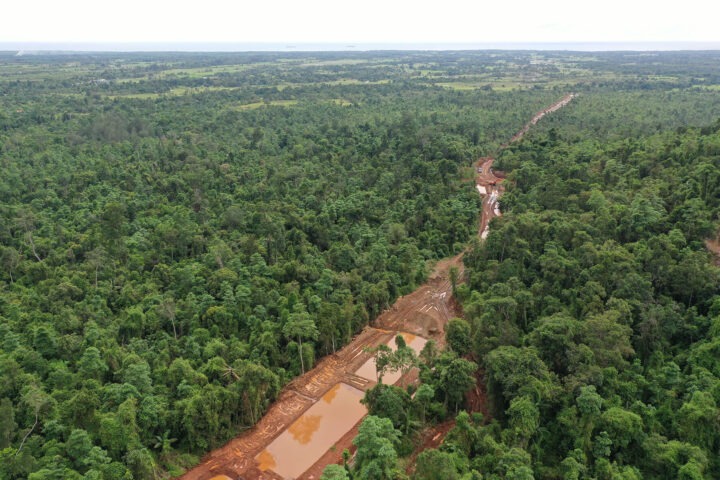
INC Waste Tailing Pond, in Brooke’s Point (Palawan) (© SPM)
INC, a subsidiary of Global Ferronickel Holdings, has attempted to rebrand its operations as “responsible mining,” even claiming that its presence protects forests from slash-and-burn agriculture. This narrative demonizes indigenous swidden farming—an ancestral, sustainable practice—while legitimizing large-scale forest clearing.
“We have practiced sustainable farming for generations. That is why the forest is still here,” said one Pala’wan elder. “Now the government forbids us to open new swidden to feed our families, while mining companies are allowed to clear-cut old forests.”
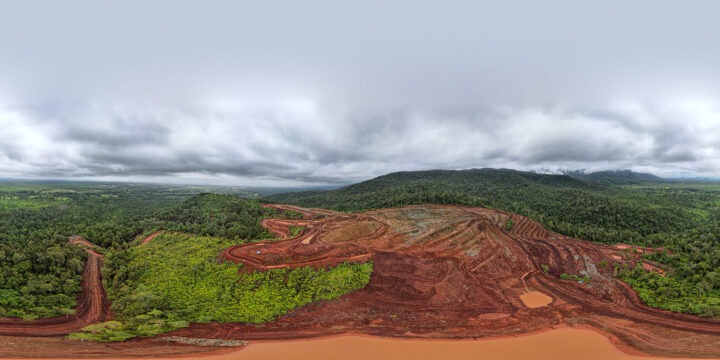
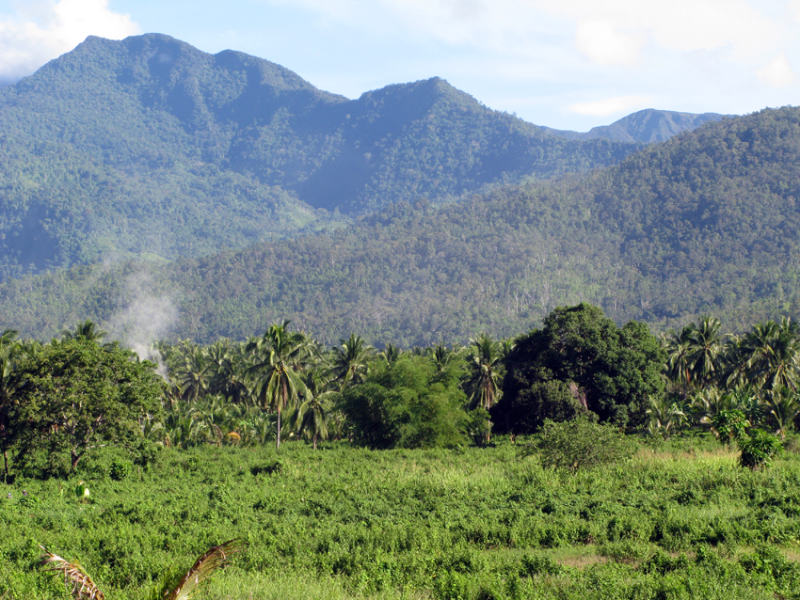
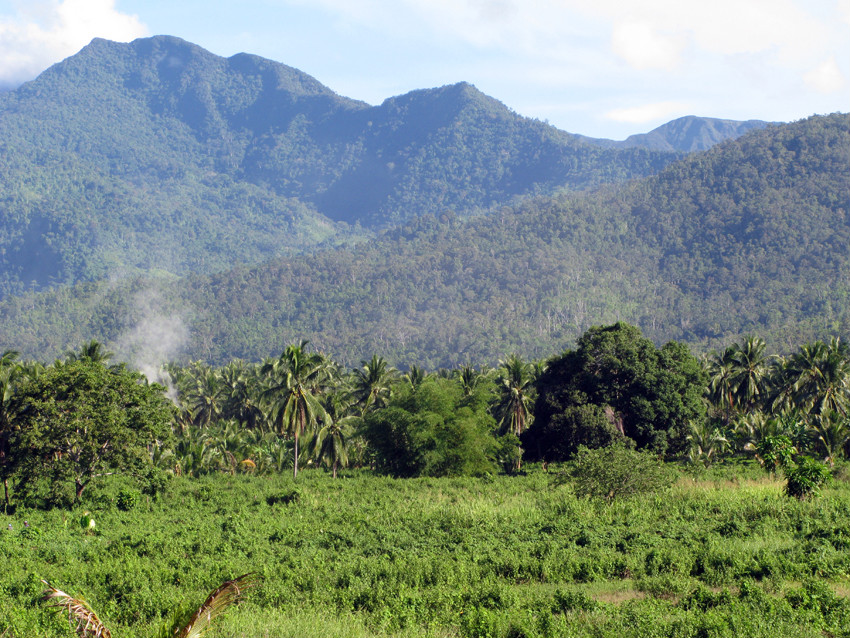
Biodiversity-rich primary forest in Palawan UNESCO Man and Biosphere Reserve is being destroyed for a mine by Ipilan Nickel Corporation (INC) (© SPM)
During a Senate hearing on March 9, officials appeared more interested in INC’s reported ₱1.73 billion remittance to the national government than in the environmental violations raised. Meanwhile, INC has already cleared more than 20 hectares of old-growth forest, causing siltation, coastal degradation, and a collapse in fish stocks. Its operations encroach on the buffer zone of the Mount Mantalingahan Protected Landscape and overlap with Pala’wan ancestral domains.
The new endorsement would allow INC to cut an additional 32,000 trees in primary forest.
Local communities are already living with the consequences.
“During the 2023 flood, laterite from mining tailings covered our fields,” said D.L., a resident of Maasin. “Now every time it rains, the sea turns brown. Lobsters are gone. Our daily catch keeps shrinking. Starvation is at the doorstep.”
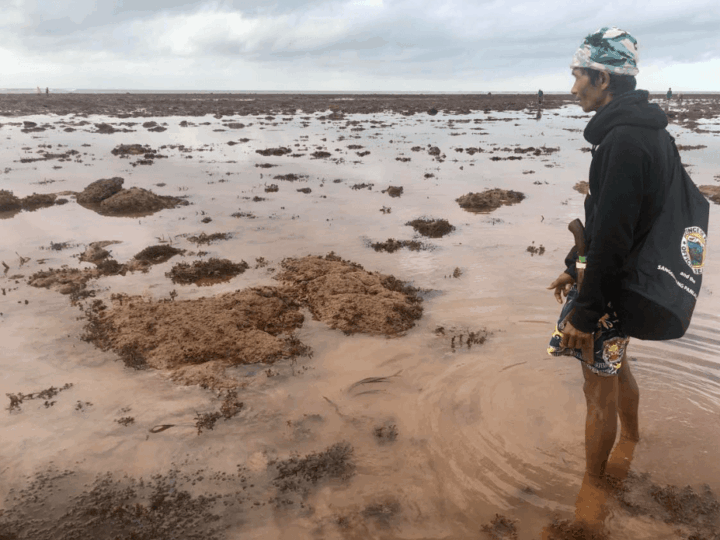
Coastal areas in Brookes’ Point submerged by laterite mud during the 2023 flood (© SPM)
INC insists allegations of pollution and agricultural damage are “unsubstantiated,” citing its compliance with monitoring by DENR, MGB, and local authorities. But on the ground, regulatory oversight has withered. Environmental Impact Statements are no longer publicly accessible, and NGO participation in Multipartite Monitoring Teams now requires endorsement from mining companies themselves – a blatant conflict of interest.
Indigenous leaders also question the legitimacy of the Free, Prior, and Informed Consent (FPIC) process. They accuse NCIP officials of manipulating consultations and validating mining approval through dubious “majority” votes rather than genuine consensus, as required by the IPRA law (Republic Act no. 8371).
The Save Palawan Movement is urging the provincial government to convene the Mining Moratorium Council mandated under Provincial Ordinance No. 3646 – a 50-year mining moratorium won through years of campaigning and more than 110,000 signatures. Yet the ordinance continues to be ignored by the very officials tasked with enforcing it.
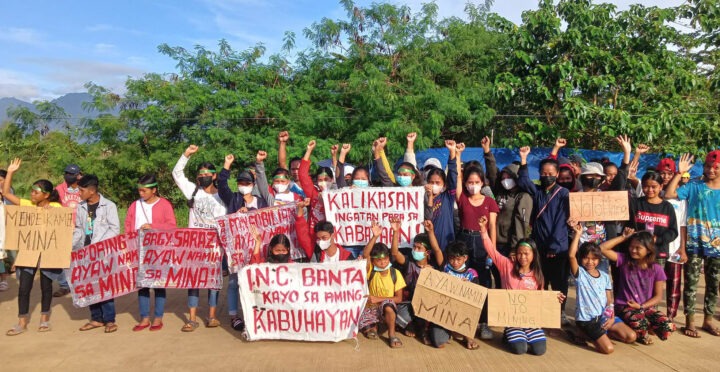
Young indigenous protesters demonstrating against mining expansion in Southern Palawan (© CALG)
The Brooke’s Point endorsement blatantly violates the moratorium. Section 3 allows renewals only if they do not involve new areas or increased production. INC’s expansion does both.
This failure of governance undermines Palawan’s status as a UNESCO Man & Biosphere Reserve and threatens one of the Philippines’ last intact forests.
In response, civil society groups planned to hold a protest at the Brooke’s Point Municipal Center on March 31 to oppose the renewal of INC’s business permit.
Unfortunately, Mayor Cesareo Benedito of Brooke’s Point refused to grant a permit for the mass rally—an action that local advocates immediately recognized as part of a troubling pattern. “This is not surprising,” one activist remarked, “given that he was the same official who vetoed the Municipal Government’s endorsement of Ipilan Nickel’s 25-year Mineral Production Sharing Agreement.”
Yet despite the obstruction, the people refused to be silenced. On March 25, around 100 Palaw’an indigenous women and youth marched through the streets, asserting their right to defend their ancestral lands and demanding an end to large-scale mining expansion in Southern Palawan. Timed with National Women’s Month, the demonstration underscored a powerful truth: indigenous women have long been the backbone of environmental defense, even as they are systematically excluded from the decisions that determine the fate of their territories.
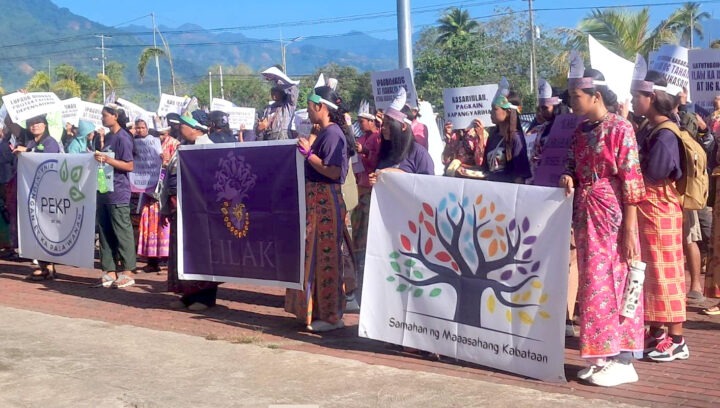
Indigenous Women and Youth in Brookes’s Point Marching against Mining Expansion”. (© Alyansa tigil Mina)
The protest also revealed a rising generational alarm. Jonavie Nani of the Association of Reliable Youth (SAMAKA) voiced the fears shared by many young Palaw’ans. “As an Indigenous youth with dreams for the future, I fear for what lies ahead if they continue destroying our forests. I don’t want our mountains to exist only in history,” she said—an urgent reminder that the cost of environmental destruction will be borne most heavily by those who had no say in it.
Judy Pasimio, Coordinator of LILAK (Purple Action for Indigenous Women’s Rights), emphasized that what is happening in Brooke’s Point is not an isolated struggle but part of a nationwide pattern of indigenous marginalization and harassment. She stressed that while women consistently stand at the frontlines of land defense, they remain shut out of the very governance processes that shape the destiny of their lands.
The message from Brooke’s Point is unmistakable: communities are rising, women are leading, and the youth refuse to inherit a devastated homeland. Their call for justice—and for the protection of ancestral territories—demands to be heard.
Meanwhile, INC has already begun its 2026 operations, shipping 53,912 WMT of low-grade nickel ore to China aboard the MV Ru Cheng Shan. The company aims to extract at least 1.5 million WMT this year- while indigenous peoples, farmers, and fishers wonder whether their future is being mined out from under them.
They are calling on national and international allies to stand with them in peaceful resistance.
Governor Amy Roa Alvarez — mabuhay@palawan.gov.ph
Vice Governor Leoncio N. Ola — palawan.vicegovernorola@gmail.com
Atty. Mary Joy Ordaneza-Cascara — provinciallegaloffice.palawan@gmail.com
The municipal government of Brooke’s Point: brookespointmayorsoffice@gmail.com
Across the world right now, Indigenous peoples are facing a renewed assault on their lands, rights, and ways of life.
From extractive industries pushing deeper into ancestral territories, to governments rolling back hard-won protections,
the threat is global—and it is growing.
What makes this moment especially dangerous is how little attention it receives.
Stories like this are disappearing in real time. Mainstream media
barely covers it and the coverage is fragmented. The public is left without the context
needed to understand what is truly at stake.
That is exactly why IC Magazine exists..
For more than 20 years, IC has reported on Indigenous struggles worldwide — consistently, independently, and without compromise.
We don’t follow news cycles; we trace patterns. We don’t sensationalize; we provide context.
And when the world looks away, we stay focused.
But this work is increasingly difficult to sustain.
We refuse to lock our reporting behind a paywall. We don’t sell access through subscriptions.
And we don’t answer to advertisers. IC Magazine survives solely because readers like you choose to
support independent Indigenous journalism.
Please donate today if you can. Every contribution helps us to continue this crucial work.
Thank you,
John Ahni Schertow
Founder and Editor in Chief