Last Updated on April 8, 2026
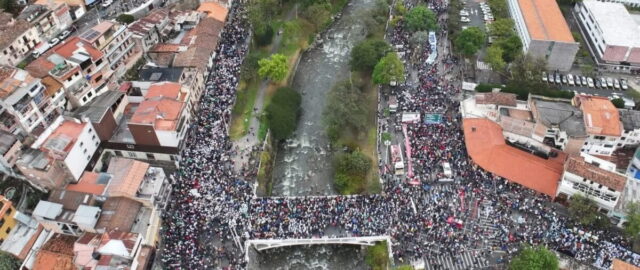
Brasilia, Brazil – Thousands of Indigenous people marched in Brazil’s capital yesterday, during the second day of the 2026 Free Land Camp (ATL), the country’s largest Indigenous mobilization, to denounce land rights violations driven by large-scale mining, agribusiness, and logging projects. Leaders from the Xingu River condemned the Canadian company Belo Sun’s proposed Volta Grande mega-mine as emblematic of the current assault on Indigenous territorial rights and the failure to consult communities threatened by industrial projects.
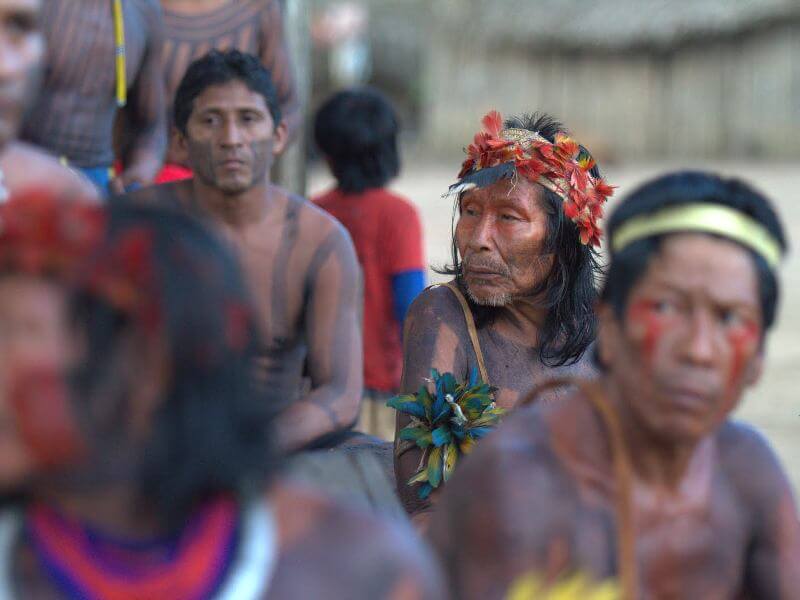
As they marched along the Esplanade of Ministries toward Three Powers Square, the Indigenous delegation from the Xingu called on President Luiz Inácio Lula da Silva to honor his public defense of native rights and the Amazon’s ecosystems from projects that threaten their territories and ways of life. After a month of occupying the Altamira headquarters of Brazil’s federal Indigenous agency FUNAI to demand the cancellation of Belo Sun’s project, a group of Juruna, Arara, Xipaia, Parakanã, and Xikrin representatives joined the march of more that 7,000 people assembled at ATL, carrying signs and banners reading “Belo Sun Out” and “Life Is Worth More Than Gold.”
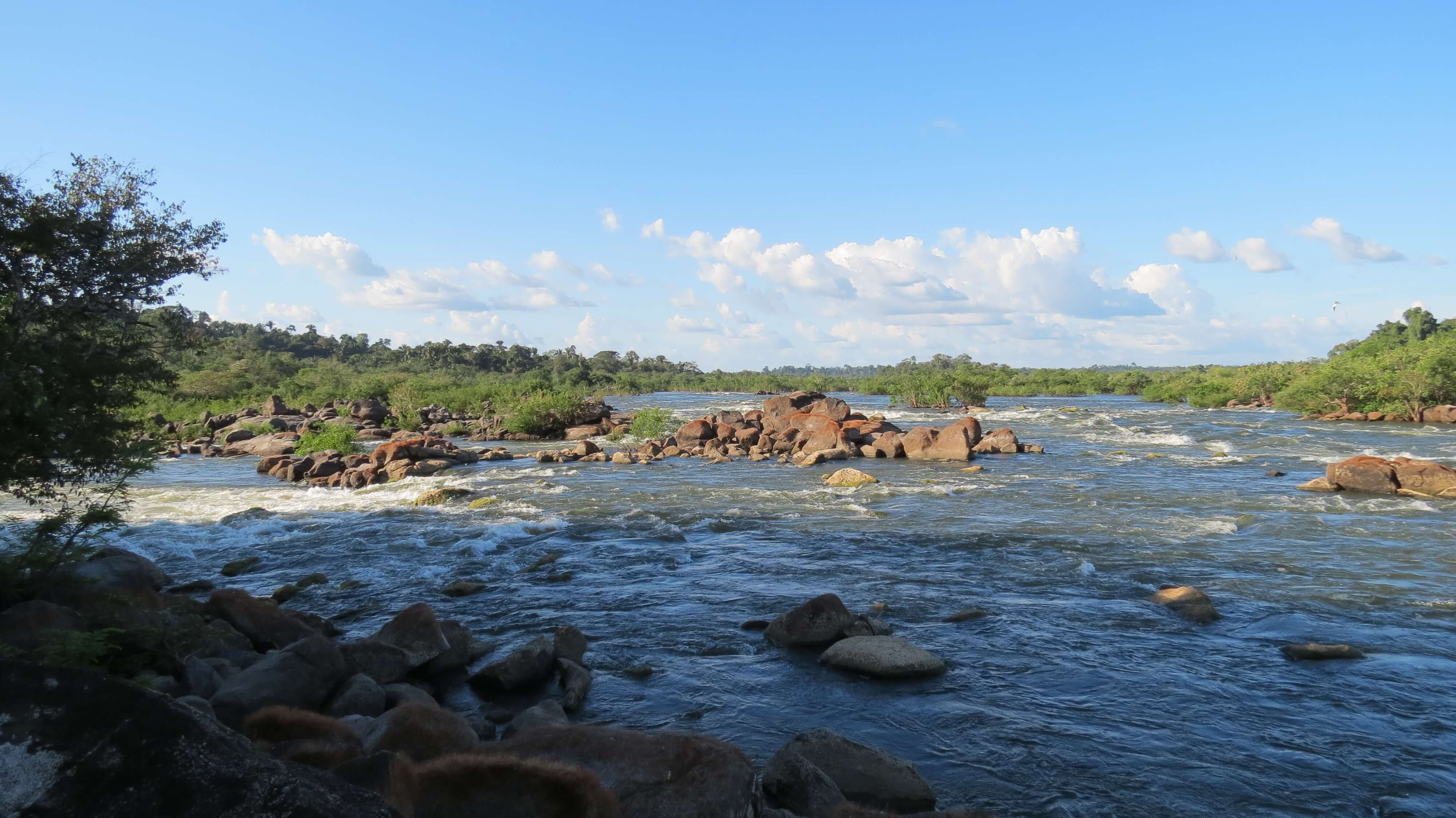
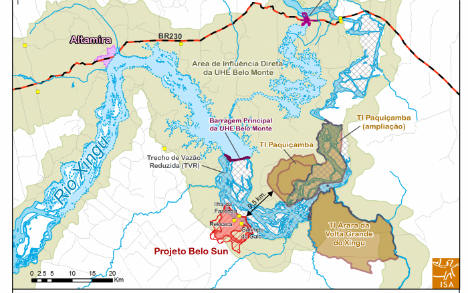
Belo Sun aims to carve Brazil’s largest open pit gold mine into the banks of the Xingu River, with operations extending 1735 square kilometers, an area roughly twice the size of New York City. The project includes multiple waste pits, cyanide processing, and a mining rejects (tailings) dam adjacent to the Xingu, one the Brazilian Amazon’s most important tributaries. Experts warn that the rupture of the mine’s dam would destroy the river, causing irreversible consequences for its inhabitants and a vast region of the Amazon.
“We are here in Brasília to denounce these violations and demand a response from the authorities that matches the seriousness of this project. Our message is clear: we want a definitive end to Belo Sun in our territory,” said Sol Juruna, one of the leaders of the movement.
In addition to their central demand, Xingu Indigenous peoples denounce the fact that the project’s licensing process remains under the jurisdiction of Pará State Secretariat for Environment and Sustainability (SEMAS), which critics describe as a rubber-stamp for licensing, rather than under Brazil’s federal environmental agency, IBAMA. They question why a project of this scale – with acute socio-environmental risks, located only 10 kilometers from the Belo Monte dam and adjacent to a major river and Indigenous territories – has not been placed under federal jurisdiction, as required by Brazilian law. Brazil’s Federal Public Prosecutor’s Office (MPF) and NGOs such as the Socioenvironmental Institute (ISA) have also challenged the licensing process.
Another major concern appears in the report Minando Direitos (“Mining Rights Away”), produced for Brazil’s Ministry of Indigenous Peoples, which states that the licensing process for the Volta Grande project excluded Indigenous communities that should have been considered from the outset. According to the study, Belo Sun consulted only peoples living in the two demarcated Indigenous territories in the Volta Grande region and excluded other threatened communities. The report states “at least 10 disregarded and overlooked communities” and shows that if the Xikrin villages of the Trincheira-Bacajá Indigenous Territory are counted individually, the total number of excluded communities could reach 57.
The same report identifies the Xikrin of the Trincheira-Bacajá Indigenous Territory as a people threatened by Belo Sun’s mega mine, stating that the company excluded them due to an arbitrary 10 kilometer cutoff used in Brazil’s environmental licensing process to define affected communities. The researchers recommend further investigation into rights violations involving Xikrin villages and other communities in the Volta Grande do Xingu region.
“Belo Sun is betting on a policy that renders us invisible. With the support of the Pará state government, they downplayed impacts on paper to deny rights to peoples who will be concretely affected on the ground. There is no real consultation when entire communities are excluded from the process and treated as if they were not part of the Volta Grande. That is why we will continue to resist,” said Ngrenhkarati Xikrin, a Xikrin leader from the Médio Xingu.
Across the world right now, Indigenous peoples are facing a renewed assault on their lands, rights, and ways of life.
From extractive industries pushing deeper into ancestral territories, to governments rolling back hard-won protections,
the threat is global—and it is growing.
What makes this moment especially dangerous is how little attention it receives.
Stories like this are disappearing in real time. Mainstream media
barely covers it and the coverage is fragmented. The public is left without the context
needed to understand what is truly at stake.
That is exactly why IC Magazine exists..
For more than 20 years, IC has reported on Indigenous struggles worldwide — consistently, independently, and without compromise.
We don’t follow news cycles; we trace patterns. We don’t sensationalize; we provide context.
And when the world looks away, we stay focused.
But this work is increasingly difficult to sustain.
We refuse to lock our reporting behind a paywall. We don’t sell access through subscriptions.
And we don’t answer to advertisers. IC Magazine survives solely because readers like you choose to
support independent Indigenous journalism.
Please donate today if you can. Every contribution helps us to continue this crucial work.
Thank you,
John Ahni Schertow
Founder and Editor in Chief