
Last Updated on October 6, 2025
Just two weeks after 100,000 people poured into the streets demanding water protection, Ecuador’s government has revoked the environmental license granted to Canada’s DPM Metals for its proposed Loma Larga gold mining project.
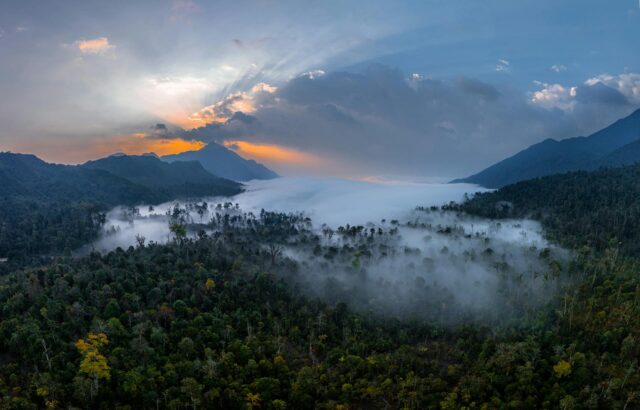
The decision marks a major victory for local communities, Indigenous organizations, and environmental defenders who have spent years warning that the mine would endanger the Quimsacocha water reserve — a fragile Andean ecosystem that provides drinking and irrigation water to hundreds of thousands of people in and around Cuenca.
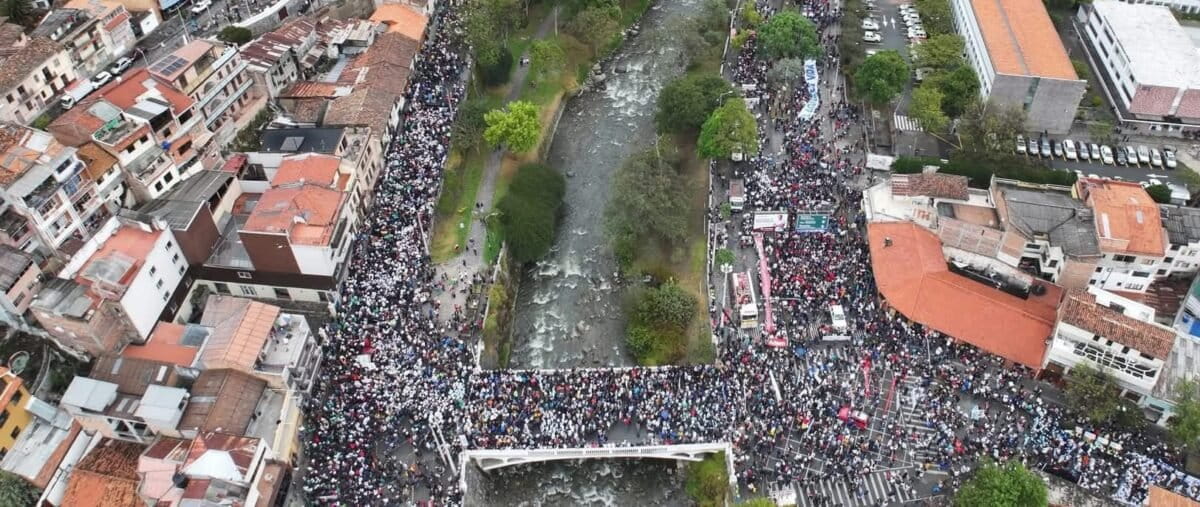
On Sept. 16, Cuenca became the stage for one of Ecuador’s largest environmental demonstrations in decades. The “March for Water” drew an estimated 100,000 participants — farmers, students, Indigenous leaders, and city residents — united under banners reading “Hands off Quimsacocha!” and “Water is worth more than gold.” Cuenca’s mayor, Cristian Zamora, called the massive turnout a “historic defense of life and water,” urging the government to heed the public outcry.
Ecuador’s Ministry of Environment said the revocation followed technical reviews by local water and environmental authorities in Azuay, which found that the project could jeopardize downstream water supplies. Invoking the precautionary principle, the ministry declared that the state has an obligation to protect both public health and the rights of nature — a constitutional principle enshrined since 2008.
DPM Metals, formerly known as Dundee Precious Metals, had planned to invest roughly $419 million to produce 200,000 ounces of gold annually. The company has not yet commented on the decision, though analysts expect it may challenge the revocation through legal or international arbitration channels.
For now, the revocation of Loma Larga’s license stands as a powerful symbol of people’s resistance — but the streets of Ecuador are far from quiet. Across the country, new waves of demonstrations continue, driven by anger over extractive projects, corruption, and the rising cost of living.
Across the world right now, Indigenous peoples are facing a renewed assault on their lands, rights, and ways of life.
From extractive industries pushing deeper into ancestral territories, to governments rolling back hard-won protections,
the threat is global—and it is growing.
What makes this moment especially dangerous is how little attention it receives.
Stories like this are disappearing in real time. Mainstream media
barely covers it and the coverage is fragmented. The public is left without the context
needed to understand what is truly at stake.
That is exactly why IC Magazine exists..
For more than 20 years, IC has reported on Indigenous struggles worldwide — consistently, independently, and without compromise.
We don’t follow news cycles; we trace patterns. We don’t sensationalize; we provide context.
And when the world looks away, we stay focused.
But this work is increasingly difficult to sustain.
We refuse to lock our reporting behind a paywall. We don’t sell access through subscriptions.
And we don’t answer to advertisers. IC Magazine survives solely because readers like you choose to
support independent Indigenous journalism.
Please donate today if you can. Every contribution helps us to continue this crucial work.
Thank you,
John Ahni Schertow
Founder and Editor in Chief