

Last Updated on June 17, 2026
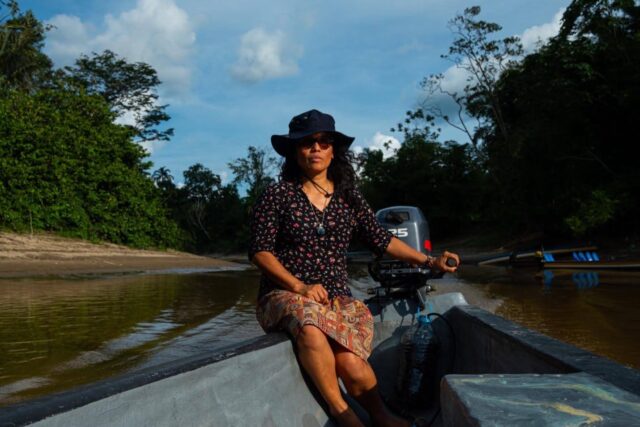
Santa Elena, Ecuador – On June 8, nature defender and anti-corruption activist Monika Silva Koniuszek was found dead in her home in the coastal community of Montañita. The scene was set for a suicide – she was found on the floor with a noose around her neck – but investigation revealed a pre-mortem blow to the head and blood stains on the wall.
Monika spent years meticulously documenting how a corrupt network of politicians, police, judges, and lawmakers used fraudulent real estate schemes to steal thousands of hectares of ancestral land from local and Indigenous communities in the province of Santa Elena. Recently, her investigations had escalated to an even more dangerous level: she was compiling evidence that linked international narcotics trafficking directly to Noboa Trading—the powerful fruit conglomerate owned by the family of Ecuador’s President, Daniel Noboa.
A few weeks before being murdered, Monika reported plots to assassinate her on social media platforms and radio interviews. She wrote in a chillingly prophetic declaration that if anything happened to her, it would be the direct responsibility of the Ecuadorian state.
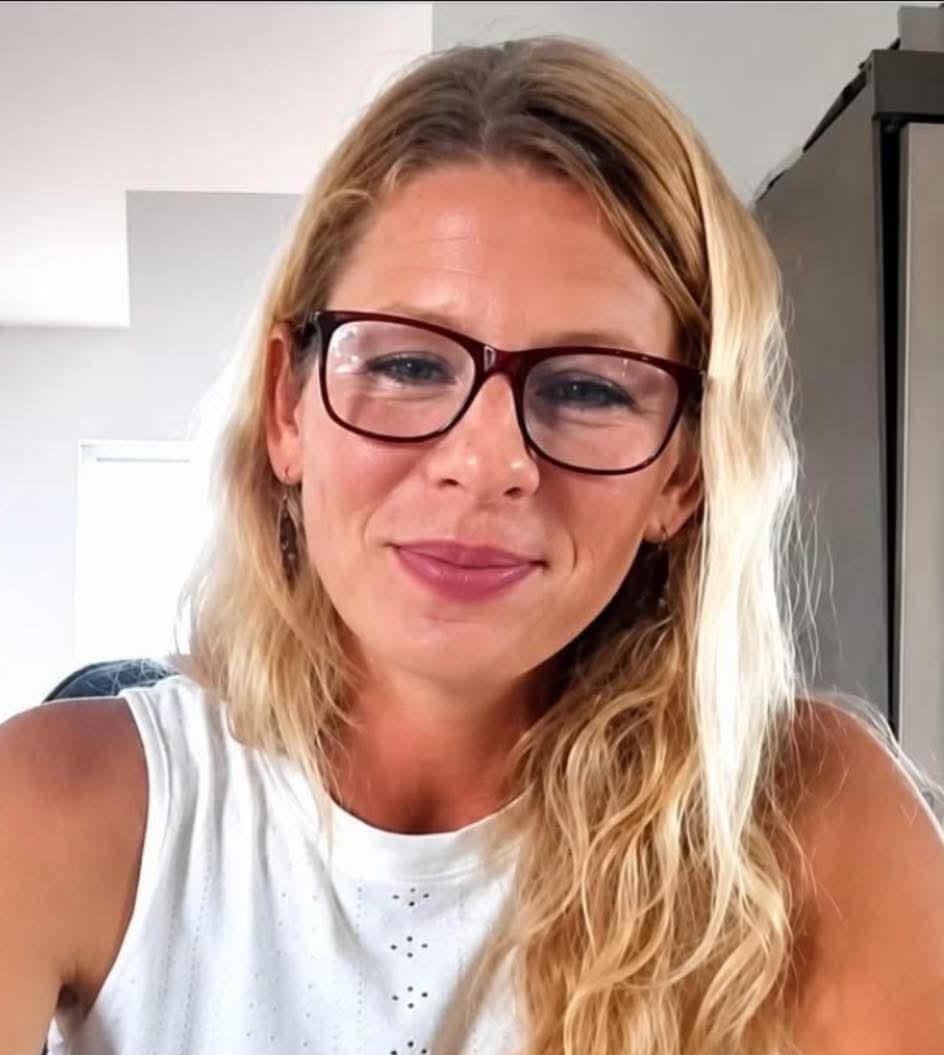
“You don’t need to be born in Ecuador to love it and defend what is right.”
Monika was of Polish origin but had lived in Ecuador for over a decade, stating on her public profiles: “You don’t need to be born in Ecuador to love it and defend what is right.” She served as President of Fundación La Integridad, a foundation that exposed cases of corruption, defended the rule of law, the empowerment of citizens, and the right to a dignified life. At 41, she was a prominent anti-corruption activist, environmental defender, advocate for the rights of vulnerable groups, and single mother of two young daughters aged 4 and 9.
Monika’s dangerous crusade began as an effort to denounce local environmental crimes but quickly snowballed as she uncovered a massive land-grabbing and money-laundering ring involving high-profile politicians. She boldly compared the region’s political machine to a mafia cartel, publicly labeling the vice-president of congress Otto Vera as the “feudal lord of land trafficking.”
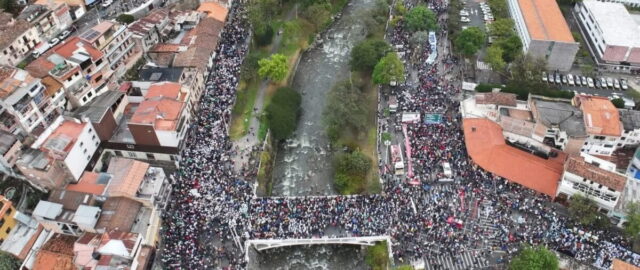
Monika’s death exposed how dangerous it has become to challenge organized crime operating inside Ecuador’s government. When the Minister of the Interior quickly declared her death a suicide, it sparked immediate public outrage and accusations of a police cover-up. The international community quickly intervened, with the European Union and the Inter-American Commission on Human Rights demanding an exhaustive, transparent investigation. Meanwhile, Poland dispatched a consul to Ecuador to guarantee a second, independent autopsy.
For years, Monika worked closely with citizen journalist Robinson Del Pezo, co-investigating high-profile corruption scandals. Their work upset many powerful actors from the mayor’s office all the way to the presidency. Robinson was gunned down by hitmen in November 2025. As she fought for an investigation into his murder, Monika started receiving death threats herself.
As the warnings grew louder, she refused to back down, defiantly handing over more dossiers of evidence to state prosecutors.
By March 2026, Silva publicly warned that she feared for her life, revealing she had received intelligence that the same hitmen who executed Robinson had been contracted to eliminate her. In a desperate bid to protect her daughters, she fled to Quito, formally alerting both Ecuadorian authorities and the Polish government about the assassination plots. Weeks later, a radio interview she was scheduled to give was abruptly canceled after the hosting journalist received direct death threats.
Walls closed in as the state tried to exhaust her with smear campaigns and judicial harassment. Monika publicly projected fierce defiance—adding the words “still alive” to her social media biography.
Yet in private, she expressed the immense psychological and financial toll of a coordinated campaign of state-backed persecution against her. “I’m unfortunately not good at all,” she wrote in a private message, exposing the raw reality behind her activism. “The persecution has reached an unbearable level and has broken me emotionally.”
She described her financial situation as a “complete disaster” due to lawfare—the deliberate abuse of the legal system to bury her in legal fines and procedures. Monika expressed acute fear regarding upcoming criminal hearings. These weaponized defamation lawsuits were designed by the state to silence her as retaliation for exposing massive corruption in local public works.
Even in the face of extreme state harassment, she continued exposing evidence. On June 5, 2026, just three days before she was murdered, she used her X (Twitter) account to publicly denounce lawmakers for ignoring a massive nepotism and influence-peddling ring she had uncovered within the office of the State Comptroller General.
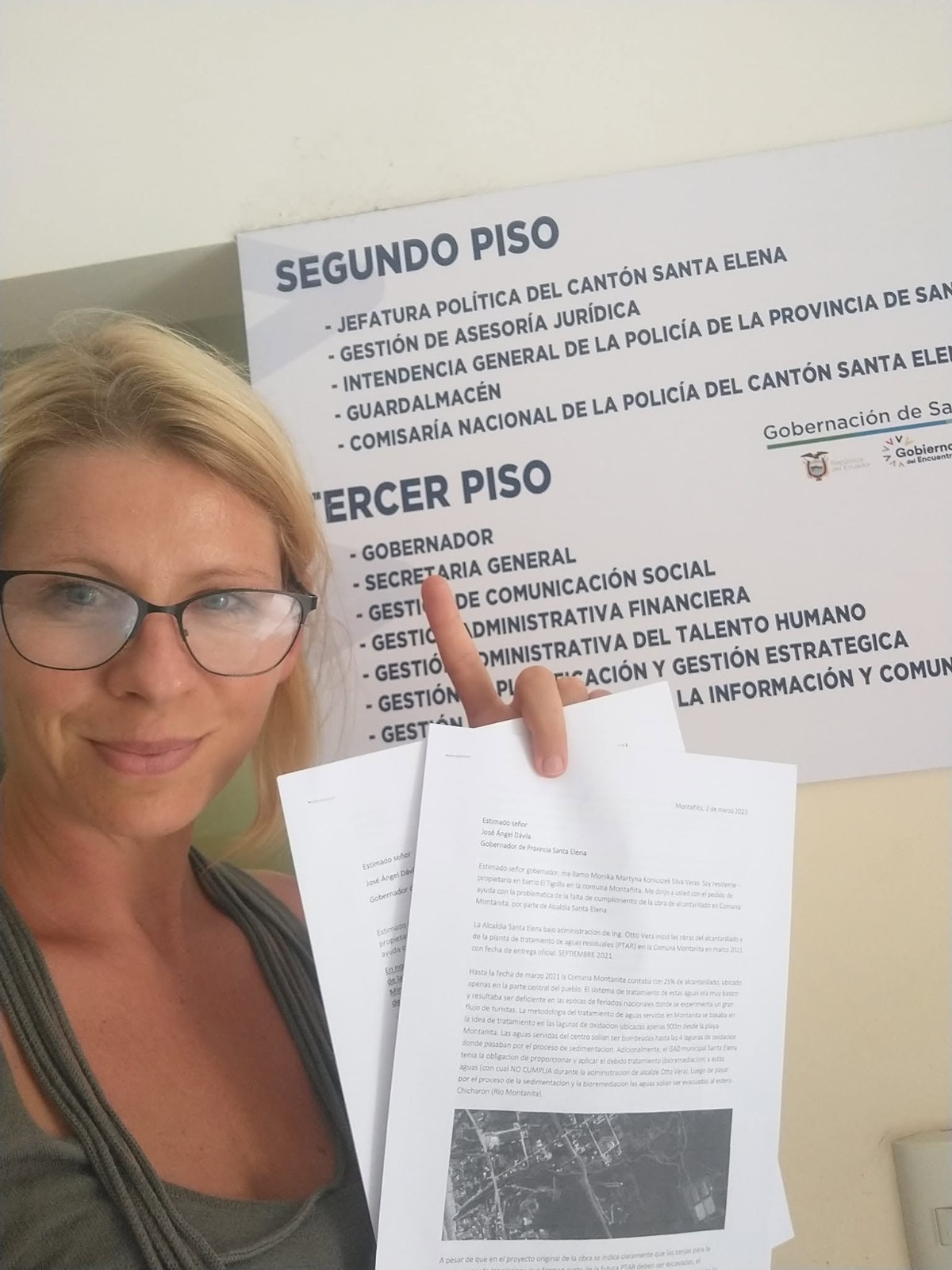
Even in the face of extreme state harassment, she continued exposing evidence.
Monika’s work exposed how politicians launder massive amounts of illicit cash by privatizing Ecuador’s public beaches through fraudulent real estate deals. In one glaring case, she discovered that a young waitress was on the verge of purchasing $3 million worth of municipal beachfront land. The absurd transaction flagged an irregular sale that Monika tracked directly President Noboa’s former vice-president and current cabinet member, Cynthia Gellibert.
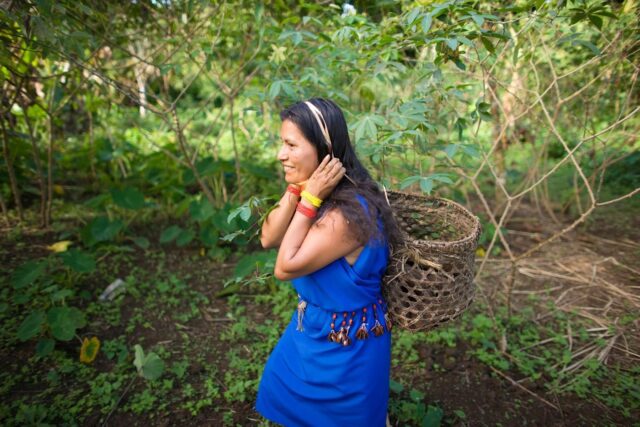
Monika advocated for ancestral communes like Monteverde, where powerful business interests attempted to construct a liquefied gas terminal against the explicit, legal veto of the local fishing community. She also fought to protect the nesting sites of critically endangered sea turtles against a multimillion-dollar construction project marked by irregularities and lacking environmental permits on the beach of Manglaralto.
She connected the dots between corrupt local politicians and the highest levels of Ecuador’s government. Her primary target was Otto Vera, former Mayor of Santa Elena turned national congressman.
In her final interview, Monika explained that $112 million in public funds had disappeared during his term as mayor, swallowed by public works projects that were never built. The most infamous of these “ghost projects” was a multimillion-dollar wastewater treatment plant in the tourist town of Montañita, which was left completely unfinished, leaving raw, toxic sewage pumping directly into beaches and rivers.
Monika exposed how Vera used a Panama-based shell company called the “Sunshine Group” to plot the illicit acquisition of a prime beachfront property featuring an ecologically sensitive estuary. Her evidence revealed another scheme engineered by one of Vera’s associates that converted beachfront municipal land into private property owned by Vera’s wife.
Another major investigation exposed a state-backed land trafficking network involving a company called Bellitec. She uncovered evidence that Congressman Vera and a top national Comptroller official had orchestrated and concealed the transfer of valuable coastal lands to Bellitec at drastically deflated prices. Monika’s documentation emphasized that Bellitec’s owners included close relatives of the former president of Ecuador’s congress, Niels Olsen.
Following these revelations, Vera publicly threatened her, declaring that her actions would have consequences.
Monika’s investigations took an even more perilous turn when international law enforcement intercepted over three tons of cartel cocaine hidden inside banana shipping containers belonging to Noboa Trading—the fruit empire owned by President’s Noboa family. Monika compiled a dossier and delivered it to the U.S. Embassy, alleging that high-ranking Ecuadorian officials were intentionally stalling judicial investigations into the smuggling network.
Among those she accused of a cover-up was the State Comptroller Mauricio Torres. In response, Torres launched a criminal lawsuit against Monika for defamation; a case which was due to take place four days after her death.
Messages that Monika sent to close confidants reveal that after she presented the dossier to the DEA, the agency betrayed her, failing to deliver the protection it had promised, essentially abandoning her.
Left exposed, Monika was relentlessly targeted by other powerful figures she had unmasked, including a local mayoral candidate, Andres Aguilar. In her case against him, the judge hit her with heavy financial fines, ordered her to make a humiliating public apology to the politician, and forwarded her file to the national Prosecutor’s Office to face criminal defamation charges.
As the threats against her escalated, every institution looked the other way. Not because she lacked evidence; not because the land-trafficking schemes and rigged courts were a failure of the system. They ignored her because they were the system; a system designed to silence and erase, perfected over centuries of settler colonial governance.
It took a vast narco-network to murder Monika.
It was not just a paid hitman who killed her in her own home. It took corrupt local police and judges to strip away her protection. It took Ecuador’s Prosecutor’s Office, the U.S. Embassy, and the DEA ignoring her pleas. It took a mainstream press refusing to cover her stories out of fear. It took deliberate court delays and a complicit silence from congress. It took masterminds at the highest levels of government. And, ultimately, it took a violent ex-husband legally blocking her from leaving the country with her two daughters, denying her the right to seek refuge in Poland.
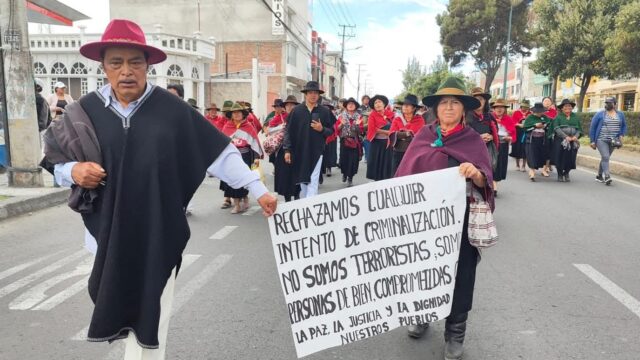
Monika’s death exposes a grim truth that local and Indigenous communities have known for centuries: that the state is often weaponized to steal their land, executing what the Native American historian Vine Deloria called “conquest masqueraded as law.”
In her relentless pursuit of transparency, Monika became a global symbol for the countless unsung land defenders who have paid the ultimate price to protect their ancestral territories. The fight she carried forward so bravely does not end with her murder.
La lucha sigue. — The struggle continues.
If you would like to act, consider signing this petition and donating to this crowdfunding campaign.
Across the world right now, Indigenous peoples are facing a renewed assault on their lands, rights, and ways of life.
From extractive industries pushing deeper into ancestral territories, to governments rolling back hard-won protections,
the threat is global—and it is growing.
What makes this moment especially dangerous is how little attention it receives.
Stories like this are disappearing in real time. Mainstream media
barely covers it and the coverage is fragmented. The public is left without the context
needed to understand what is truly at stake.
That is exactly why IC Magazine exists..
For more than 20 years, IC has reported on Indigenous struggles worldwide — consistently, independently, and without compromise.
We don’t follow news cycles; we trace patterns. We don’t sensationalize; we provide context.
And when the world looks away, we stay focused.
But this work is increasingly difficult to sustain.
We refuse to lock our reporting behind a paywall. We don’t sell access through subscriptions.
And we don’t answer to advertisers. IC Magazine survives solely because readers like you choose to
support independent Indigenous journalism.
Please donate today if you can. Every contribution helps us to continue this crucial work.
Thank you,
John Ahni Schertow
Founder and Editor in Chief