
Last Updated on January 1, 2026
At dawn in the Cuyabeno Reserve, members of the Siona Ancestral Force move quietly through Amazonia’s dense forest. This Indigenous guard monitors territory abandoned by the government. Trails are marked by violence, some still hiding landmines scattered during decades of armed conflict in neighboring Colombia. Today, various armed groups move through the borderlands.
Siona guards carry no weapons. Their authority comes from collective mandate, careful documentation, and the presence of the community. Every patrol is a negotiation with the forest itself, a tense balance of vigilance, knowledge, and survival. Their work protects not only a fragile ecosystem but the lifeways of the Siona peoples—a frontline defense that matters to everyone concerned with human rights and environmental protection.
Nancy Correa Payaguaje knows this terrain intimately. She is Siona, from the Cuyabeno region in the Ecuadorian Amazon, and a member of the Siona Ancestral Force. Patrols require careful preparation, coordination across communities, and constant risk assessment. They are voluntary. They are exhausting. And they are a lifeline to the community.
Nancy also serves as the Director of Economy and Development for the Organization of Indigenous Siona Nationality of Ecuador (ONISE). Her work bridges two realities: coordinating territorial defense through Indigenous guards and confronting state institutions that authorize extraction on Siona homelands.
For the Siona, defending territory is part of self-governance. It is inseparable from maintaining autonomy, cultural continuity, and the right to live on ancestral lands.
The Siona live along the Putumayo River, on both sides of the Ecuador–Colombia border. Their history is marked by invasion, forced conversion, the rubber trade, and prolonged armed conflict. These histories of dispossession are not distant—they shape the challenges Nancy faces today.
In 2009, Colombia’s Constitutional Court formally declared the Siona peoples to be at imminent risk of physical and cultural extinction due to armed conflict and extractive pressures—a legal designation that remains unresolved more than a decade later.
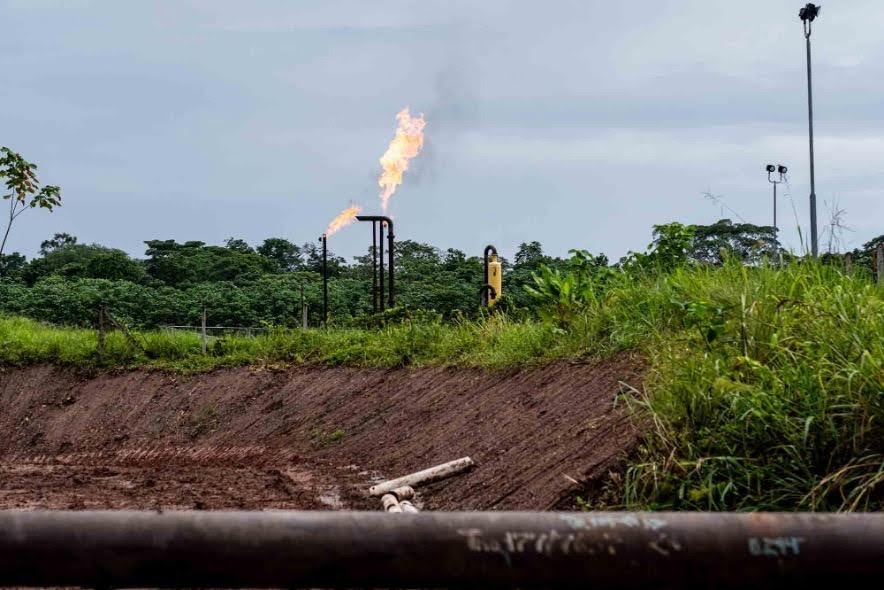
Flares burning off natural gas from oil extraction at an oil field in the Cuyabeno area. Photo credit: Tom Laffay
Oil extraction without consent, contaminated rivers, illegal mining, and restricted mobility caused by violence and leftover explosives are part of the landscape she navigates as a community leader and organizer. What is at stake is the survival of her people, their culture, and the ecological health of a forest that provides vital services for the planet.
Beginning in the early 2000s and continuing for more than a decade, Colombia carried out large-scale aerial herbicide spraying as part of anti-drug operations, with an estimated 1.4 million hectares treated—an intervention Indigenous organizations documented as contaminating water sources, destroying subsistence crops, and leaving lasting ecological and health impacts across Amazonian territories.
The Amazon is often described as a global climate regulator. Indigenous peoples protect nearly 80 percent of the world’s remaining biodiversity while making up just 5 percent of the global population. But for the Siona—and for Nancy— Amazonia is not just a carbon sink. It is memory, spirituality, and responsibility. Rivers, forests, and lagoons are living relatives shaping daily life.
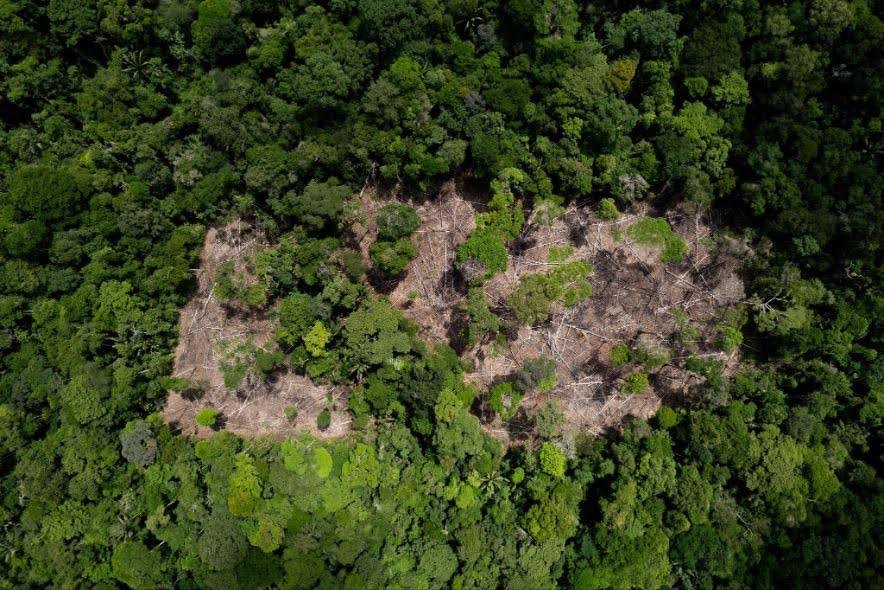
Deforestation within Siona ancestral territory in the Cuyabeno reserve. Photo credit: Tom Laffay
The loss of Amazonia’s forest is not just a Siona problem—it is a global one. When these forests and waters are threatened, the consequences ripple outward, affecting climate stability, biodiversity, and the rights of Indigenous peoples everywhere. Nancy’s leadership puts her at the center of a struggle that matters far beyond Amazonia over the future of the planet.
Siona elders in Cuyabeno formed the Siona Ancestral Force in 2019. Nancy proposed the initiative and helped organize it. “I was basically the only woman running this team,” she recalls.
Nancy’s leadership emerged from institutional failure. The Cuyabeno Reserve, where she is from, is administered by Ecuador’s Ministry of Environment. In practice, she says, the ministry “isn’t defending or protecting the territory.” Oil permits are issued inside Indigenous land, settlers arrive without oversight, and enforcement is minimal. Sacred sites and lagoons have been contaminated.
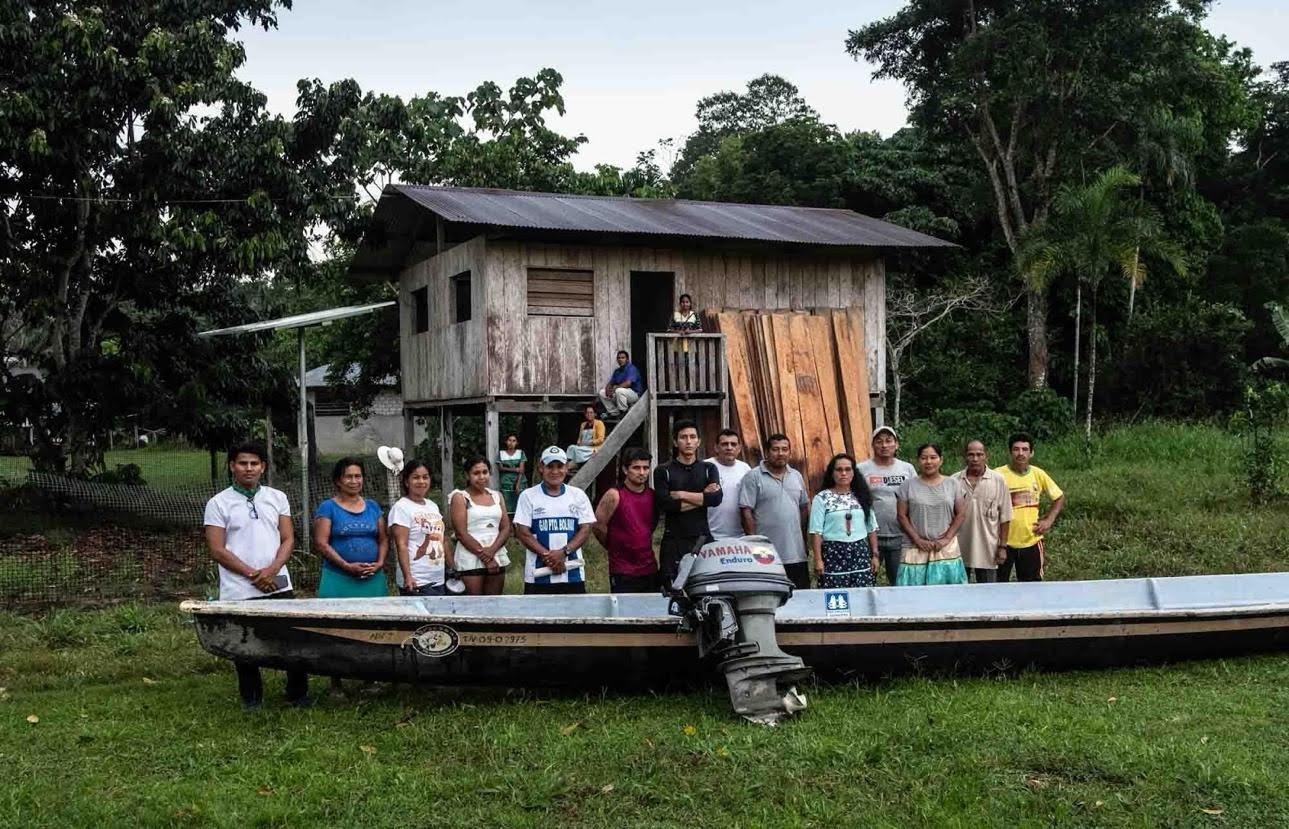
Members of Siona Ancestral Force and the Seoque’ya community stand in front of a tourist canoe they seized after the operator failed to comply with agreements made with the community. Photo credit: Tom Laffay
Patrols demand extensive preparation, long walks through dense forest to document illegal activity from drug trafficking to illegal mining. In its first year, the group removed five settler families from Siona land. Nancy’s leadership during this process led her community to nominate her as their spokesperson. “The communities know I have a deep commitment,” she said. “They know I’ll support in any way I can.”
Patrols are increasingly difficult because attacks are increasing. In 2024 alone, Siona monitoring teams documented more than 50 illegal logging sites within their ancestral territory, with timber prepared for transport and sale valued in the tens of thousands of dollars.
Nancy’s role expanded through ONISE, where she now works to reconnect fragmented Siona guard efforts across the Ecuador–Colombia border and raises international support to acquire monitoring equipment.
Lately, she started an important legal process on behalf of the Aucacocha Lagoons, or Eo’era’Aya in Siona, which seeks to establish their rights as legal subjects. There are many lagoons, among them Cocha Larga So’a Jaira, Macuro Cocha, Mateo Cocha Mateao Jaira, Pato Cocha Vetera Jaira, Caiman Cocha Bera Jaira, Lai Jaira, and even the river Hormiga Uncu Jaira. The Siona Ancestral Force created a detailed report explaining the web of relations between the lagoons and their communities that they presented to the Ministry of the Environment and the Prosecutor’s Office, trying to translate the untranslatable.
Nancy is pursuing this lawsuit acting as a guardian of the lagoons, invoking constitutional provisions that recognize the rights of nature. These efforts highlight the urgency of Indigenous-led protection: as the state fails Indigenous communities, their survival depends on local leadership fueling international attention.
Nancy’s experience is proof of Siona women’s leadership in territorial defense. Their work is physically demanding, politically risky, but essential to their collective survival. Women patrol the territory, gather evidence of oil contamination, and speak publicly about the violence of oil drilling that leads to the destruction of food systems, health, and cultural survivance.
Siona women face external pressures from state and oil actors, as well as resistance within their own forms of governance. “There are men who don’t like women making decisions,” Nancy explains. Some refused to follow her instructions during monitoring patrols.
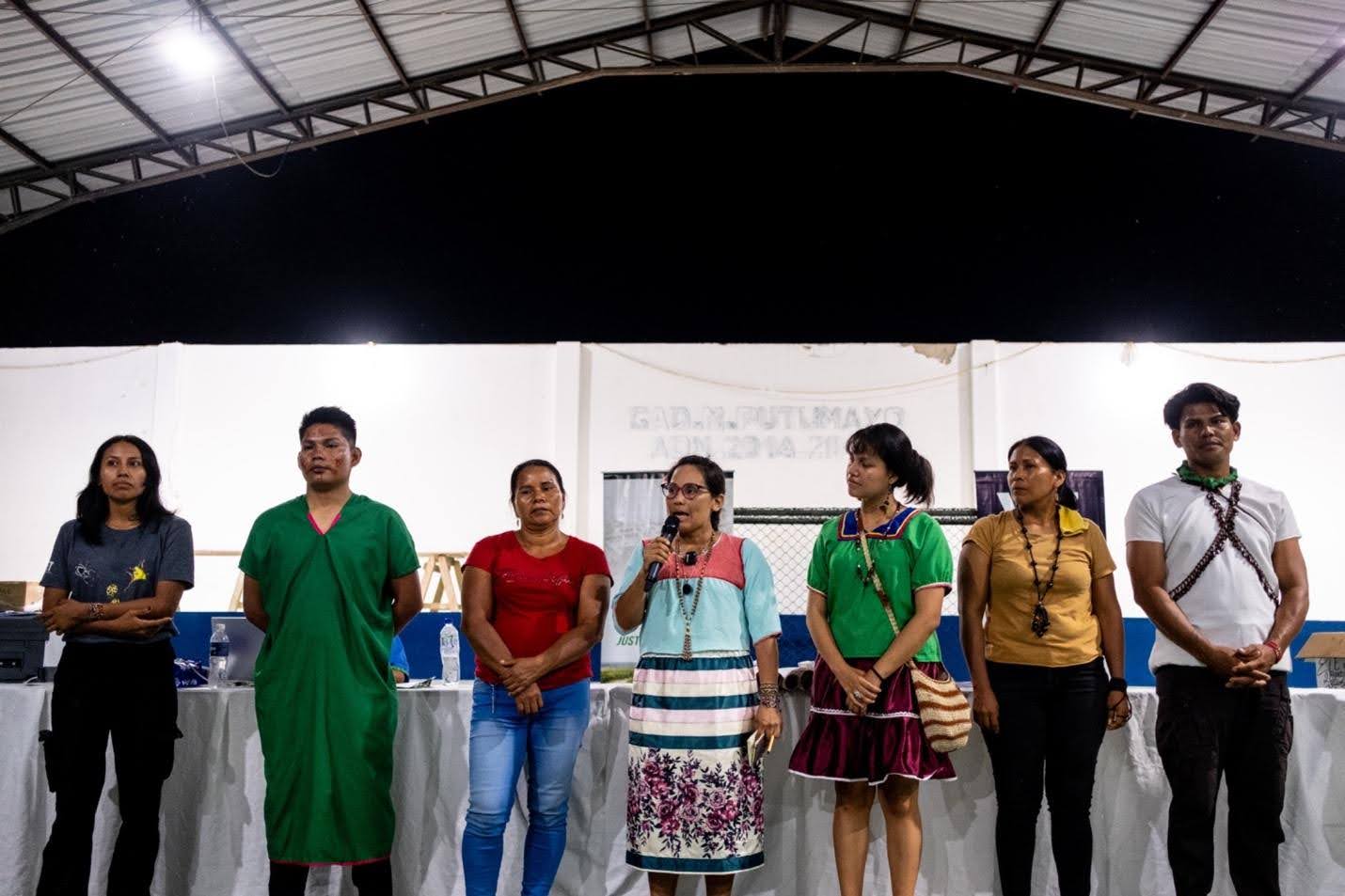
Nancy Correa Payaguaje , director of economy and development, speaks alongside her directive of the recently elected ONISE in Puerto Bolivar, Cuyabeno, Ecuador. Photo credit: Tom Laffay
In local assemblies, accusations rooted in misogyny have been used to discredit her, sparking debates over women’s roles in governance. Outside the community, male leaders dominate conversation as Indigenous women experience the intersectional violence of racist and sexist oppression. Their contributions are often dismissed, and interactions sometimes verge on sexual harassment.
Within this context, Indigenous women engage in the most vernacular forms of governance, weaving their political leadership in local governance with national politics and international norms, practicing interlegality to defend territory. Nancy’s leadership exemplifies this form of “vernacular sovereignty,” as Manuela Picq calls it, rooted not in the Ecuadorian state but in Siona territory, community mandate, and lived responsibility.
Even when the world fails to see it.
Siona women’s contributions are practical yet political. Ina Shkurti, a geographer who has worked with the Siona for five years, notes that women are often better equipped to de-escalate conflict during encounters with illegal loggers, miners, or fishers. Their negotiation skills have prevented confrontations from becoming violent, quietly preserving lives and territorial cohesion.
Their leadership shows that protecting Amazonia depends on Indigenous women having to confront risk daily.
Nancy is also at the center of Tigre Eléctrico, filmmaker Tom Laffay’s upcoming feature. She joined as producer and co-writer, treating the project as a political intervention. The film unfolds within the same conditions that structure Nancy’s daily work: oil companies violating prior consultation laws, pipelines laid beneath rivers without proper authorization, and decades of toxic wastewater contaminating the Putumayo River.
For the Siona, contamination is not only physical harm but spiritual damage. Rivers are relatives. Land is identity. The film illustrates that defending the forest is inseparable from defending the Siona peoples right to live, govern, and maintain cultural continuity.
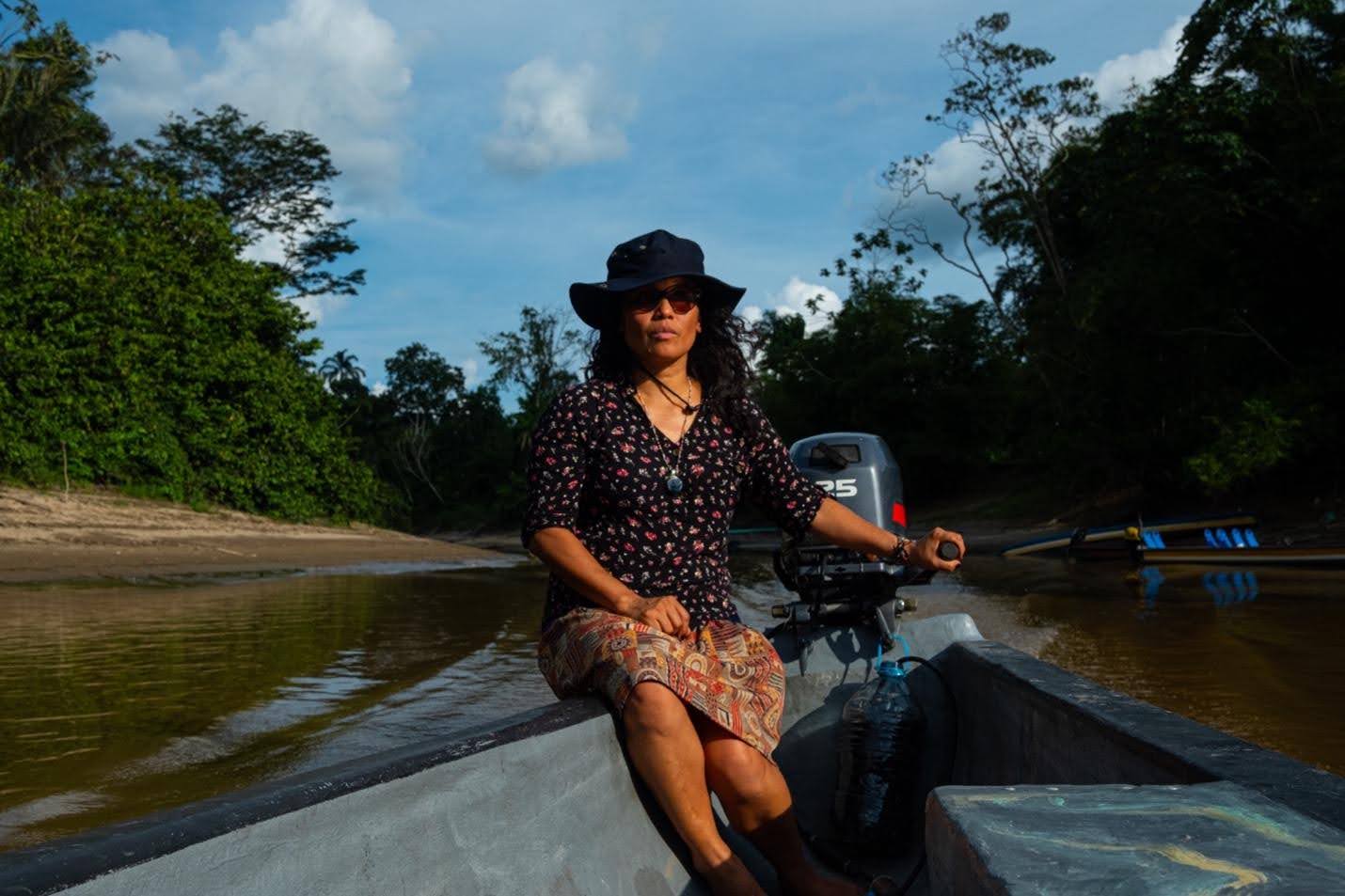
Nancy Correa Payaguaje drives a boat on the Cuyabeno River near her home village of Seoque’yå, Ecuador. Photo credit: Tom Laffay
Protecting the Amazon begins with Indigenous leadership. Nancy’s work is a reminder that the Amazon is defended by local communities on the ground, and that threats to this land are threats to all who rely on it.
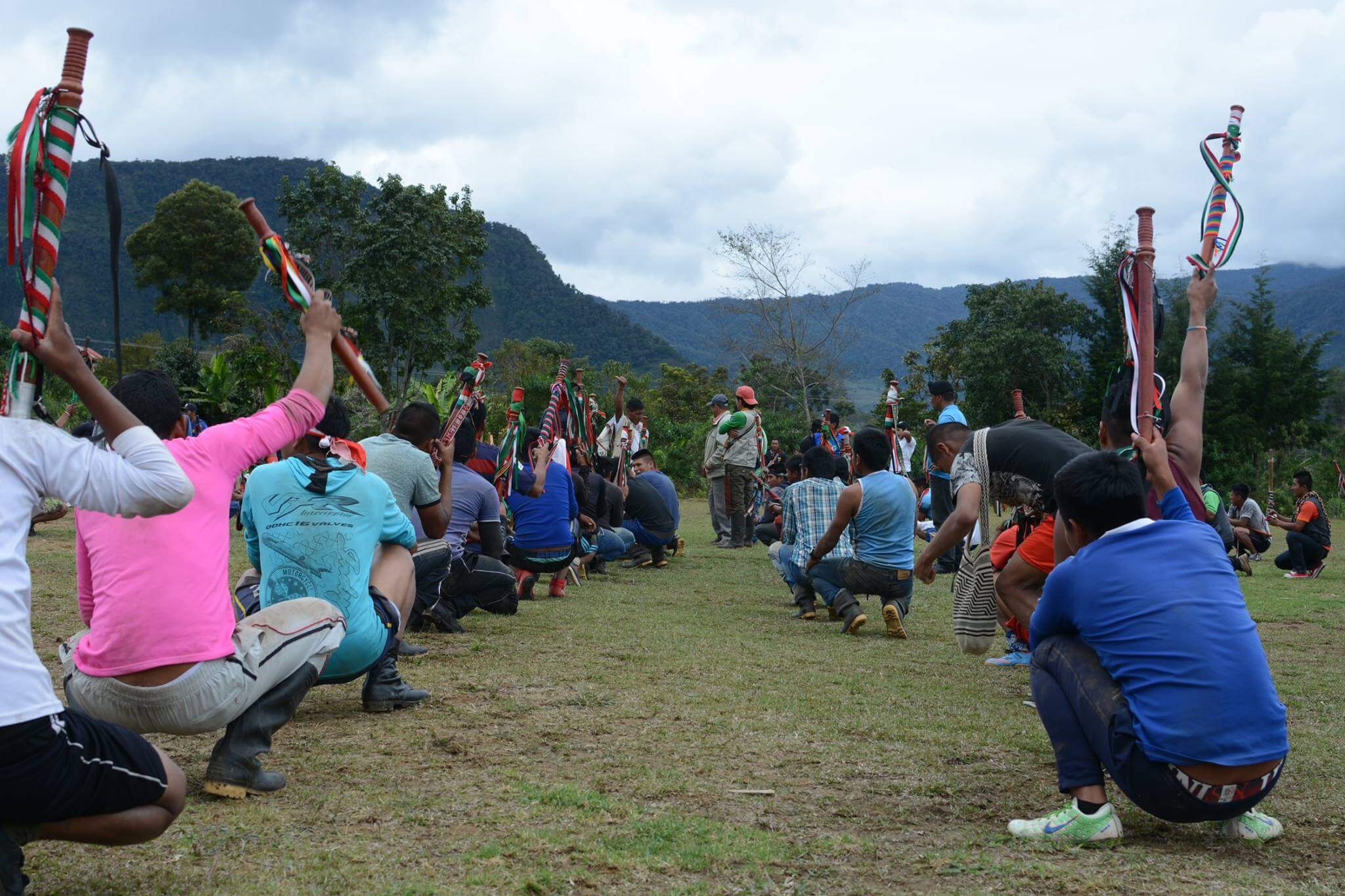
Through her leadership, Nancy emphasizes a central truth: territorial defense is not abstract. It is survival because Life itself is at stake. It also has a material dimension. In December 2025, the Siona gathered with the Siekopai, the Awá, the A’I Cofán, the Waorani, the Kichwa and the Quijos to discuss the role and responsibilities of Ancestral Indigenous Guard in that corner of Amazonia.
Her dream now is to build a cross-border seedbed of Ancestral Siona Guards, so that Siona communities in Colombia can safeguard their territory for generations to come.
Protecting Amazonia requires listening to those who belong to it. If the world truly wants to protect the forest, we must start by listening to Nancy and the Siona’s Ancestral Guard.
This article is a part of Hotspots, a journalistic collaboration between IC, Professor Manuela Picq and her students at Amherst College.
Across the world right now, Indigenous peoples are facing a renewed assault on their lands, rights, and ways of life.
From extractive industries pushing deeper into ancestral territories, to governments rolling back hard-won protections,
the threat is global—and it is growing.
What makes this moment especially dangerous is how little attention it receives.
Stories like this are disappearing in real time. Mainstream media
barely covers it and the coverage is fragmented. The public is left without the context
needed to understand what is truly at stake.
That is exactly why IC Magazine exists..
For more than 20 years, IC has reported on Indigenous struggles worldwide — consistently, independently, and without compromise.
We don’t follow news cycles; we trace patterns. We don’t sensationalize; we provide context.
And when the world looks away, we stay focused.
But this work is increasingly difficult to sustain.
We refuse to lock our reporting behind a paywall. We don’t sell access through subscriptions.
And we don’t answer to advertisers. IC Magazine survives solely because readers like you choose to
support independent Indigenous journalism.
Please donate today if you can. Every contribution helps us to continue this crucial work.
Thank you,
John Ahni Schertow
Founder and Editor in Chief