
Last Updated on April 23, 2026
A newly highlighted legal argument rooted in British common law could reshape the landscape of Indigenous rights in Australia, reopening long-standing debates over sovereignty, land and the authority of colonial legal systems.
The argument was uncovered by Olivia Barr, an associate professor of law at the University of Melbourne, who identified what she describes as a “forgotten” legal rule.
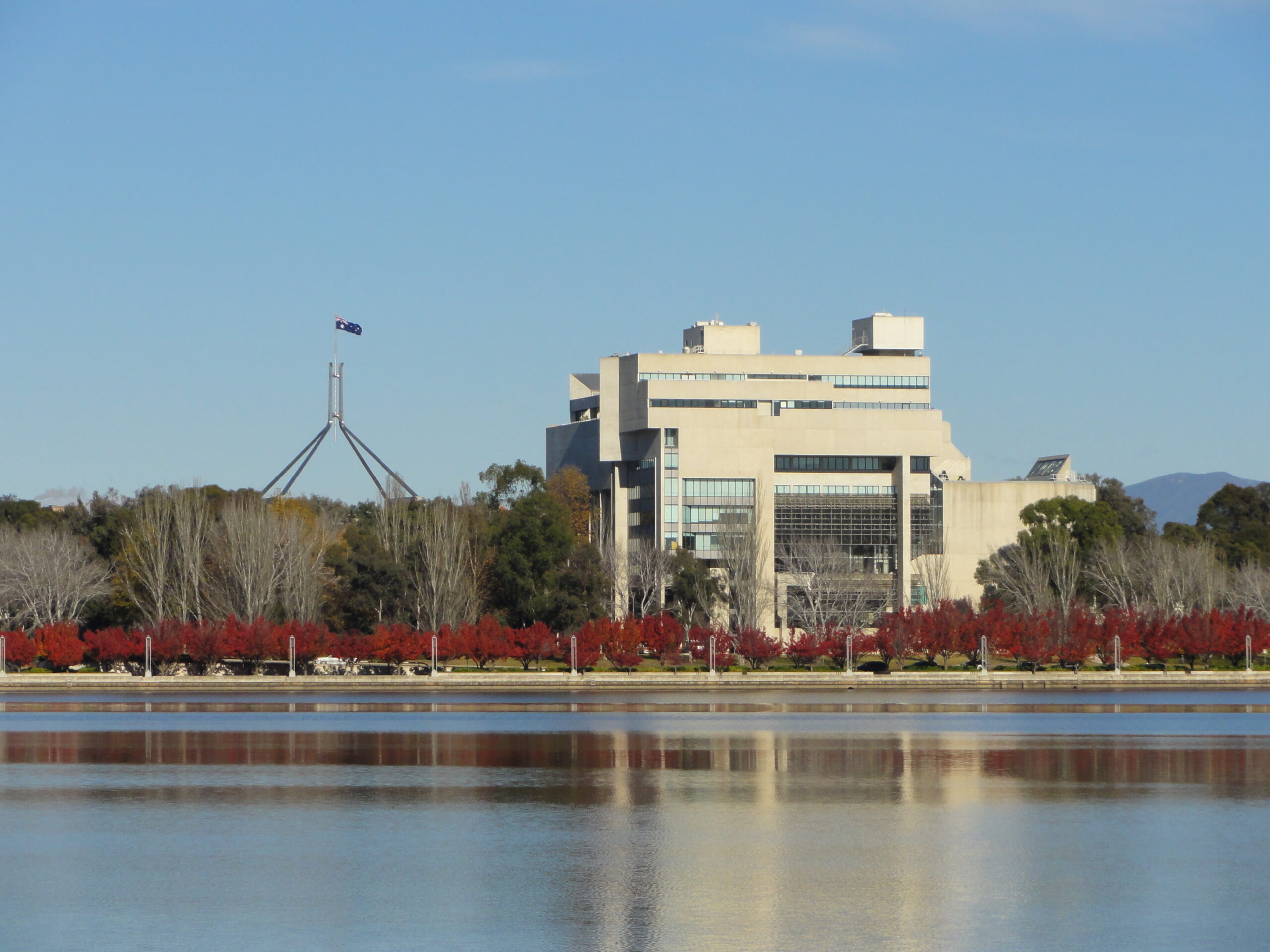
Writing in The Conversation, Barr points to decades of legal reasoning on Indigenous sovereignty that traces back to the 1979 High Court case, Coe v Commonwealth.
“For around 50 years, the High Court has consistently said all questions about First Nations sovereignty fall outside its jurisdiction – that the court does not have the power to hear such cases,” Barr writes. “This started in 1979, with a case called Coe v Commonwealth.”
She explains that the case did not produce a binding legal precedent because the court was evenly divided.
“Normally the High Court sits with an odd number of judges. This prevents deadlocks,” Barr writes. “But in Coe, there were only four High Court judges, who split two and two on the early procedural question of whether the court should allow a trial on sovereignty.”
“That meant their vote was a stalemate, so the case did not go to trial.”
Barr argues that because the court failed to reach a majority decision, the ruling should not have been treated as authoritative in subsequent cases.
“Because it was a stalemate, or a deadlock vote, and not a decision on which the court had a majority verdict one way or the other, the case does not count as a valid precedent,” she writes. “A legal precedent is a decision that must be followed in all subsequent cases.”
“In other words, it is as if the case never happened.”
Despite this, Barr notes that courts have continued to rely on Coe to avoid hearing arguments about Indigenous sovereignty — effectively closing the door on such claims for decades.
The implications of her argument could be far-reaching. If accepted, it would undermine the procedural foundation used to exclude sovereignty claims from judicial consideration, potentially reopening one of the most contested questions in Australian law.
The issue sits alongside the legacy of terra nullius — the doctrine that Australia was land belonging to no one prior to British settlement — which was rejected by the High Court in the landmark 1992 ruling Mabo v Queensland. While that decision recognized native title, it did not address the question of sovereignty itself.
Indigenous leaders have long maintained that sovereignty was never ceded, and that its continued denial underpins disparities in land rights, governance and legal recognition.
Barr’s analysis does not resolve that question, but it reframes the legal terrain on which it rests.
Courts have historically been reluctant to entertain arguments that could disrupt the legal foundations of the state, and any shift would likely face significant institutional resistance. Still, the re-examination of Coe arrives at a time of renewed national debate over treaty-making, constitutional reform and truth-telling processes in Australia.
Across the world right now, Indigenous peoples are facing a renewed assault on their lands, rights, and ways of life.
From extractive industries pushing deeper into ancestral territories, to governments rolling back hard-won protections,
the threat is global—and it is growing.
What makes this moment especially dangerous is how little attention it receives.
Stories like this are disappearing in real time. Mainstream media
barely covers it and the coverage is fragmented. The public is left without the context
needed to understand what is truly at stake.
That is exactly why IC Magazine exists..
For more than 20 years, IC has reported on Indigenous struggles worldwide — consistently, independently, and without compromise.
We don’t follow news cycles; we trace patterns. We don’t sensationalize; we provide context.
And when the world looks away, we stay focused.
But this work is increasingly difficult to sustain.
We refuse to lock our reporting behind a paywall. We don’t sell access through subscriptions.
And we don’t answer to advertisers. IC Magazine survives solely because readers like you choose to
support independent Indigenous journalism.
Please donate today if you can. Every contribution helps us to continue this crucial work.
Thank you,
John Ahni Schertow
Founder and Editor in Chief