Last Updated on May 7, 2026
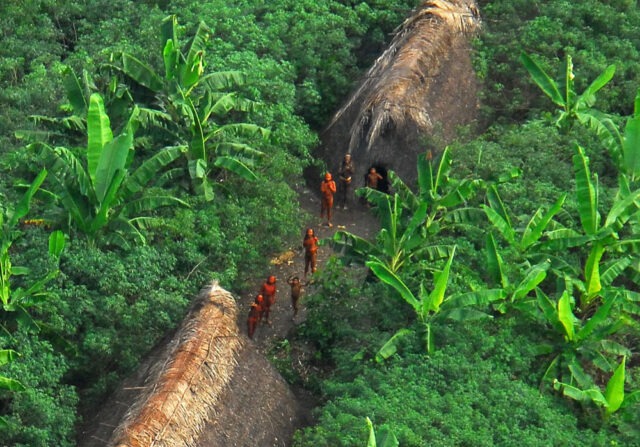
One of the world’s largest remaining strongholds of isolated Indigenous peoples is being squeezed by a growing web of oil concessions, illegal logging operations and criminal trafficking routes spreading across the Amazon borderlands of Peru and Brazil, according to a new report co-authored by Earth Insight in partnership with Indigenous organizations in Peru and Brazil.
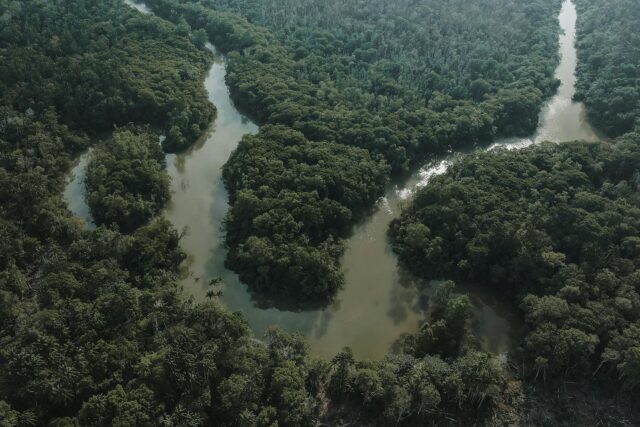
The report, Vanishing Footprints: The Race to Protect Isolated Indigenous Peoples in the Amazon’s Yavari-Tapiche Corridor, warns that industrial encroachment and weak legal protections are placing Indigenous Peoples in Voluntary Isolation and Initial Contact (PIACI) at growing risk across a transboundary forest corridor that spans more than 16 million hectares.
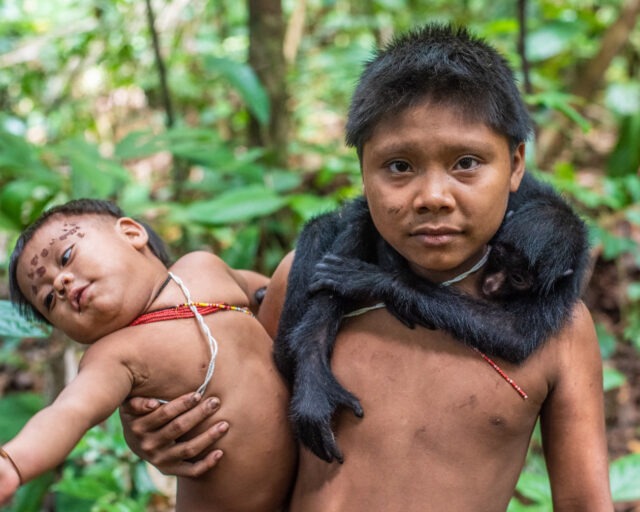
The Yavari-Tapiche corridor stretches across Peru’s Loreto and Ucayali regions into Brazil’s Amazonas and Acre states. Indigenous organizations and researchers say the region serves as a refuge for isolated Indigenous peoples including the Matsés, Matis, Korubo, Marubo, Remo and several unconfirmed groups who continue to avoid sustained outside contact.
The report argues that existing state protections recognize only fragments of the territories actually used by isolated peoples, leaving vast areas exposed to industrial concessions and illegal activity. Indigenous advocates say isolated communities move seasonally across extensive forest ecosystems that do not conform to political or administrative boundaries.
The report’s findings show extensive overlap between extractive industries and lands used by isolated peoples. In Peru alone, more than 1 million hectares of logging concessions overlap with existing or proposed PIACI reserves, while oil and gas concessions overlap approximately 1.6 million hectares of Indigenous reserves intended to protect isolated peoples.


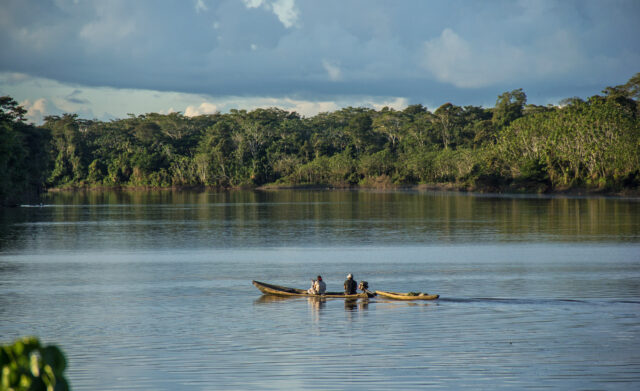
The report warns that roads, river traffic and expanding industrial infrastructure are further fragmenting the forests that isolated communities depend upon for hunting, mobility and survival.
Researchers also identified illegal logging, narcotrafficking routes and coca cultivation as accelerating threats throughout the corridor. Indigenous organizations say criminal networks are increasingly penetrating remote forest regions once protected by their isolation and inaccessibility.
The report documents how decades-long efforts by Indigenous organizations to secure protections for the region have faced repeated delays and political resistance. Work toward a formal cross-border corridor began in the early 2000s, when Indigenous federations in Peru initiated legal efforts to establish reserves for isolated peoples. More than twenty years later, several proposed reserves still remain unrecognized or contested.
One of the most significant advances came in 2021, when Peru officially established the Yavarí Tapiche Indigenous Reserve after nearly two decades of advocacy. The 1.1-million-hectare reserve was created to protect isolated Matsés, Remo and Marubo peoples living near the Brazilian border.
But Indigenous advocates say the reserve alone is insufficient because isolated peoples move across a much broader landscape extending beyond state-recognized boundaries. Organizations including the Organización Regional de los Pueblos Indígenas del Oriente (ORPIO) have therefore pushed for legal recognition of larger “territorial corridors” that reflect Indigenous patterns of movement and forest use rather than fragmented reserve systems.
The concept differs from traditional conservation corridors because it combines biodiversity protection with Indigenous territorial and human rights protections. Indigenous leaders argue that isolated peoples cannot survive if governments continue authorizing industrial concessions around and between protected reserves.
Environmental groups also describe the corridor as globally significant for climate stability and biodiversity conservation. Roughly 95% of the forest within the Yavari-Tapiche and neighboring Pano-Arawak corridors remains intact, according to Rainforest Foundation. The region supports jaguars, giant otters, giant armadillos, Amazon river dolphins and some of the Amazon Basin’s highest concentrations of apex predators.
The consequences of outside contact for isolated peoples can be catastrophic. Previous encounters linked to extractive activity in Peru resulted in widespread disease outbreaks among Indigenous communities with little or no immunity to outside illnesses.
The report calls on Peru and Brazil to formally recognize and jointly protect the transboundary corridor, cancel overlapping industrial concessions and strengthen enforcement against illegal logging and criminal activity. It also urges governments and international conservation organizations to recognize Indigenous territorial governance as central to protecting both biodiversity and isolated peoples.
Without urgent intervention, the report warns, one of the world’s last strongholds for isolated Indigenous peoples could be permanently transformed.
Across the world right now, Indigenous peoples are facing a renewed assault on their lands, rights, and ways of life.
From extractive industries pushing deeper into ancestral territories, to governments rolling back hard-won protections,
the threat is global—and it is growing.
What makes this moment especially dangerous is how little attention it receives.
Stories like this are disappearing in real time. Mainstream media
barely covers it and the coverage is fragmented. The public is left without the context
needed to understand what is truly at stake.
That is exactly why IC Magazine exists..
For more than 20 years, IC has reported on Indigenous struggles worldwide — consistently, independently, and without compromise.
We don’t follow news cycles; we trace patterns. We don’t sensationalize; we provide context.
And when the world looks away, we stay focused.
But this work is increasingly difficult to sustain.
We refuse to lock our reporting behind a paywall. We don’t sell access through subscriptions.
And we don’t answer to advertisers. IC Magazine survives solely because readers like you choose to
support independent Indigenous journalism.
Please donate today if you can. Every contribution helps us to continue this crucial work.
Thank you,
John Ahni Schertow
Founder and Editor in Chief