Last Updated on August 12, 2025
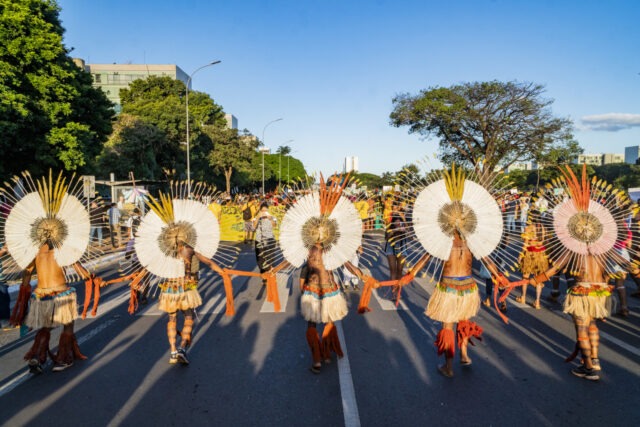
Indigenous and rural communities in Brazil’s western Amazon have won a major reprieve in their fight against the proposed Tabajara Hydroelectric Plant, a project that would have flooded nearly 60 square miles of land in the state of Rondônia.
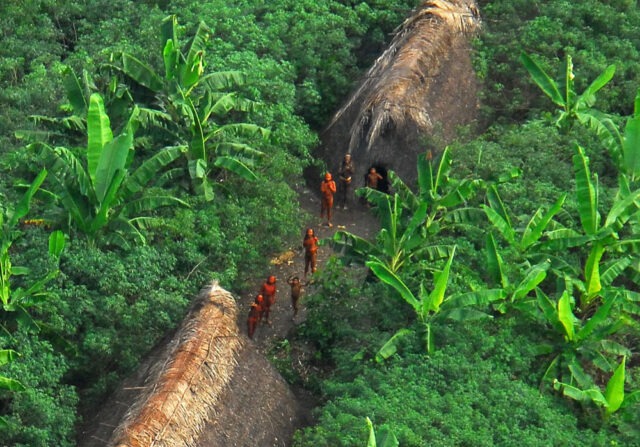
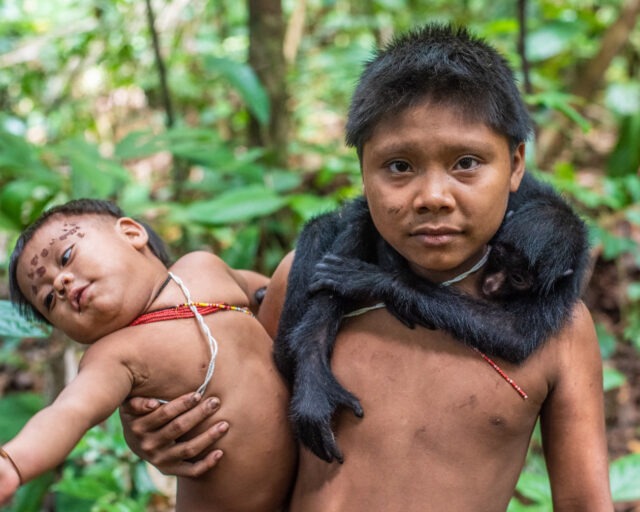
The dam, planned for the Machado River, was set to impact nine Indigenous territories, including lands inhabited by uncontacted and recently contacted Indigenous Peoples such as the Piripkura and the Kaidjuwa. Some of these territories lie a mere 650 feet from the edge of the proposed reservoir. Environmentalists and Indigenous leaders warn that such proximity poses an existential threat to these communities, whose survival depends on the health and isolation of their forest ecosystems.
The project’s suspension follows a series of legal interventions requiring FUNAI, Brazil’s federal Indigenous affairs agency, to include all affected territories in its environmental impact assessments. Until now, critics say, the licensing process ignored constitutional guarantees of Free, Prior, and Informed consent for Indigenous peoples.
Opposition to the Tabajara project has been building for years, with a coalition of Indigenous associations, environmental groups, and human rights organizations warning that the dam would destroy critical forest habitat, disrupt fish stocks, and open the region to further deforestation.
“This victory was the result of the tireless advocacy of communities that united to protect the Machado River from a project that would threaten their food and economic lifelines and destroy their connection to their cultural heritage,” said International Rivers in a recent statement. “Studies conducted by Brazilian researchers confirmed that the Tabajara would accelerate deforestation and loss of biodiversity, alter the Machado River’s flow, degrade water quality, accelerate local greenhouse gas emissions, ignite battles over land, and threaten the way of life for countless Indigenous communities.”
The recent victory comes amid a broader national debate over Amazon development. While the Lula administration has pledged to defend Indigenous rights and curb deforestation, large-scale infrastructure projects like Tabajara remain politically attractive to sectors of the energy industry and agribusiness lobby. Critics argue these projects follow a decades-old pattern in Brazil that sacrifices Indigenous lands and biodiversity in the name of “progress.”
But it doesn’t need to follow the same old pattern. As International Rivers observes, “On the eve of COP 30, Brazil has the opportunity to serve as a global leader in the clean energy transition. It can achieve this by abandoning mega-dams and encouraging, promoting, and expanding renewable, fair, and socially inclusive energy sources. It must abandon mega-dams and lead a just, clean, and decentralized energy transition. As the world looks to Brazil for climate leadership, large-scale hydropower has no place in that future.”
Across the world right now, Indigenous peoples are facing a renewed assault on their lands, rights, and ways of life.
From extractive industries pushing deeper into ancestral territories, to governments rolling back hard-won protections,
the threat is global—and it is growing.
What makes this moment especially dangerous is how little attention it receives.
Stories like this are disappearing in real time. Mainstream media
barely covers it and the coverage is fragmented. The public is left without the context
needed to understand what is truly at stake.
That is exactly why IC Magazine exists..
For more than 20 years, IC has reported on Indigenous struggles worldwide — consistently, independently, and without compromise.
We don’t follow news cycles; we trace patterns. We don’t sensationalize; we provide context.
And when the world looks away, we stay focused.
But this work is increasingly difficult to sustain.
We refuse to lock our reporting behind a paywall. We don’t sell access through subscriptions.
And we don’t answer to advertisers. IC Magazine survives solely because readers like you choose to
support independent Indigenous journalism.
Please donate today if you can. Every contribution helps us to continue this crucial work.
Thank you,
John Ahni Schertow
Founder and Editor in Chief