Last Updated on April 10, 2025
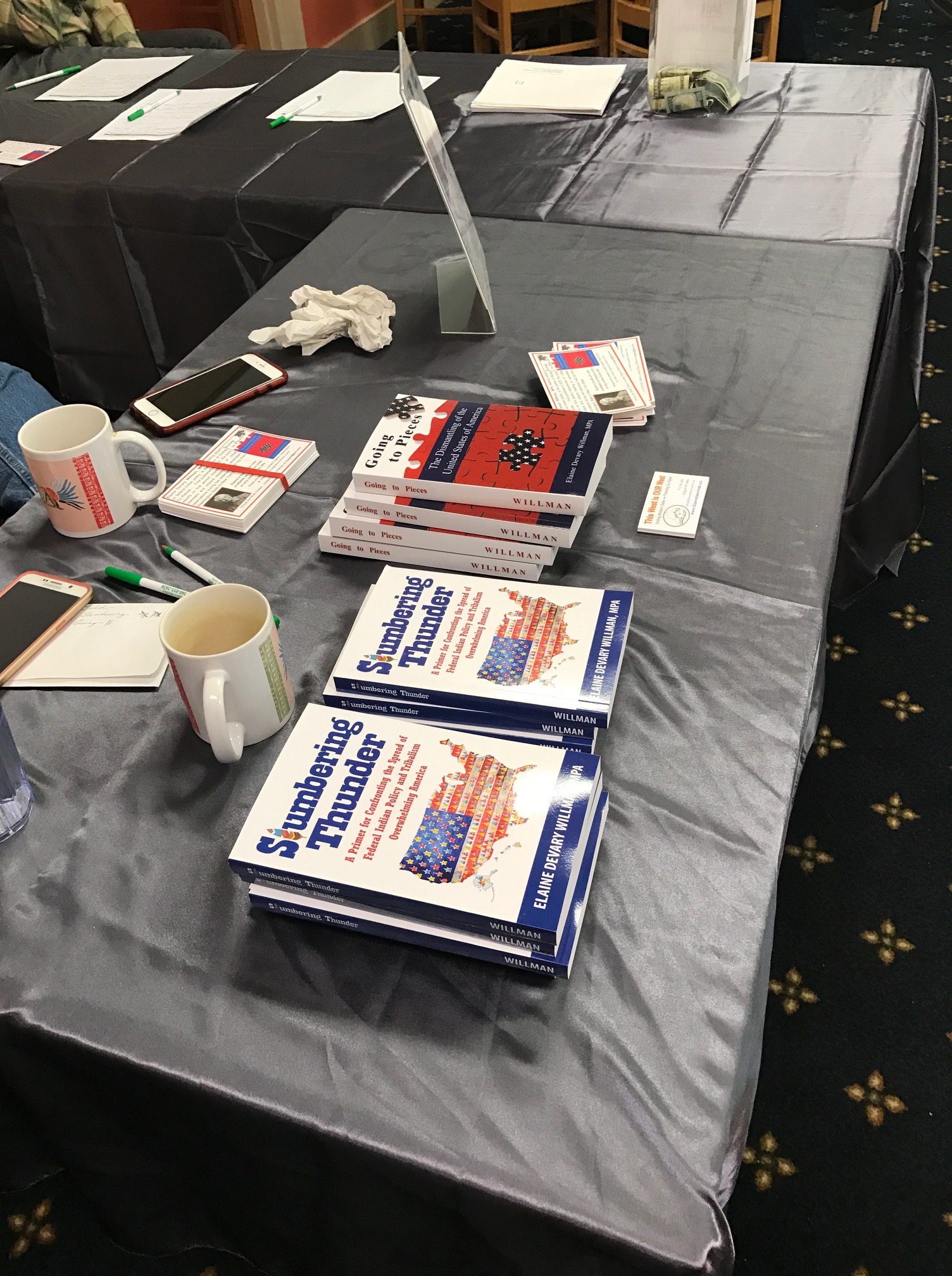
In this second excerpt from Drumming Up Resentment, Ken Toole examines the organizational infrastructure of the Anti-Indian Movement.
Over the last thirty years, tribal governments have become more sophisticated about asserting themselves through treaty rights. This evolution has often created controversy. Those who have opposed tribes, fearing Indian governance, have coalesced themselves into the anti-Indian movement. Groups like the Interstate Congress for Equal Rights and Responsibilities (ICERR), Totally Equal Americans (TEA), and the Citizens Equal Rights Alliance (CERA) have served as national umbrella organizations for groups that have grown out of local and state controversies. These national groups have focused on federal policy by lobbying in Congress and litigating in the federal courts. However, the power and effectiveness of these national groups is linked to the local anti-Indian groups.
In addition to “vertical integration” from local to state to national organizations, the anti-Indian movement also developed “horizontal integration,” or ally relationships with groups and activists in other political and social movements. The anti-Indian movement is allied with the anti-environmental “wise use movement.” There is extensive cooperation between anti-Indian groups like CERA and wise use groups like the Alliance for America. Loose affiliation between anti-Indian groups and the Religious Right is also evident primarily in the electoral arena and state legislature. Finally, despite their best efforts, anti-Indian activists often stumble into the overt white supremacist movement. It is not a surprising stumble since both movements have racist ideas at the core.
–Ken Toole, Montana Human Rights Network, January 2000
Across the world right now, Indigenous peoples are facing a renewed assault on their lands, rights, and ways of life.
From extractive industries pushing deeper into ancestral territories, to governments rolling back hard-won protections,
the threat is global—and it is growing.
What makes this moment especially dangerous is how little attention it receives.
Stories like this are disappearing in real time. Mainstream media
barely covers it and the coverage is fragmented. The public is left without the context
needed to understand what is truly at stake.
That is exactly why IC Magazine exists..
For more than 20 years, IC has reported on Indigenous struggles worldwide — consistently, independently, and without compromise.
We don’t follow news cycles; we trace patterns. We don’t sensationalize; we provide context.
And when the world looks away, we stay focused.
But this work is increasingly difficult to sustain.
We refuse to lock our reporting behind a paywall. We don’t sell access through subscriptions.
And we don’t answer to advertisers. IC Magazine survives solely because readers like you choose to
support independent Indigenous journalism.
Please donate today if you can. Every contribution helps us to continue this crucial work.
Thank you,
John Ahni Schertow
Founder and Editor in Chief